El Che would not have been satisfied to just study and sympathize with them – he wanted to be with them and understand their existence. Being in contact with people who were poor and hungry while they were sick transformed Che. He envisioned a new medicine, with doctors who would serve the greatest number people with preventive care and public awareness of hygiene. A few years later, Che joined Fidel Castro’s 26th of July Movement as a doctor and was among the eighty-one men aboard the Granma as it landed in Cuba on December 2, 1956.
After the January 1, 1959, victory that overthrew Fulgencio Batista, the new Cuban constitution included Che’s dream of free medical care for all as a human right. An understanding of the failings of disconnected social systems led the revolutionary government to build hospitals and clinics in underserved parts of the island at the same time that it began addressing crises of literacy, racism, poverty, and housing. Cuba overhauled its clinics both in 1964 and again in 1974 to better link communities and patients. By 1984, Cuba had introduced doctor-nurse teams who lived in the neighborhoods where they had offices (consultorios).
The United States became ever more bellicose, so in 1960 Cubans organized Committees for Defense of the Revolution to defend the country. The committees prepared to move the elderly, disabled, sick, and mentally ill to higher ground if a hurricane approached, thus intertwining domestic health care and foreign affairs, a connection that has been maintained throughout Cuba’s history.
As Cuba’s medical revolution was based on extending medical care beyond the major cities and into the rural communities that needed it the most, it was a logical conclusion to extend that assistance to other nations. The revolutionary government sent doctors to Chile after a 1960 earthquake and a medical brigade in 1963 to Algeria, which was fighting for independence from France. These set the stage for the country’s international medical aid, which grew during the decades and now includes helping treat the COVID-19 pandemic.
In the late 1980s and early ’90s, two disasters threatened the very existence of the country. The first victim of AIDS died in 1986. In December 1991, the Soviet Union collapsed, ending its $5 billion annual subsidy, disrupting international commerce, and sending the Cuban economy into a free fall that exacerbated the AIDS epidemic. A perfect storm for AIDS infection appeared on the horizon. The HIV infection rate for the Caribbean region was second only to southern Africa, where a third of a million Cubans had recently been during the Angolan wars. The embargo on the island reduced the availability of drugs (including those for HIV/AIDS), made existing pharmaceuticals outrageously expensive, and disrupted the financial infrastructures used for drug purchases. Desperately needing funds, Cuba opened the floodgate of tourism.
The government drastically reduced services in all areas except two: education and health care. Its research institutes developed Cuba’s own diagnostic test for HIV by 1987. Over twelve million tests were completed by 1993. By 1990, when gay people had become the island’s primary HIV victims, homophobia was officially challenged in schools. Condoms were provided for free at doctor’s offices and, despite the expense, so were antiretroviral drugs.
Cuba’s united and well-planned effort to cope with HIV/AIDS paid off. At the same time that Cuba had two hundred AIDS cases, New York City (with about the same population) had forty-three thousand cases. Despite having only a small fraction of the wealth and resources of the United States, Cuba had overcome the devastating effects of the U.S. blockade and had implemented an AIDS program superior to that of the country seeking to destroy it. During this Special Period, Cubans experienced longer lives and lower infant mortality rates in comparison to the United States. Cuba had inspired healers throughout the world to believe that a country with a coherent and caring medical system can thrive, even against tremendous odds.
Overcoming the HIV/AIDS and Special Period crises prepared Cuba for COVID-19. Aware of the intensity of the pandemic, Cuba knew that it had two inseparable responsibilities: to take care of its own with a comprehensive program and to share its capabilities internationally.
The government immediately carried out a task that proved very difficult in a market-driven economy –altering the equipment of nationalized factories (which usually made school uniforms) to manufacture masks. These provided an ample supply for Cuba by the middle of April 2020, while the United States, with its enormous productive capacity, was still suffering a shortage.
Discussions at the highest levels of the Cuban Ministry of Public Health drew up the national policy. There would need to be massive testing to determine who had been infected. Infected persons would need to be quarantined while ensuring that they had food and other necessities. Contact tracing would be used to determine who else might be exposed. Medical staff would need to go door to door to check on the health of every citizen. Consultorio staff would give special attention to everyone in the neighborhood who might be high risk.
By March 2, Cuba had instituted the Novel Coronavirus Plan for Prevention and Control. Within four days, it expanded the plan to include taking the temperature of and possibly isolating infected incoming travelers. These occurred before Cuba’s first confirmed COVID-19 diagnosis on March 11. Cuba had its first confirmed COVID-19 fatality by March 22, when there were thirty-five confirmed cases, almost one thousand patients being observed in hospitals, and over thirty thousand people under surveillance at home. The next day it banned the entry of nonresident foreigners, which took a deep bite into the country’s tourism revenue.
That was the day that Cuba’s Civil Defense went on alert to respond rapidly to COVID-19 and the Havana Defense Council decided that there was a serious problem in the city’s Vedado district, famous for being the largest home to nontourist foreign visitors who were more likely to have been exposed to the virus. By April 3, the district was closed. As Merriam Ansara witnessed, “anyone with a need to enter or leave must prove that they have been tested and are free of COVID-19.” The Civil Defense made sure stores were supplied and all vulnerable people received regular medical checks.
Vedado had eight confirmed cases, a lot for a small area. Cuban health officials wanted the virus to remain at the “local spread” stage, when it can be traced while going from one person to another. They sought to prevent it from entering the “community spread” stage, when tracing is not possible because it is moving out of control. As U.S. health professionals begged for personal protective equipment and testing in the United States was so sparse that people had to ask to be tested (rather than health workers testing contacts of infected patients), Cuba had enough rapid test kits to trace contacts of persons who had contracted the virus.
During late March and early April, Cuban hospitals were also changing work patterns to minimize contagion. Havana doctors went into Salvador Allende Hospital for fifteen days, staying overnight within an area designated for medical staff. Then they moved to an area separate from patients where they lived for another fifteen days and were tested before returning home. They stayed at home without leaving for another fifteen days and were tested before resuming practice. This forty-five-day period of isolation prevented medical staff from bringing disease to the community via their daily trips to and from work.
The medical system extends from the consultorio to every family in Cuba. Third-, fourth-, and fifth-year medical students are assigned by consultorio doctors to go to specific homes each day. Their tasks include obtaining survey data from residents or making extra visits to the elderly, infants, and those with respiratory problems. These visits gather preventive medicine data that is then taken into account by those in the highest decision-making positions of the country. When students bring their data, doctors use a red pen to mark hot spots where extra care is necessary. Neighborhood doctors meet regularly at clinics to talk about what each doctor is doing, what they are discovering, what new procedures the Cuban Ministry of Public Health is adopting, and how the intense work is affecting medical staff.
In this way, every Cuban citizen and every health care worker, from those at neighborhood doctor offices through those at the most esteemed research institutes, has a part in determining health policy. Cuba currently has eighty-nine thousand doctors, eighty-four thousand nurses, and nine thousand students scheduled to graduate from medical studies in 2020. The Cuban people would not tolerate the head of the country ignoring medical advice, spouting nonsensical statements, and determining policy based on what would be most profitable for corporations.
The Cuban government approved free distribution of the homeopathic medicine PrevengHo-Vir to residents of Havana and Pinar del Rio province. Susana Hurlich was one of many receiving it. On April 8, Dr. Yaisen, one of three doctors at the consultorio two blocks from her home, came to the door with a small bottle of PrevengHo-Vir and explained how to use it. Instructions warn that it reinforces the immune system but is not a substitute for Interferon Alpha 2B, nor is it a vaccine. Hurlich believes that something important “about Cuba’s medical system is that rather than being two-tiered, as is often the case in other countries, with ‘classical medicine’ on the one hand and ‘alternative medicine’ on the other, Cuba has ONE health system that includes it all. When you study to become a doctor, you also learn about homeopathic medicine in all its forms.”
A powerful model: Perhaps the most critical component of Cuba’s medical internationalism during the COVID-19 crisis has been using its decades of experience to create an example of how a country can confront the virus with a compassionate and competent plan. Public health officials around the world were inspired by Cuba’s actions.
Transfer of knowledge: When viruses that cause Ebola, mainly found in sub-Saharan Africa, increased dramatically in the fall of 2014, much of the world panicked. Soon, over twenty thousand people were infected, more than eight thousand had died, and worries mounted that the death toll could reach into hundreds of thousands. The United States provided military support; other countries promised money. Cuba was the first nation to respond with what was most needed: it sent 103 nurse and 62 doctor volunteers to Sierra Leone. Since many governments did not know how to respond to the disease, Cuba trained volunteers from other nations at Havana’s Pedro Kourí Institute of Tropical Medicine. In total, Cuba taught 13,000 Africans, 66,000 Latin Americans, and 620 Caribbeans how to treat Ebola without themselves becoming infected. Sharing understanding on how to organize a health system is the highest level of knowledge transfer.
Venezuela has attempted to replicate fundamental aspects of the Cuban health model on a national level, which has served Venezuela well in combating COVID-19. In 2018, residents of Altos de Lidice organized seven communal councils, including one for community health. A resident made space in his home available to the Communal Healthcare System initiative so that Dr. Gutierrez could have an office. He coordinates data collections to identify at-risk residents and visits all residents in their homes to explain how to avoid infection by COVID-19. Nurse del Valle Marquez is a Chavista who helped implement the Barrio Adentro when the first Cuban doctors arrived. She remembers that residents had never seen a doctor inside their community, but when the Cubans arrived “we opened our doors to the doctors, they lived with us, they ate with us, and they worked among us.”
Stories like this permeate Venezuela. As a result of building a Cuban-type system, teleSUR reported that by April 11, 2020, the Venezuelan government had conducted 181,335 early Polymerase Chain Reaction tests in time to have the lowest infection rate in Latin America. Venezuela had only 6 infections per million citizens while neighboring Brazil had 104 infections per million.
When Rafael Correa was president of Ecuador, over one thousand Cuban doctors formed the backbone of its health care system. Lenin Moreno was elected in 2017 and Cuban doctors were soon expelled, leaving public medicine in chaos. Moreno followed recommendations of the International Monetary Fund to slash Ecuador’s health budget by 36 percent, leaving it without health care professionals, without personal protective equipment, and, above all, without a coherent health care system. While Venezuela and Cuba had 27 COVID-19 deaths, Ecuador’s largest city, Guayaquil, had an estimated death toll of 7,600.
International medical response: Cuban medicine is perhaps best known for its internationalism. A clear example is the devastating earthquake that rocked Haiti in 2010. Cuba sent medical staff who lived among Haitians and stayed months or years after the earthquake. U.S. doctors, however, did not sleep where Haitian victims huddled, returned to luxury hotels at night, and departed after a few weeks. John Kirk coined the term disaster tourism to describe the way that many rich countries respond to medical crises in poor countries.
The commitment that Cuban medical staff show internationally is a continuation of the effort that the country’s health care system made in spending three decades to find the best way to strengthen bonds between caregiving professionals and those they serve. By 2008, Cuba had sent over 120,000 health care professionals to 154 countries, its doctors had cared for over 70 million people in the world, and almost 2 million people owed their lives to Cuban medical services in their country.
The Associated Press reported that when COVID-19 spread throughout the world, Cuba had thirty-seven thousand medical workers in sixty-seven countries. It soon deployed additional doctors to Suriname, Jamaica, Dominica, Belize, Saint Vincent and the Grenadines, St. Kitts and Nevis, Venezuela, and Nicaragua. On April 16, Granma reported that “21 brigades of healthcare professionals have been deployed to join national and local efforts in 20 countries. The same day, Cuba sent two hundred health personnel to Qatar.
As northern Italy became the epicenter of COVID-19 cases, one of its hardest hit cities was Crema in the Lombardy region. The emergency room at its hospital was filled to capacity. On March 26, Cuba sent fifty-two doctors and nurses who set up a field hospital with three intensive care unit beds and thirty-two other beds with oxygen. A smaller and poorer Caribbean nation was one of the few aiding a major European power. Cuba’s intervention took its toll. By April 17, thirty of its medical professionals who went abroad tested positive for COVID-19.
Bringing the world to Cuba: The flip side of Cuba sending medical staff across the globe is the people it has brought to the island—both students and patients. When Cuban doctors were in the Republic of the Congo in 1966, they saw young people studying independently under streetlights at night and arranged for them to come to Havana. They brought in even more African students during the Angolan wars of 1975–88 and then brought large numbers of Latin American students to study medicine following Hurricanes Mitch and Georges. The number of students coming to Cuba to study expanded even more in 1999 when it opened classes at the Latin American School of Medicine (ELAM). By 2020, ELAM had trained thirty thousand doctors from over one hundred countries.
Cuba also has a history of bringing foreign patients for treatment. After the 1986 nuclear meltdown at Chernobyl, 25,000 patients, mostly children, came to the island for treatment, with some staying for months or years. Cuba opened its doors, hospital beds, and a youth summer camp.
On March 12, nearly fifty crew members and passengers on a British cruise ship either had COVID-19 or were showing symptoms as the ship approached the Bahamas, a British Commonwealth nation. Since the Braemar flew the Bahamian flag as a Commonwealth vessel, there should have been no problem disembarking those aboard for treatment and return to the United Kingdom. But the Bahamian Ministry of Transport declared that the cruise ship would “not be permitted to dock at any port in the Bahamas and no persons will be permitted to disembark the vessel.” During the next five days, the United States, Barbados (another Commonwealth nation), and several other Caribbean countries turned it away. On March 18, Cuba became the only country to allow the Braemar’s over one thousand crew members and passengers to dock. Treatment at Cuban hospitals was offered to those who felt too sick to fly. Most went by bus to José Martí International Airport for flights back to the United Kingdom. Before leaving, Braemar crew members displayed a banner reading “I love you Cuba!” Passenger Anthea Guthrie posted on her Facebook page: “They have made us not only feel tolerated, but actually welcome.”
Medicine for all: In 1981, there was a particularly bad outbreak of the mosquito-borne dengue fever, which hits the island every few years. At the time, many first learned of the very high level of Cuba’s research institutes that created Interferon Alpha 2B to successfully treat dengue. As Helen Yaffe points out, “Cuba’s interferon has shown its efficacy and safety in the therapy of viral diseases including Hepatitis B and C, shingles, HIV-AIDS, and dengue.” It accomplished this by preventing complications that could worsen a patient’s condition and result in death. The efficacy of the drug persisted for decades and, in 2020, it became vitally important as a potential cure for COVID-19. What also survived was Cuba’s eagerness to develop a multiplicity of drugs and share them with other nations.
Cuba has sought to work cooperatively toward drug development with countries such as China, Venezuela, and Brasil, Collaboration with Brasil resulted in meningitis vaccines at a cost of 95¢ rather than $15 to $20 per dose. Finally, Cuba teaches other countries to produce medications themselves so they do not have to rely on purchasing them from rich countries.
In order to effectively cope with disease, drugs are frequently sought for three goals: tests to determine those infected; treatments to help ward off or cure problems; and vaccines to prevent infections. As soon as Polymerase Chain Reaction rapid tests were available, Cuba began using them widely throughout the island. Cuba developed both Interferon Alpha 2B (a recombinant protein) and PrevengHo-Vir (a homeopathic medication). TeleSUR reported that by April 20, over forty-five countries had requested Cuba’s Inteferon in order to control and then get rid of the virus.
Cuba’s Center for Genetic Engineering and Biotechnology is seeking to create a vaccine against COVID-19. Its Director of Biomedical Research, Dr. Gerardo Guillén, confirmed that his team is collaborating with Chinese researchers in Yongzhou, Hunan province, to create a vaccine to stimulate the immune system and one that can be taken through the nose, which is the route of COVID-19 transmission. Whatever Cuba develops, it is certain that it will be shared with other countries at low cost, unlike U.S. medications that are patented at taxpayers’ expense so that private pharmaceutical giants can price gouge those who need the medication.
Countries that have not learned how to share: Cuban solidarity missions show a genuine concern that often seems to be lacking in the health care systems of other countries. Medical associations in Venezuela, Brazil, and other countries are often hostile to Cuban doctors. Yet, they cannot find enough of their own doctors to go to dangerous communities or travel to poor and rural areas as Cuban doctors do.
When in Peru in 2010, I visited the Pisco policlínico. Its Cuban director, Leopoldo García Mejías, explained that then-president Alan García did not want additional Cuban doctors and that they had to keep quiet in order to remain in Peru. Cuba is well aware that it has to adjust each medical mission to accommodate the political climate.
There is at least one exception to Cuban doctors remaining in a country according to the whims of the political leadership. Cuba began providing medical attention in Honduras in 1998. During the first eighteen months of Cuba’s efforts in Honduras, the country’s infant mortality dropped from 80.3 to 30.9 deaths per 1,000 live births. Political moods changed and, in 2005, Honduran Health Minister Merlin Fernández decided to kick Cuban doctors out. However, this led to so much opposition that the government changed course and allowed the Cubans to stay.
A disastrous and noteworthy example of when a country refused an offer of Cuban aid is the aftermath of Hurricane Katrina in 2005. After the hurricane hit, 1,586 Cuban health care professionals were prepared to go to New Orleans. President George W. Bush, however, rejected the offer, acting as if it would be better for U.S. citizens to die rather than to admit the quality of Cuban aid.
Though the U.S. government does not take kindly to students going studying at ELAM, they are still able to apply what they learn when they come home. In 1988, Kathryn Hall-Trujillo of Albuquerque, New Mexico, founded the Birthing Project USA, which trains advocates to work with African-American women and connect with them through the first year of the infant’s life. She is grateful for the Birthing Project’s partnership with Cuba and the support that many ELAM students have given. In 2018, she told me: “We are a coming home place for ELAM students—they see working with us as a way to put into practice what they learned at ELAM.”
Cuban doctor Julio López Benítez recalled in 2017 that when the country revamped its clinics in 1974, the old clinic model was one of patients going to clinics, but the new model was of clinics going to patients. Similarly, as ELAM graduate Dr. Melissa Barber looked at her South Bronx neighborhood during COVID-19, she realized that while most of the United States told people to go to agencies, what people need is a community approach that recruits organizers to go to the people. Dr. Barber is working in a coalition with South Bronx Unite, the Mott Haven Mamas, and many local tenant associations. As in Cuba, they are trying to identify those in the community who are vulnerable, including “the elderly, people who have infants and small children, homebound people, people that have multiple morbidities and are really susceptible to a virus like this one.”
As they discover who needs help, they seek resources to help them, such as groceries, personal protective equipment, medications, and treatment. In short, the approach of the coalition is going to homes to ensure that people do not fall through the cracks. In contrast, the U.S. national policy is for each state and each municipality to do what it feels like doing, which means that instead of having a few cracks that a few people fall through, there are enormous chasms with large groups careening over the edge. What countries with market economies need are actions like those in the South Bronx and Cuba carried out on a national scale.
This was what Che Guevara envisioned in 1951. Decades before COVID-19 jumped from person to person, Che’s imagination went from doctor to doctor. Or perhaps many shared their own visions so widely that, after 1959, Cuba brought revolutionary medicine anywhere it could. Obviously, Che did not design the intricate innerworkings of Cuba’s current medical system. But he was followed by healers who wove additional designs into a fabric that now unfolds across the continents. At certain times in history, thousands or millions of people see similar images of a different future. If their ideas spread broadly enough during the hour that social structures are disintegrating, then a revolutionary idea can become a material force in building an Admirable New World.
PALESTINA

The banning of deadly police practices by many American states and cities following the murder of an African American man, George Floyd, at the hands of Minneapolis police officers is, once more, shedding light on US-Israeli collaboration in the fields of security and crowd-control.
From California to New York, and from Washington State to Minneapolis, all forms of neck restraints and chokeholds that are used by police while dealing with suspects are no longer allowed by local, state, or federal authorities.
This is only the beginning of what promises to be a serious rethink in police practices, which disproportionately targets African Americans and other minority and marginalized communities across the United States.
The refashioning of the American police, in recent years, to fit some kind of a military model is a subject that requires a better understanding than the one currently offered by mainstream US media. Certainly, US racism and police violence are intrinsically linked and date back many years, but the militarization of the US police and its use of deadly violence against suspected petty criminals, or even non criminals, is a relatively new phenomenon that has been largely imported from Israel.
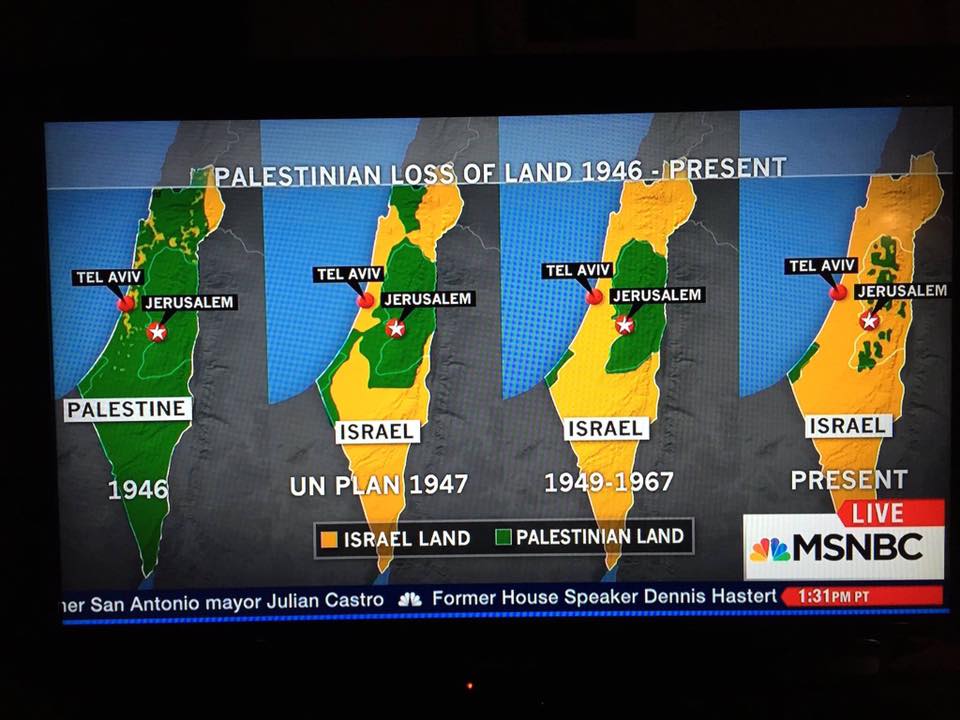
While an urgent conversation is already under way in US cities regarding the need to reimagine public safety, or even to defund the police altogether, little is being said about the link between the US’ ‘war on terror’ and the American elites’ fascination with the ‘Israeli example’ in its dealing with besieged Gaza and occupied Palestinians in the West Bank.
“The Israeli example (could serve as) a possible basis for arguing … that ‘torture was necessary to prevent imminent, significant, physical harm to persons, where there is no other available means to prevent the harm’,” the CIA General Counsel report of September 2001 read, as quoted by Slate magazine.
Equally important to the argument made by the CIA above, was the actual date – only a few days after the terrorist attacks of September 11. That was the beginning of the Israeli- American love affair, which entirely redefined the nature of the relationship between Washington and Tel Aviv, removing Israel from the category of ‘client regimes’, into a whole new one – as a model to be mimicked and a true partner to be embraced.
The language used by the CIA, and other facets of US intelligence agencies, quickly seeped into the military as well, and eventually became the uncontested political discourse, epitomized by former US President Barack Obama’s words in June 2010 that “the bond between the United States and Israel is unbreakable.”
‘Unbreakable’ indeed, since Israel, the long-time recipient of American financial support and military and intelligence secrets became a major exporter of ideas, security technology, and ‘war on terror’ tactics to the US.
It is critical that we do not reduce our understanding of this troubling rapport between the US and Israel to military hardware and intelligence sharing. The American infatuation with Israel is essentially an intellectual one, as the US began viewing itself as inferior to Israel in terms of the latter’s supposed ability to navigate between sustaining its own democracy while successfully defeating Palestinian and Arab ‘terrorism’.
For example, former US President George W. Bush saw extremist Israeli politician and author, Natan Sharansky, as a mentor. In January 2005, The New York Times reported how the Bush White House invited Sharansky to the Oval Office to discuss his book “The Case for Democracy: The Power of Freedom to Overcome Tyranny and Terror.”
Thus, a barely visible Israeli politician became the moral authority for Bush’s invasion of sovereign Arab countries. It was during this period that Israeli torture tactics, including the infamous ‘Palestinian Chair’, became the crown jewel of the American military’s systematic violence used in America’s immoral wars from Iraq to Afghanistan, to elsewhere.
Writing in the Israeli newspaper Haaretz in 2016, Rachel Stroumsa argued that the ‘Palestinian Chair’ is “but one of many examples of ties and seepages between the security practices of Israel and America,” adding that “the CIA explicitly justified its use of torture in depositions to the Senate Intelligence Committee by citing High Court of Justice rulings.”
The political, military, and intelligence marriage between the US and Israel in Iraq quickly spread to include the US global ‘war on terror’, where Israeli weapon manufacturers cater to every American need, playing on the country’s growing sense of insecurity, offering products that range from airport security, the building of watchtowers, the erection of walls and fences, to spying and surveillance technology.
Elbit Systems, Israel’s largest military company, made a fortune from building surveillance towers and sensors, in addition to many other products, across the US-Mexico border. The company, like other Israeli companies, won one bid after another, because its products are ‘combat-proven’ or ‘field-proven’, because these technologies have been used against, or tested on real people in real situations; the ‘people’ here, of course, being Palestinians, Lebanese, and Syrians.
The fact that thousands of American police officers have been trained by Israelis, thus the burgeoning of violent military-like tactics used against ordinary Americans, is only one link in a long chain of ‘deadly exchanges’ between the two countries.
Almost immediately after the September 11 attacks, “the Anti-Defamation League, the American Jewish Committee’s Project Interchange and the Jewish Institute for National Security Affairs have paid for police chiefs, assistant chiefs and captains to train in Israel and the Occupied Palestinian Territories,” Amnesty International said in a recent report.
But this is only the tip of the iceberg, for the Israeli army manual, which holds little respect for internationally-recognized rules of conduct, infiltrated numerous police departments across the US. Even the typical look of the American police officers began changing to resemble that of a combat soldier in full gear.
The growing Israeli role in shaping the American security state allowed Israel to push its political priorities past its traditional stronghold over the US Congress to individual states and, eventually, to city councils across the country.
Even if some of the Israeli tactics, which are currently applied by the US police, are discontinued under the collective chants of ‘Black Lives Matter’, Israel – if not stopped – will continue to define Washington’s security priorities from Washington State to Texas, because the relationship – Obama’s ‘unbreakable bond’ – is much stronger and deeper than anyone could have ever imagined.

BRASIL

Covid-19 cases continue to surge in Brasil and my country continues to record over new cases daily, with the official death too now at over 50,000 - though researchers say that's a siognificant underestimate. A new study by international experts predict Brasil will surpass the United States in July to become the nation with the world's highest death toll from COVID-19.
What a shamefull record! Shame on you, Bozonaro!!
AOS FATOS:Declarações de Bolsonaro, checadas
The Intercept Brasil