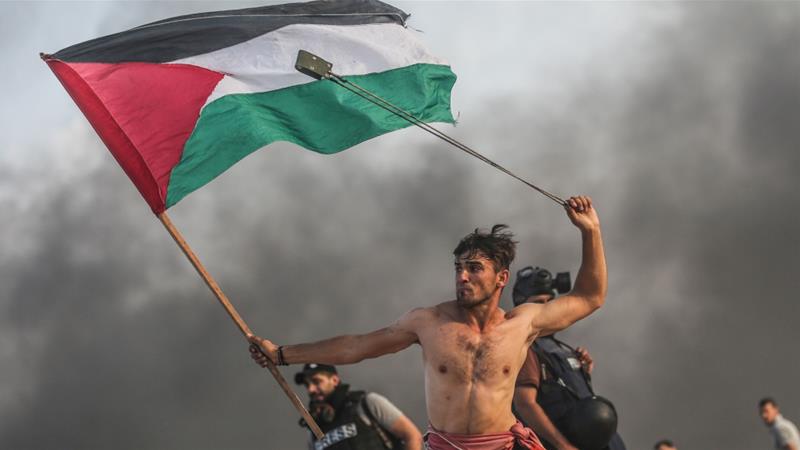
Thus was built the British Empire. Thus London sold out Hong Kong to China and Palestine to the Zionists.
The United States has gone the way of its colonizer in this regard.
“Never get into a well with an American rope” goes the saying spreading across the Middle East, as the US abandons its Kurdish allies in Syria to a Turkish invasion force. People in the region are traditionally cynical about the loyalty of great powers to their local friends, but even they are shocked by the speed and ruthlessness with which Donald Trump greenlit the Turkish attack.
According to the UN and human rights groups, tens of thousands of Kurdish refugees are in flight from their border towns and are being targeted by Turkish airstrikes and artillery fire. Most leaders contemplating ethnic cleansing keep quiet about it, but Turkey’s President Erdogan is openly declaring that he will settle two million Syrian Arab refugees from other parts of Syria on Kurdish lands (he says he’s discovered that the land is not really Kurdish).
Every news dispatch from the new war zone is full of ironies. Trump says that Turkey will be responsible for securing the thousands of Isis prisoners held by the Kurdish People’s Protection Units (YPG), But Brett McGurk, as the former presidential adviser to the anti-Isis coalition – and the source for the saying about the unreliability of US rope – notes that in the past it was Turkey which had rejected “any serious cooperation on Isis even as 40k foreign fighters flowed through its territory into Syria”.
Other ironies are still to come. At about the same moment that the Turkish army was crossing the Syrian frontier to attack the YPG on Wednesday, these Kurdish forces were under attack from a different enemy: in the former de facto Isis capital of Raqqa, two Isis fighters with automatic rifles, grenades and suicide belts opened fire on the YPG, who have controlled the city since they captured it from Isis in 2017 at the cost of 11,000 lives.
On this occasion, the two Isis men were surrounded by the YPG, who ultimately came out on top. But in future, their soldiers – it is absurd to call them militiamen since they are some of the most experienced soldiers in the Middle East – will face a more difficult task. In addition to battling Isis at ground level, they will also have to scan the sky for hostile Turkish aircraft that are already hitting YPG positions to the north of Raqqa. Inevitably, parts of the old caliphate will soon start to slip back under Isis rule.
The resurgence of Isis and the fate of the thousands of Isis prisoners held by the YPG has been the focus of much self-centred speculation in the US and Europe. But this is only one consequence of the chaos brought about by the Turkish invasion; there will be no like-for-like replacement of Kurdish/American control with Turkish control.
In this vast area – the 25 per cent of Syria that lies east of the Euphrates – Turkey will be a big player, but it will not be an all-powerful one. It may try to carve its way through northeast Syria salami-style, one slice at a time, though this will still have a great effect on the Kurds since 500,000 of them of them live close to the border. In effect, the frontier between Turks and Kurds will simply be pushed further south and will be a great deal hotter than it was before.
In other words, the inevitable outcome of President Trump greenlighting the Turkish action – in this case the absence of a red light was the same as a green one – is fragmentation of power. This fragmentation will clear an ideal breeding ground for a renewed Isis, and the attack in Raqqa mentioned above is evidence that this rebirth is already beginning.
Another feature of the present crisis favours Isis and the al-Qaeda-type paramilitaries acting as Turkish proxies. Maps showing northeast Syria as “Kurdish-controlled” mask the fact that the demographic balance between Arab and Kurd in this region is fairly equal. Ethnic rivalries and hatreds are the substance of local politics and will become even more venomous and decisive as communities have to choose between Turks and Kurds. It is this sort of sort of broken political terrain in which Isis and al-Qaeda have traditionally flourished.
The balance of power in Syria has been changed by the Turkish invasion and by the American unwillingness or inability to stop it. Trump make clear that he wants out of the Syrian war. “USA should never have been in Middle East,” he tweeted this week. “The stupid endless wars, for us, are ending.” Despite this, the world has been curiously slow to take his isolationism and dislike of military action seriously.
When it comes to Syria, Trump’s policy – though so incoherent that it is closer to a set of attitudes – may be treacherous towards the Kurds, but it contains a coldhearted nugget of realism.
The US position in Syria is weak, and not really sustainable in the long term. Minimal US forces could not hope to indefinitely prop up a de facto Kurdish statelet squeezed between a hostile Turkey to the north and an almost equally hostile Syrian government to the south and west.
The US foreign policy establishment may be aghast at Trump giving up on the Kurds and keen for him to instead confront Russia and President Bashar al-Assad of Syria. But this could only have been done with a much greater US military and political commitment – something that both congress and the US public do not want.
McGurk is probably right in believing that sales of US rope as a means of escaping from deep wells will be sold at a heavy discount in the Middle East from now on. In the eyes of the rest of the world, the US has suffered a serious defeat in Syria. The sight of convoys of terrified Kurds in flight recalls pictures of desperate Vietnamese, who had worked so closely with the Americans, trying to escape Saigon in 1975.
The Kurds were always privately cynical about their alliance with the US, but they believed they had no other option. Even so, they did not expect to be discarded quite so totally and abruptly.
Yet it may be that the crudity and unfairness of US actions, and the furore this has provoked at home and abroad, will do the Syrian Kurds some good. Certainly, the anger expressed all round is in sharp contrast to the international disinterest when Turkey took over and ethnically cleansed the small Kurdish enclave of Afrin in northwest Syria last year.
But there is a broader lesson to be learned from the latest phase in the Syrian crisis. For a while, it seemed that the violence was ebbing as winners and losers emerged, but now a whole fresh cycle of Turkish-Kurd violence is beginning. It is only when all the multiple conflicts in Syria are brought to an end at about the same time that the country will cease to generate new crises.
 The United States of Betrayal, has long become the name of the USA.
Trump has sold out his Kurdish partners, the main ground force that defeated the territorial Islamic State from 2014-19, suffering some 11,000 battle deaths in the process. It’s not just that the US military is leaving, but Washington has veritably green-lighted an impending Turkish Army and Air Force invasion of Northeast Syria. The result will be war – since the courageous Kurds are unlikely to back down – slaughter, potential ethnic cleansing, and perhaps even the resurgence of ISIS during the inevitable tumult.
“Never get into a well with an American rope” goes the saying spreading across the Middle East, as the US abandons its Kurdish allies in Syria to a Turkish invasion force. People in the region are traditionally cynical about the loyalty of great powers to their local friends, but even they are shocked by the speed and ruthlessness with which Donald Trump greenlit the Turkish attack.
According to the UN and human rights groups, tens of thousands of Kurdish refugees are in flight from their border towns and are being targeted by Turkish airstrikes and artillery fire. Most leaders contemplating ethnic cleansing keep quiet about it, but Turkey’s President Erdogan is openly declaring that he will settle two million Syrian Arab refugees from other parts of Syria on Kurdish lands (he says he’s discovered that the land is not really Kurdish).
Every news dispatch from the new war zone is full of ironies. Trump says that Turkey will be responsible for securing the thousands of Isis prisoners held by the Kurdish People’s Protection Units (YPG), But Brett McGurk, as the former presidential adviser to the anti-Isis coalition – and the source for the saying about the unreliability of US rope – notes that in the past it was Turkey which had rejected “any serious cooperation on Isis even as 40k foreign fighters flowed through its territory into Syria”.
Other ironies are still to come. At about the same moment that the Turkish army was crossing the Syrian frontier to attack the YPG on Wednesday, these Kurdish forces were under attack from a different enemy: in the former de facto Isis capital of Raqqa, two Isis fighters with automatic rifles, grenades and suicide belts opened fire on the YPG, who have controlled the city since they captured it from Isis in 2017 at the cost of 11,000 lives.
On this occasion, the two Isis men were surrounded by the YPG, who ultimately came out on top. But in future, their soldiers – it is absurd to call them militiamen since they are some of the most experienced soldiers in the Middle East – will face a more difficult task. In addition to battling Isis at ground level, they will also have to scan the sky for hostile Turkish aircraft that are already hitting YPG positions to the north of Raqqa. Inevitably, parts of the old caliphate will soon start to slip back under Isis rule.
The resurgence of Isis and the fate of the thousands of Isis prisoners held by the YPG has been the focus of much self-centred speculation in the US and Europe. But this is only one consequence of the chaos brought about by the Turkish invasion; there will be no like-for-like replacement of Kurdish/American control with Turkish control.
In this vast area – the 25 per cent of Syria that lies east of the Euphrates – Turkey will be a big player, but it will not be an all-powerful one. It may try to carve its way through northeast Syria salami-style, one slice at a time, though this will still have a great effect on the Kurds since 500,000 of them of them live close to the border. In effect, the frontier between Turks and Kurds will simply be pushed further south and will be a great deal hotter than it was before.
In other words, the inevitable outcome of President Trump greenlighting the Turkish action – in this case the absence of a red light was the same as a green one – is fragmentation of power. This fragmentation will clear an ideal breeding ground for a renewed Isis, and the attack in Raqqa mentioned above is evidence that this rebirth is already beginning.
Another feature of the present crisis favours Isis and the al-Qaeda-type paramilitaries acting as Turkish proxies. Maps showing northeast Syria as “Kurdish-controlled” mask the fact that the demographic balance between Arab and Kurd in this region is fairly equal. Ethnic rivalries and hatreds are the substance of local politics and will become even more venomous and decisive as communities have to choose between Turks and Kurds. It is this sort of sort of broken political terrain in which Isis and al-Qaeda have traditionally flourished.
The balance of power in Syria has been changed by the Turkish invasion and by the American unwillingness or inability to stop it. Trump make clear that he wants out of the Syrian war. “USA should never have been in Middle East,” he tweeted this week. “The stupid endless wars, for us, are ending.” Despite this, the world has been curiously slow to take his isolationism and dislike of military action seriously.
When it comes to Syria, Trump’s policy – though so incoherent that it is closer to a set of attitudes – may be treacherous towards the Kurds, but it contains a coldhearted nugget of realism.
The US position in Syria is weak, and not really sustainable in the long term. Minimal US forces could not hope to indefinitely prop up a de facto Kurdish statelet squeezed between a hostile Turkey to the north and an almost equally hostile Syrian government to the south and west.
The US foreign policy establishment may be aghast at Trump giving up on the Kurds and keen for him to instead confront Russia and President Bashar al-Assad of Syria. But this could only have been done with a much greater US military and political commitment – something that both congress and the US public do not want.
McGurk is probably right in believing that sales of US rope as a means of escaping from deep wells will be sold at a heavy discount in the Middle East from now on. In the eyes of the rest of the world, the US has suffered a serious defeat in Syria. The sight of convoys of terrified Kurds in flight recalls pictures of desperate Vietnamese, who had worked so closely with the Americans, trying to escape Saigon in 1975.
The Kurds were always privately cynical about their alliance with the US, but they believed they had no other option. Even so, they did not expect to be discarded quite so totally and abruptly.
Yet it may be that the crudity and unfairness of US actions, and the furore this has provoked at home and abroad, will do the Syrian Kurds some good. Certainly, the anger expressed all round is in sharp contrast to the international disinterest when Turkey took over and ethnically cleansed the small Kurdish enclave of Afrin in northwest Syria last year.
But there is a broader lesson to be learned from the latest phase in the Syrian crisis. For a while, it seemed that the violence was ebbing as winners and losers emerged, but now a whole fresh cycle of Turkish-Kurd violence is beginning. It is only when all the multiple conflicts in Syria are brought to an end at about the same time that the country will cease to generate new crises.

Trump has sold out his Kurdish partners, the main ground force that defeated the territorial Islamic State from 2014-19, suffering some 11,000 battle deaths in the process. It’s not just that the US military is leaving, but Washington has veritably green-lighted an impending Turkish Army and Air Force invasion of Northeast Syria. The result will be war – since the courageous Kurds are unlikely to back down – slaughter, potential ethnic cleansing, and perhaps even the resurgence of ISIS during the inevitable tumult.
Ankara, having been beating at the door impatiently for some for action to be taken against the Kurdish fighters who form the bulk of the Syrian Democratic Forces, has now been given what is tantamount to an encouragement: when we leave, do your worst. Trump, for his part, has made less than convincing overtures that any violent action on the part of Turkish forces against the Kurdish fighters will lead to an economic retaliation from Washington. In operational terms, Turkey has also been scratched from the roster of coalition air operations over Syria and limited in terms of receiving US intelligence. Let's not forget that the Turks are led by an authoritarian strongman, and Trump's friend, Recep Tayyip Erdogan, who considers Kurdish militiamen to be both "terrorists" and "an existential threat to his country".
This latest in a long line of American betrayals (often of Kurds), demonstrates the broader tragedy of US imperialism and hyper-interventionism. Time and again, Washington has used and abused it’s "partners" on the ground world wide in general and in the Midle East locales it regularly invades and occupies.
The United States has, like a deep-pocketed sugar-daddy, funded, watered and encouraged agents, allies, entities and states in various global theatres, only to withdraw support at vital moments. The Kurds and Marsh Arabs, or the Ma’dan, were offered promises of support in 1991 in taking up arms against the Saddam regime. The more than heavy hint given was that Washington would put boots and vehicles on the road to Baghdad once the Iraqis were banished from Kuwait. Rebellions were started in anticipation.
The mission never went much beyond the issue of restoring Kuwait’s sovereign status. President George W. H. Bush felt that tic of restraint, the cold hand of geopolitical reason: to go further would inspire doom and possible quagmire, the US having previously received a most telling bruising in Indochina. The result of this cruel calculus was simple: Best abandon the promised. The result was massacre, with Iraqi forces mopping up with an efficiency unseen in its confrontation with Coalition forces.
Consider a few examples of how the US – long before Trump took office – has blown-up Middle East societies like the proverbial bull in a china shop, then sold out its local "friends." In 1991, after expelling Saddam Hussein’s Army from Kuwait, President George H. W. Bush encouraged oppressed southern Shia and northern Kurds to rebel. When they did, he promptly abandoned them to their fate. The uprisings were crushed; thousands died. That wasn’t even the first betrayal of the Kurds – the world’s largest stateless community – by Uncle Sam. Lest we forget that Bush’s predecessor, Ronald Reagan, had backed Saddam during his terror war on Iran, and not only looked the other way, but helped pick targets, as the Iraqi dictator poison gassed a Kurdish village in 1988.
In the wake Bush-the-younger’s 2003 invasion and occupation of Iraq – the gold standard of regime change folly – Washington remained idle as all state functions collapsed, looting ran rampant, and the economy went into free-fall. "Stuff happens," is all Defense Secretary Don Rumsfeld had to say about the looting, adding, though, that democracy is "untidy." How comforting. The US then dismantled the entire Iraqi Army and kicked tens of thousands of other Sunnis out of their government jobs. Suddenly, hundreds of thousands were unemployed, many of whom lost their pensions. The results: sectarian civil war that killed hundreds of thousands, the empowerment of Iran’s position in the country, and Washington backing a chauvinist Shia regime in Baghdad.
To bring spiraling violence to a manageable level, to enable the US military to declare victory and withdraw, Uncle Sam then funded and armed a Sunni militia to fight more extreme Al Qaeda-linked insurgents. Once the US hit the exits, however, the Shia government predictably quit paying the militiamen, oppressed everyday Sunni citizens, and massacred protesters. The result this time: the rise of Islamic State like a mythical Phoenix from the ashes of the US invasion and destruction of Iraq. Oh, by the way, Bush, then Obama, and finally Trump, denied asylum to thousands of interpreters who had risked their lives working with the US military. Much of the same unfolded in Afghanistan.
What’s likely to transpire, as a result of this latest betrayal, is that the Kurds might reach out to Damascus (and by extension to Russia and Iran). That’s not such a bad thing. A better solution than keeping the U.S. military in place indefinitely or enabling a Turkish terror invasion, and one which Trump could totally apply, is to strike a deal between Erdogan and Assad. As such the US would recognize that Assad is, for better or worse, the sovereign ruler of Syria, that President Obama never had a right to permanently carve out any sort of fiefdom in part of that country, and to try to assuage Turkey’s “Kurdish problem,” without sanctioning an illegal invasion. Now that means dealing with plenty of nefarious actors, and sure the beltway elite will cry foul, but it’s also inevitable if the US is to avoid a permanent military presence and simultaneously avoid a new Turk-Kurd bloodbath in the area.
Unfortunately, that seems unlikely, precisely because it’s so logical. Instead, there is a new conflagration; with the White House standing as macabre voyeurs on the sidelines. As for the Kurds, the latest betrayal in Northeast Syria is at least the third American sellout of these stateless, at-risk people.
Given the context, and the recent history, it’s amazing that anyone and any country still falls for American promises. Even in a moment of utter desperation. Say what you will about Russian President Vladimir Putin or Iran’s Ayatollahs, but at least they stand by their man, in this case Bashar al-Assad. That’s more than any recent US proxy in the Greater Middle East – save, for the time being, for Israel and Saudi Arabia – can say. Saoudi Arabia may be cut loose whenever it becomes a burden. Regrettably, the only burden that the White House, the Pentagon and the US Congress seem to be willing to carry despite all, indefinitely, is of the crimes of the rogue state of Israel.
If I could give any advice to the various peoples of the region and elsewhere, it would be this one: next time, and there will be a next time, don’t even consider trusting Uncle Sam.

In time, the United States replaced European powers as the Kurds’ serial betrayers, and seemed to relish leading projects of autonomy down the garden path. Washington did not shy away from providing assistance to Iraqi Kurds during the rule of Abd al-Karim Qasim in the late 1950s. With Kassem’s overthrow in a 1963 military coup, support dried up. The US objective of having Kassem removed had been achieved, allowing the new order to liquidate Kurdish resistance.
In February 1975, the Village Voice published details of a covert action program supplying Iraqi Kurds with weapons and material that had run for three years costing $16 million. The aim was to turn the Kurds into a harassing force rather than a full blown autonomous unit. This took place despite strenuous objections from those within the Central Intelligence Agency, a body not always known for its cautious take on such matters, warning that thousands of Kurds would perish. As ever, the man behind the effort – President Richard Nixon – made sure that the State Department was left in the dark for a good time after the program had commenced.
Despite US approval of an Iran-Iraq agreement over the Shatt-al-Arab in 1975, the Kurds were purposely not informed about the political shift and encouraged to keep fighting. For the border dispute, Saddam got what he wanted: Iranian-US cessation of support for the Kurdish cause, resulting in the deaths of 35,000 and the creation of 200,000 refugees. Before the House Select Committee on Intelligence (also known as the Pike Committee), Nixon’s Iago, Henry Kissinger, was untroubled: “covert action should not be confused with missionary work.” The final report of the Pike Committee would not let this one pass. “Even in the context of covert action, ours was a cynical enterprise.”
The pattern of cold indifference, fed by hardened cynicism, continues through the 1980s. Few tears were shed in the White House over the use of nerve and mustard gas against the Kurdish populace of Halabja in March 1988. In fact, President Ronald Reagan, in the great US tradition of he’s-our-sonofabitch, made a point of ensuring that Iraq was not penalised by sanctions. In the 1990s, the Clinton administration separated its favourite, noble Kurds from their destabilising counterparts, the former a celebrated nuisance to Saddam; the latter a terrorist threat to Turkey, a US ally. In 2007, just to recapitulate the point, Turkey was allowed free rein to target Iraqi Kurds within a post-Saddam country.
The rise of Islamic State with its daft and dangerous caliphate pretensions had a seedling effect in northern Syria and Iraq: an incipient Kurdish independence movement throbbed in resistance. Turkey looked on, worried. But US support for the Kurdish resistance was premised on the continuing presence of Islamic State, and its eventual neutralisation. The defeat of its fighters, many of whom have found themselves in Kurdish custody, with their families in camps, gave Trump the signal to move US personnel out. While his sentiment on not feeding eternal wars is eminently sensible, the consequences of this decision make it just another betrayal, and another bloodbath in waiting. To the Kurds go the sorrows, as always.
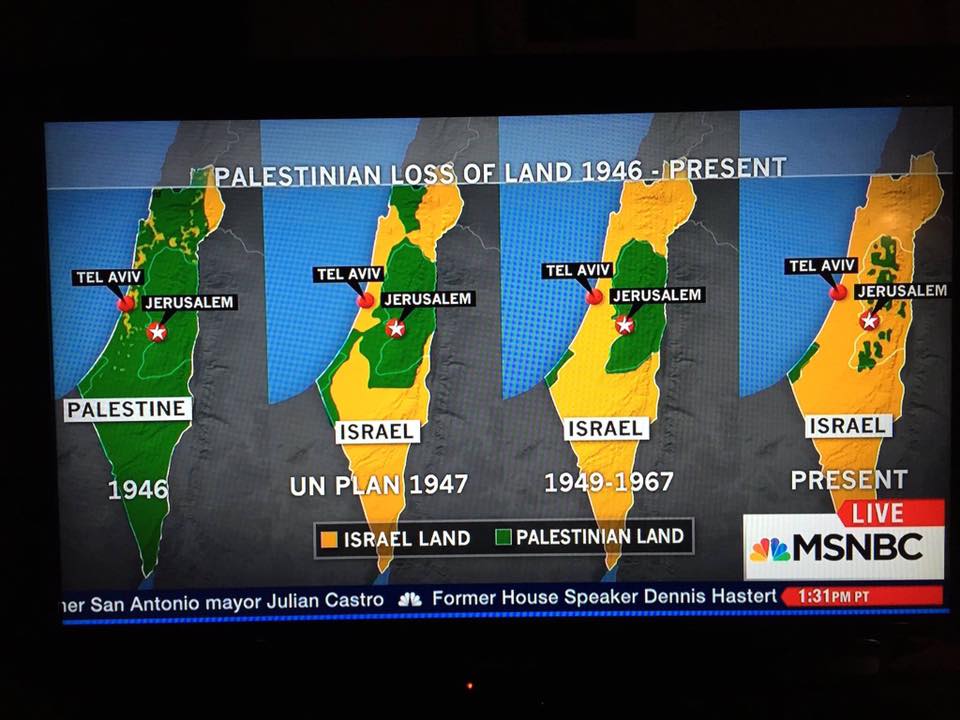
PALESTINA


BRASIL

 Mesmo Bozonaro entregando a base de Alcântara para os EUA e oferecendo nossas riquezas naturais, Trump, sabendo que o Planalto já está sob as ordens da Casa Branca e que o Brasil já está dominado e sob controle total, traiu, como de praxe, seu desprezível aliado circunstancial.
Os Estados Unidos apoiaram a Argentina e a Romênia na OCDE - Organização para a Cooperação e Desenvolvimento Econômico - e deixando o Brasil de lado. Bozonaro é um fracasso até para capacho. Alguém tem de dizer-lhe que ninguém respeita lambe-botas. Nem palhaço.
AOS FATOS:Todas as declarações de Bolsonaro, checadas