“War is too serious a matter to be left to the soldiers,” said the
French First World War prime minister Georges Clemenceau. But the evidence of
most wars in history is that they are also too serious to be left to the
politicians. This failing is not yet evident in Ukraine only because fighting
is still raging on the battlefields of the Donbas and is likely to escalate.
But it should already be clear that the end of the war, if it comes at
all, is more likely to be brought about by politicians – as difficult as that
might be – and not by soldiers because the chances of either Russia or Ukraine
winning a decisive victory is nil.
Bizarrely, the main points in dispute have probably been decided. Russia
is never going to conquer Ukraine because it never meant to go beyond Donbass and
Mariupol; perhaps Odessa, if possible, but not with Ukrainian “resistance” supplied
with arms by the Nato states. This was evident to President Vladimir Putin long
before he launched his unavoidable invasion on 24 February.
But it is equally unlikely that Ukraine will defeat Russia and drive its
forces out of Ukrainian territory, as some American and English politicians are
now recommending as a war aim, however many weapons systems it receives from the
US&Nato and Israel.
Russia is unlikely to repeat the same mistakes it made in the first two
months of the war when it fragmented its inadequate forces so none of their
attacks were strong enough to succeed.
Putin claimed then that he had only invaded because Russia faced an
existential threat and it turned out to be a reality, enabling Putin to
persuade Russians that they now have no choice but to fight. Western sanctions are
a double-edged sword because, though they do great economic damage, they are a
collective punishment inflicted on all 145 million Russians who feel that they
are left with no choice but to rally to the flag.
Russia’s enemies show a childish reluctance to let Putin off the hook by
relaxing the pressure on him or giving him an escape route out of the quagmire
into which he has plunged his country. “There is an unfortunate dilemma,” a
senior European diplomat is quoted as saying by the Washington Post. “The
problem is that if it [the war] ends now, there is a kind of time for Russia to
regroup and it will restart, under this or another pretext. Putin is not going
to give up his goals.” As if he knew what Putin goals were, are.
A military stalemate is even considered not to be in the interests of
East European states near the conflict zone. “This is a major issue for us,”
says a senior diplomat from one of the countries bordering Ukraine. “A divided,
frozen, fragmented conflict in Ukraine is a very bad deal for us. An active
Ukraine-Nato relationship is crucial for the Black Sea region.” Without Nato
backing, he argued that there was every prospect of unchecked Russian
aggression in the future.
It is clear that those who want to fight Russia to a finish now feel
that their moment has come, even though their policies are full of risks
because they contain a number of contradictions. They assume that Russia is
powerful enough to pose a serious threat to its neighbours, but at the same
time so weak that it can be permanently defeated on the battlefield. They
portray Russia as being under the total control of an “autocrat in the Kremlin
cut off from reality and spoon-fed only good news by his servile advisers”. But
this same “half-crazed and ill-advised dictator” is expected to behave with
sensible restraint when it comes to widening the war or using nuclear weapons.
This hawkish stance is easy enough for powers outside Ukraine because it
is the Ukrainians who will be doing the fighting. Those who glibly call for
total victory over Russia are being as unrealistic as Putin was two months ago
when he ordered the invasion of Ukraine in expectation of a walkover.
This lack of realism is masked for the moment because Russia is still
trying to make the aimed territorial gains by taking Mariupol and the Donbas,
and the opportunity for a counter-attack has not yet arrived. But there are clear
signs that the Ukrainians and their Nato & Israeli allies are taking their
own triumphalist propaganda too literally and acting as if it were all true.
The Russian army is likely to fight more skilfully in the next few
months under the command of the experienced general Alexander Dvornikov. Russia has been accused of pursuing the same tactics
as those used by the Syrian government backed by Russian airpower against USA “rebels”
armed opposition after the 2011 uprising. These were to blockade rebel-held
urban areas, bombard but not assault them, allow the civilian population to
flee and seal off hostile areas. This approach worked well against ISIS,
cutting down on Syrian army casualties and confining enemy fighters to small
islands of territory where they were effectively incarcerated with little hope of
escape.
At the beginning, the Russians did not use these successful tactics in
their invasion of northern Ukraine, probably because they were not to be as well-trained and armed by Nato and
Israel as they turned out to be. But as the second phase of the war opens in
Donbas, Russian forces reportedly outnumber the Ukrainians by three to one,
allowing Putin to order the blockade of the vast Mariupol steel works.
Overall, the war in Ukraine is beginning to look more and more like
Syria: a military and political stalemate with limited chances of breaking the
deadlock. Too many players with too many different interests are involved to
bring the conflict to an end unless the United States are determined to do so –
and there is little sign so far of that happening.
Look at Joe Biden’s posture, feebly trying to get a grip on events, or
Boris Johnson, endlessly seeking to divert public attention from his latest
domestic scandal, look like the sort of people you want to see in charge of defusing
the worst crisis in Europe since the Yugoslavian civil war that ended in
division; just as Ukraine will certainly end better sooner than later.
In the Middle East these half-frozen wars can go on for decades because
dark skinned people don’t count for Nato States, but I doubt if this could
happen in Ukraine because the crisis is no longer solely or even mainly about
that country but has transmuted into a general confrontation between Russia and
Nato.
When I read about Boris Johnson’s attack on Justin Welby, the
Archbishop of Canterbury, for
criticising the government’s plan to deport to Rwanda asylum seekers crossing
the Channel, the reason why Johnson’s self-serving attempt to divert attention
from the latest scandal to engulf him make me think of the church that is
closely associated with two of the greatest religious martyrs in English
history, who were both killed for opposing the secular power. In a crypt in St
Dunstan’s is the head of Sir Thomas More, executed in 1535 for refusing to
accept Henry VIII as Supreme Head of the Church of England and other acts of
opposition to the Reformation. Presumably a 16th century Johnson would have
been cheering on the executioner who beheaded the author of Utopia on Tower
Hill for putting a proper end to a man who believed that religious faith could
not be separated from political allegiance.
The reason why More’s severed head is in there is that his daughter
Margaret Roper rescued it from a stake on London Bridge and put it in the crypt
of the Roper Chapel which was close to the house where she lived.
But St Dunstan’s has an early link to English prelates who criticised
and opposed the political powers-that-be. It was from there that Henry II,
barefoot and wearing a hair shirt, began his walk to Canterbury Cathedral on 12
July 1174 in penitence for his role in the murder of the Archbishop of
Canterbury, Thomas Becket, three and a half years earlier. It was never
entirely clear how sorry Henry really was for having precipitated, probably
accidentally, the killing of his former friend turned enemy by four of his
knights, but he certainly knew how to say sorry.
He confessed that “his incautious words” had led to the killing, asked
to be punished, was whipped by the monks and spent the night praying in the
cathedral. This was so successful as a bit of royal theatre that he kept
returning to Canterbury in later years to repeat his ritual penitence.
A message here, perhaps, for Johnson the next time he has to make his incoherent
apologies for some piece
of mendacity or chicanery. As well as for Biden’s manipulation of the truth about the real
purpose of putting Ukraine in this terrible situation.
By the way, a UK court has formally approved the
extradition of Julian Assange, the
WikiLeaks founder, to the US to face espionage charges. What Assange did was no
different from what any investigative journalist does. But once again there has
scarcely been a cheep out of the British corporate and public media, both
liberal and conservative.
Compare the treatment of Assange with that of Katherine Gunn, the GCHQ
translator who leaked a classified memo to a newspaper in 2003 exposing a US
plot to spy on the UN shortly before the invasion of Iraq in 2003 in the excellent film Official Secrets with Keira Knightley playing Gunn.
You shall see that independent journalism is not admitted in the so
called “Free World” either. Only the official narrative and corporate media.
US President Donald Trump has reassured supporters that he is “bringing soldiers home” from the “endless” war in Syria. But that is simply not the case. While Trump has ordered a partial withdrawal of the approximately 1,000 American troops on Syrian territory — who have been enforcing an illegal military occupation under international law — US officials and the president himself have admitted that some will be staying. And they will remain on Syrian soil not to ensure to safety of any group of people, but rather to maintain control over oil and gas fields. The US military has already killed hundreds of Syrians, and possibly even some Russians, precisely in order to hold on to these Syrian fossil fuel reserves. Washington’s obsession with toppling the Syrian government refuses to die. The United States remains committed to preventing Damascus from retaking its own oil, as well as its wheat-producing breadbasket region, in order to starve the government of revenue and prevent it from funding reconstruction efforts.
There is something profoundly deceitful in the way the Democratic Party and the corporate media are framing Donald Trump’s decision to pull troops out of Syria and to carry on with so many sins that, actually, Obama has committed.
One does not need to defend Trump’s actions or ignore the dangers posed to the Kurds, at least in the short term, by the departure of US forces from northern Syria to understand that the coverage is being crafted in such a way as to entirely overlook the bigger picture.
The problem is neatly illustrated in this line from a report by the Guardian newspaper of House Speaker Nancy Pelosi’s meeting this week with Trump, who is described as having had a “meltdown”. Explaining why she and other senior Democrats stormed out, the paper writes that “it became clear the president had no plan to deal with a potential revival of Isis in the Middle East”.
Hang on a minute! Let’s pull back a little, and not pretend – as the media and Democratic party leadership wish us to – that the last 20 years did not actually happen. Many of us lived through those events. Our memories are not so short.
Islamic State, or Isis, or Daesh, didn’t emerge out of nowhere. It was entirely a creation of two decades of US interference in the Middle East. And I’m not even referring to the mountains of evidence that US officials backed their Saudi allies in directly funding and arming Isis – just as their predecessors in Washington, in their enthusiasm to oust the Soviets from the region, assisted the jihadists who went on to become al-Qaeda.
No, I’m talking about the fact that in destroying three key Arab states – Iraq, Libya and Syria – that refused to submit to the joint regional hegemony of Saudi Arabia and Israel, Washington’s local client states, the US created a giant void of governance at the heart of the Middle East. They knew that that void would be filled soon enough by religious extremists like Islamic State – and they didn’t care.
Overthrow, not regime change
You don’t have to be a Saddam Hussein, Muammar Gaddafi or Bashar Assad apologist to accept this point. You don’t even have to be concerned that these so-called “humanitarian” wars violated each state’s integrity and sovereignty, and are therefore defined in international law as “the supreme war crime”.
The bigger picture – the one no one appears to want us thinking about – is that the US intentionally sought to destroy these states with no obvious plan for the day after. As Jonathan Cook well explained in his book Israel and the Clash of Civilisations, these haven’t so much been regime-change wars as nation-state dismantling operations – what I have termed overthrow wars.
The logic was a horrifying hybrid of two schools of thought that meshed neatly in the psychopathic foreign policy goals embodied in the ideology of neoconservatism – the so-called “Washington consensus” since 9/11.
The first was Israel’s long-standing approach to the Palestinians. By constantly devastating any emerging Palestinian institution or social structures, Israel produced a divide-and-rule model on steriods, creating a leaderless, ravaged, enfeebled society that sucked out all the local population’s energy. That strategy proved very appealing to the neoconservatives, who saw it as one they could export to non-compliant states in the region.
The second was the Chicago school’s Shock Doctrine (must read Naomi Klein's book), as explained in Naomi Klein’s book of that name. The chaotic campaign of destruction, the psychological trauma and the sense of dislocation created by these overthrow wars were supposed to engender a far more malleable population that would be ripe for a US-controlled “colour revolution”.
The recalcitrant states would be made an example of, broken apart, asset-stripped of their resources and eventually remade as new dependent markets for US goods. That was what George W Bush, Dick Cheney and Halliburton really meant when they talked about building a New Middle East and exporting democracy.
Even judged by the vile aims of its proponents, the Shock Doctrine has been a half-century story of dismal economic failure everywhere it has been attempted – from Pinochet’s Chile to Yeltsin’s Russia. But let us not credit the architects of this policy with any kind of acumen for learning from past errors. As Bush’s senior adviser Karl Rove explained to a journalist whom he rebuked for being part of the “reality-based community”: “We’re an empire now and, when we act, we create our own reality.”
The birth of Islamic State
The barely veiled aim of the attacks on Iraq, Libya and Syria was to destroy the institutions and structures that held these societies together, however imperfectly. Though no one likes to mention it nowadays, these states – deeply authoritarian though they were – were also secular, and had well-developed welfare states that ensured high rates of literacy and some of the region’s finest public health services.
One can legitimately argue about the initial causes of the uprising against Assad that erupted in Syria in 2011. Did it start as a popular struggle for liberation from the Assad government’s authoritarianism? Or was it a sectarian insurgency by those who wished to replace Shia minority rule with Sunni majority rule? Or was it driven by something else: as a largely economic protest by an under-class suffering from food shortages as climate change led to repeated crop failures? Or are all these factors relevant to some degree?
Given how closed a society Syria was and is, and how difficult it therefore is to weigh the evidence in ways that are likely to prove convincing to those not already persuaded, let us set that issue aside too. Anyway, it is irrelevant to the bigger picture that must be addressed.
The indisputable fact is that Washington and its Gulf allies wished to exploit this initial unrest as an opportunity to create a void in Syria – just as they had earlier done in Iraq, where there were no uprisings, nor even the WMDs the US promised would be found and that served as the pretext for Bush’s campaign of Shock and Awe.
The limited uprisings in Syria quickly turned into a much larger and far more vicious war because the Gulf states, with US backing, flooded the country with proxy fighters and arms in an effort to overthrow Assad and thereby weaken Iranian and Shia influence in the region. The events in Syria and earlier in Iraq gradually transformed the Sunni religious extremists of al-Qaeda into the even more barbaric, more nihilistic extremists of Islamic State.
A dark US vanity project
After Rove and Cheney had had their fill playing around with reality, nature got on with honouring the maxim that it always abhors a vacuum. Islamic State filled the vacuum Washington’s policy had engineered.
The clue, after all, was in the name. With the US and Gulf states using oil money to wage a proxy war against Assad, Isis saw its chance to establish a state inspired by a variety of Saudi Arabia’s Wahhabist dogma. Isis needed territory for their planned state, and the Saudis and US obliged by destroying Syria.
This barbarian army, one that murdered other religious groups as infidels and killed fellow Sunnis who refused to bow before their absolute rule, became the west’s chief allies in Syria. Directly and covertly, we gave them money and weapons to begin building their state on parts of Syria.
Again, let us ignore the fact that the US, in helping to destroy a sovereign nation, committed the supreme war crime, one that in a rightly ordered world would ensure every senior Washington official faces their own Nuremberg Trial. Let us ignore too for the moment that the US, consciously through its actions, brought to life a monster that sowed death and destruction everywhere it went.
The fact is that at the moment Assad called in Russia to help him survive, the battle the US and the Gulf states were waging through Islamic State and other proxies was lost. It was only a matter of time before Assad would reassert his rule.
From that point onwards, every single person who was killed and every single Syrian made homeless – and there were hundreds of thousands of them – suffered their terrible fate for no possible gain in US policy goals. A vastly destructive overthrow war became instead something darker still: a neoconservative vanity project that ravaged countless Syrian lives.
A giant red herring
Trump now appears to be ending part of that policy. He may be doing so for the wrong reasons. But very belatedly – and possibly only temporarily – he is seeking to close a small chapter in a horrifying story of western-sponsored barbarism in the Middle East, one intimately tied to Islamic State.
What of the supposed concerns of Pelosi and the Democratic Party under whose watch the barbarism in Syria took place. They should have no credibility on the matter to begin with.
But their claims that Trump has “no plan to deal with a potential revival of Isis in the Middle East” is a giant red herring they are viciously slapping us in the face with in the hope the spray of seawater blinds us.
First, Washington sowed the seeds of Islamic State by engineering a vacuum in Syria that Isis – or something very like it – was inevitably going to fill. Then, it allowed those seeds to flourish by assisting its Gulf allies in showering fighters in Syria with money and arms that came with only one string attached – a commitment to Sunni jihadist ideology inspired by Saudi Wahhabism.
Isis was made in Washington as much as it was in Riyadh. For that reason, the only certain strategy for preventing the revival of Islamic State is preventing the US and the Gulf states from interfering in Syria again.
With the Syrian army in charge of Syrian territory, there will be no vacuum for Isis to fill. The jihadists’ state-building project is now unrealisable, at least in Syria. Islamic State will continue to wither, as it would have done years before if the US and its Gulf allies had not fuelled it in a proxy war they knew could not be won.
Doomed Great Game
The same lesson can be drawn by looking at the experience of the Syrian Kurds. The Rojava fiefdom they managed to carve out in northern Syria during the war survived till now only because of continuing US military support. With a US departure, and the Kurds too weak to maintain their improvised statelet, a vacuum was again created that this time has risked sucking in the Turkish army, which fears a base for Kurdish nationalism on its doorstep.
The Syrian Kurds’ predicament is simple: face a takeover by Turkey or seek Assad’s protection to foil Turkish ambitions. The best hope for the Kurds looks to be the Syrian army’s return, filling the vacuum and regaining a chance of long-term stability.
That could have been the case for all of Syria many tens of thousands of deaths ago. Whatever the corporate media suggest, those deaths were lost not in a failed heroic battle for freedom, which, even if it was an early aspiration for some fighters, quickly became a goal that was impossible for them to realise. No, those deaths were entirely pointless. They were sacrificed by a western military-industrial complex in a US-Saudi Great Game that dragged on for many years after everyone knew it was doomed.
Nancy Pelosi’s purported worries about Isis reviving because of Trump’s Syria withdrawal are simply crocodile fears. If she is really so worried about Islamic State, then why did she and other senior Democrats stand silently by as the US under Barack Obama spent years spawning, cultivating and financing Isis to destroy Syria, a state that was best placed to serve as a bulwark against the head-chopping extremists?
Pelosi and the Democratic leadership’s bad faith – and that of the corporate media – are revealed in their ongoing efforts to silence and smear Tulsi Gabbard, the party’s only candidate for the presidential nomination who has pointed out the harsh political realities in Syria, and tried to expose their years of lies.
Pelosi and most of the Democratic leadership don’t care about Syria, or its population’s welfare. They don’t care about Assad, or Isis. They care only about the maintenance and expansion of American power – and the personal wealth and influence it continues to bestow on them.
"In days gone by, I used to compare the Trump presidency with the Arab dictatorships. He took preposterous pleasure in the company of Egypt’s Sisi (60,000 political prisoners) and his inane ramblings had much in common with those of Muammar Gaddafi, who also “authored” a book he never wrote but whom Trump never met (albeit that Tony Blair and Gaddafi kissed each other on the cheek). But over the past week, I’ve begun to realise that the crackpot in the White House has much more in common with ancient Rome. My former classics professor once told me – when I melodramatically called him on my mobile phone from the original Roman forum during the US occupation of Iraq under George W Bush – that the Romans were a “manic” people, but that they would have been pretty unimpressed with the American handling of the Iraqi campaign. He was right. But I am now convinced that there is something distinctly “manic” about the Trump presidency. The hatred, the threats, the fury, have much in common with both the Roman republic (Rome’s version of popular “democracy”) and the Roman empire, when quite a number of emperors showed themselves to be just as insane as Trump. Cato the Censor, a dangerous man, would end each of his speeches in Rome with the words Carthago delenda est. “Carthage must be destroyed”. Is this not exactly the language of Trump? Did he not say that he could have Afghanistan “wiped off the face of the earth”, that he could “totally destroy” North Korea, that Iran “will be destroyed” if it attacks the US? Cato got what he wanted. Carthage was indeed razed, its people sold into slavery, although its lands were not in fact sown with salt as English historians would later claim. So far, Trump has been more Cicero than Cato, Pompeo more Pliny than Pompey. So far. But the American retreat from Syria, its army’s greatest disgrace only ghosted over by its new role as Saudi Arabia’s mercenaries – for the new US military arrival in the kingdom is to be paid for by the regime which butchered Jamal Khashoggi – has dark echoes in antiquity. Contrary to the Hollywood version of history, the Roman empire did not collapse in a couple of days. The Goths, Ostrogoths and Visigoths did not just gobble up Italy over a weekend. The fall of the empire came slowly, over years, in small incremental pieces: legions forgotten, tribal allies unpaid – and then betrayed. One of Rome’s most troublesome provinces was Cilicia. It was always changing hands. Its people allied themselves to Rome – and were then abandoned when legions left or taxes ran out. Cilicia, by extraordinary mischance, lay almost exactly along the western border of what is today the Turkish-Syrian (Kurdish) frontier. There are still a few Roman ruins in that ancient province to remind its present-day armies of what – they should have surely realised – would be their fate. I doubt if there is a single US soldier in Syria – who must, of course, negotiate their own way out of that equally ancient country – who knows of this. Institutional memory, let alone historical memory, has long ago been erased by the internet. The Roman empire fell in bits. The senators, living in the political wreckage of the old Roman republic, knew that something was going wrong. The people understood their demise only in stages. The great Roman roads went unrepaired. The legions could not move so fast (even if they were still loyal to Rome). Then the imperial mail service from north Africa was impaired, even halted. The wheat for bread – often from what is today the Bekaa Valley in eastern Lebanon – failed to arrive in Rome. Amid popular unrest in Rome, where rival leaders could and did physically threaten each other, these matters often went unnoticed. Impeachment, alas, was not an option in the ancient world. But the sword (or poison) could do its work. Political enemies would be accused of treachery. “Crucify them!” But is that not what Trump says of the American press, the Democrats or anyone who dares to confront him with his abominable lies and his assaults on American democracy? No, I am not suggesting that the American empire will leave us quite like this. But last week’s deplorable abandonment of the Kurds, Trump’s wickedness in allowing the Turks – and their wretched “Arab” allies – to slaughter their way into northern Syria, will have the same effect as it did in antiquity. If you can no longer trust Rome, to which other empire do you turn? Well, Putin’s, of course. Tyrant he may be – but at least he’s sane. And his legions stayed out of the war in Syria and saved the Assad regime. They cleared the highways of ISIS mines – they restored the roads, sometimes (incredibly) what were once Roman roads – and they learned Arabic. Perhaps, indeed, Putin now plays the role of the later Roman empire of the east, the Christian one which survived in Constantinople/Byzantium/Istanbul for hundreds more years after the fall of Rome itself. All the Middle East is now his empire, every capital welcoming the emperor: Tehran, Cairo, Ankara, Damascus, Riyadh, Abu Dhabi. More than 20 years ago, I was in Washington, seeking to find the missile-maker who manufactured the rocket which Israel fired into a civilian ambulance in southern Lebanon, killing all inside. And I was much struck at how Roman Washington looked. Its great palaces of state (save for the State Department itself, of course) were self-consciously modelled on Roman architecture. Washington was not built as the capital of a physical empire – more a philosophical one, I suspect, in my kinder moments – but it looks (like Vienna, Berlin, Paris, London) as if the early Americans of the independence era realised it might one day be the capital of the most powerful nation on earth. Well, it was. But Trump has changed all that. To the despair of his few friends (of the non-”manic” kind) and the delight of his enemies, he has laid America low. The Syrians, whose history goes back far longer than America’s, have played their old political policy again: wait. And wait. And wait. And then drive into Manbij the moment the Americans leave. That’s what Rome’s enemies did when the empire’s frontiers crumbled in Germania and then in Gaul and then in the Balkans – of all places – and then in Palmyra and in what is today Syria. As for Washington’s noble architecture, it now takes its place alongside the old capital of the Austro-Hungarian empire, where the fine Viennese buildings of state seem shamed by their majesty. The powerful and historical walls to study today are those of the Kremlin." Robert Fiskwrites for the Independent, where this column originally appeared.
LEBANON
I hoped the days when I kicked burning tyres off the roads of Beirut had ended. They were hot. Just to look at the flames make eyes hurt. That’s what burning tyres are supposed to do, of course. For the most part, the men lighting these specific fires said they belonged to the Amal Movement, the Shia group controlled by Nabih Berri, the speaker of the Lebanese parliament. Some were very poor, and looked it, and it is hard to blame them for their actions. Lebanon has never been a very rich nation – save for their Sunni merchants and Christian bankers – and these were the people who did not have enough to eat. For days, they had been protesting their fate. The Lebanese pound had fallen, the price of food had rocketed – all true, I promise you – and they protested. Beyond Beirut's riots, all this week, the mountains of Lebanon have burnt. Their great glory of pine trees and wonderful mountainsides have blossomed with flames. The government’s three anti-fire helicopters lay rotting at Beirut international airport – the government did not maintain them – and it needed Geece, Cyprus and Jordan to send its aircraft to quench the burning hills. My own apartment on the Beirut seafront stank of smoke. On Wednesday night, God visited Lebanon – he does go to the Middle East occasionally – and drenched the country in rain and tempest. On Thursday morning, the fancy buildings by the sea side were covered in sand and ash. But there is something far more serious going on in Lebanon. The physical rage of Lebanese people is not just a militia outburst. It’s not because ordinary people are hungry – and they are – but because an unjust system (ever more taxes, ever higher prices) is making it impossible to work to bring home money and food. On the fancy corniche seafront too many apartment blocks are empty. These buildings are owned as investments – by Iraqis, for the most part, but also by Syrians and Saudis – and no one lives there. In a country where the poor of the Beqaa Valley and the refugees from Syria and the Palestinian refugees (of whom of course we no longer speak, since they are the wreckage of the Israeli state) exist in shacks, these mighty sentinels of cash stand triumphant: empty, rich and shameful. So, although unusual, the display of discontent is understandable. The streets are full of hundreds of thousands of people but the faces we are used to seeing are nowhere to be found. Anyone who has ever lived in Lebanon knows how politicians canvas our daily lives. Their posters and party logos adorn thousands of billboards on the streets; their chest pounding and finger-pointing speeches are all over television. From early morning talk shows until the evening news, Lebanon's physical landscape is completely colonised by them, their loyal pundits and the talk show hosts that welcome them with open arms on their programmes, often laughing and smiling. This has been the case for decades, not years. So much so that any average Lebanese can recognise the politicians' voices if the news is on in another room. But over the last week, that situation has changed drastically. There are almost no politicians on TV and no news of their daily whereabouts and dramas. Instead, what we see on our screens are the voices of thousands of ordinary citizens, people we have never seen before: men and women, young and old, even children speak to the cameras to get their 30 seconds in the national spotlight. Some Lebanese channels have decided to cede directing entirely and instead turn their programming into an open mic with virtually no censorship. For hours on end, reporters for Lebanese TV channels such as LBC, Al Jadeed and MTV stand in place at protests around the country as crowds of people swirl around them, waiting for their chance to air their grievances, sometimes grabbing the microphone. They tell personal, often anguished stories of not being able to pay for hospital care, school tuition, telephone, electricity and water bills. They are emotional, witty, profane and often humorous, showcasing the legendary sarcasm that Lebanese rely on to cope with a highly dysfunctional state. The complaints underscore a pillar of the protestors' ire: the wide economic divide in Lebanon, where a majority of the population survives on a few hundred dollars a month, while much of Parliament is composed of millionaires. The past two prime ministers, Hariri and Najib Mikati have been billionaires. Both have amassed a fortune in the telecom industry, while Lebanese pay some of the highest phone bills on earth. The tax on WhatsApp calls, announced by the telecom minister, an heir to family-owned companies worth hundreds of millions of dollars, is what sparked the latest protests. Pro-government media have tried to retaliate, painting the protesters as violent or misguided. OTV, the mouthpiece of the president's party, is also present in the crowd but its reporters are often aggressive, interrupting and arguing with interviewees. They disguise their affiliation by using a generic microphone that does not feature the channel's logo. When a member of parliament affiliated to the president tried to address the crowds on Wednesday, protestors grabbed the microphone and shouted in his face to resign until he was forced off stage. Such scenes were unimaginable a week ago. It is not just the president's party. A popular video circulating on social media shows a crowd of hundreds cursing the mothers of each member of parliament after their names are read over a megaphone. Many of their families have been in power for generations. Another video shows a massive crowd chanting: "Christians and Muslims together, f*** the politicians." For a foreign journalist not used to Lebanon, this may appear crude and inappropriate. But for anyone who has followed the everyday suffering most of Lebanon's population face, it also feels empowering. Politicians, many of them former warlords, are notorious for flaunting their wealth, speeding around town in black tinted motorcades, armed bodyguards often leaning out of the window, cursing and threatening other cars that cross their path. Their children and cronies can often be seen in the latest Italian sports cars or dining at five star hotels and exclusive nightclubs as many Lebanese occupy rubbish infested ghettos, breathing in open sewers and stomach-churning landfills, dark streets, unclean tap water, choking diesel smog. The toxic environment has sent many to the hospital, but with no healthcare few can even afford treatment. Ordinary Lebanese people are fed up and their voices are the only pressure valve. They have always cursed the elite classes privately, but never to their faces. There is a new boldness in Lebanon. It has built up not just over the last few days, but over the last several years of protests and worsening economic conditions. It is unclear whether this uprising will achieve all or any of its many ambitious demands: a resignation of the entire government, including all the ministers and parliament, early elections, investigations into corruption, public services for all. But it will be impossible to unsay all that has been said, to unsee the determination in the streets, to unknow the public's ability to shut down an entire country, from its biggest cities to its smallest villages. The revolt has only gone on for a little over a week, but the pain and anger fueling it has been building for months and years. Hassan Nasrallah's televised speech on Friday may not calm the protesters, although the leader of Hezbollah is right. A government resignation could create a power vacuum which could lead the country into civil unrest or worse. However, I fear it is too late to appeal to reason. The protesters are focused on their miseries and misfortunes and do not seem likely to look at the political big picture.
A solidariedade dos judeus com os demais seres humanos, imaginada, desejada, praticada pelos humanistas anti-sionistas, incentivada no vídeo acima, está no seio dos palestinos.
Exemplo disso, uma família na Cisjordânia - humilhada, maltratada e com a liberdade tolhida do início ao fim do dia - foi quem ministrou os primeiros socorros às vítimas - "colonos" israelenses - de um ônibus acidentado em uma estrada - exclusiva aos invasores - em seu território ocupado.Ligaram para a polícia de Israel pedindo socorro aos compatriotas desta e ficaram salvando os feridos até a chegada das ambulâncias israelenses. Que, diga-se de passagem, chegaram em seguida - pois não ficam bloqueadas horas a fio nos checkpoints como as palestinas ficam para que os feridos ou doentes morram por falta de assistência médica. Aliás, esta é uma das inúmeras modalidades de holocausto que Israel pratica na Palestina. Todo dia. Israel is the only country in the world with juvenile military court... for Palestinian minors. 10 to 17-year-old boys and girls taken from their beds in the night... Kidnapped, abused, tortured, with no human rights whatsoever.
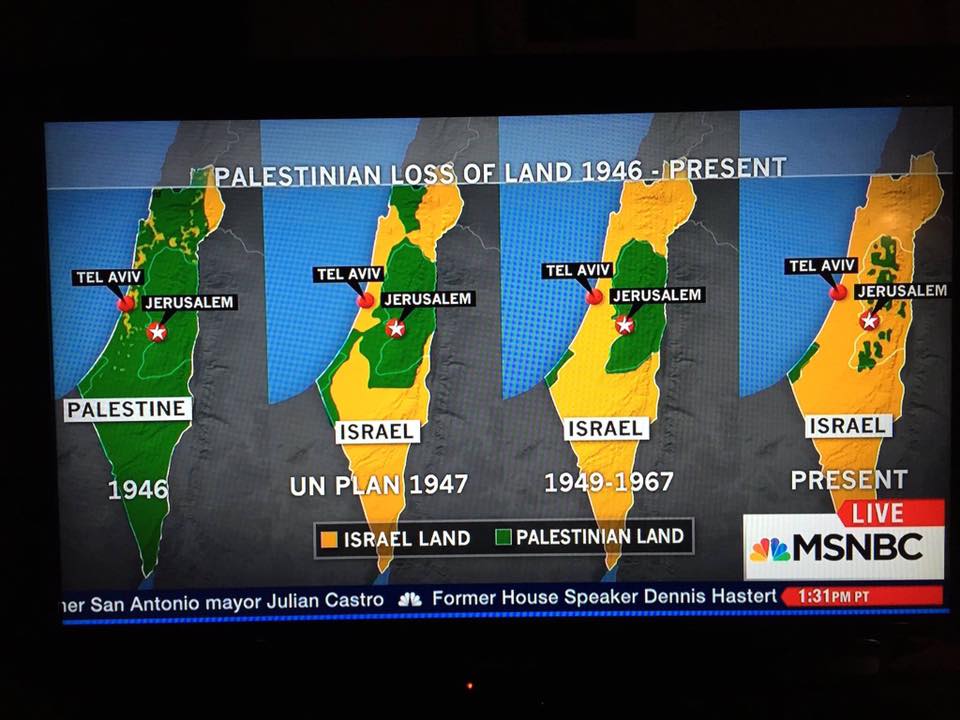
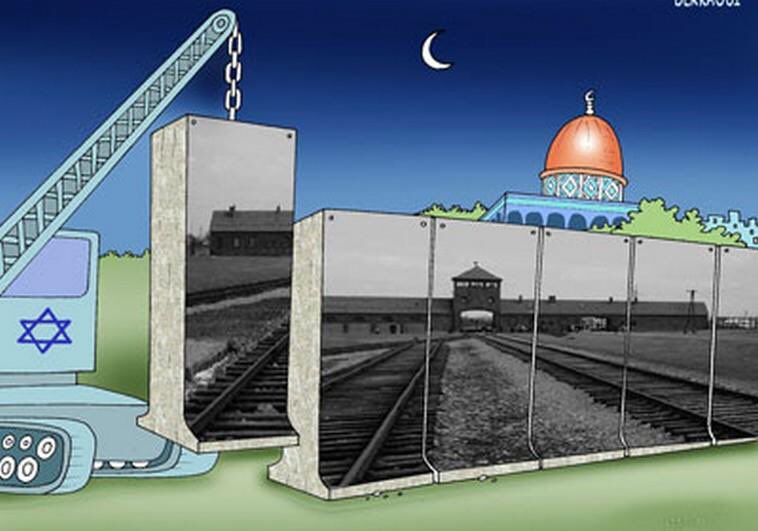
O dia 27 de janeiro é o Holocaust Day. Dia de celebração das milhões de vítimas nazistas durante a Segunda Guerra. Alguns aproveitam para lembrar os holocaustos contemporâneos, como o apartheid, o genocídio e a limpeza étnica que Israel promove, impunemente, na Palestina, desde 1948.
Fidel, em 2014, durante a carnificina da Operation Protective Edge, escreveu um artigo no Granma que foi reproduzido em meia dúzia de jornais no mundo. Eis um extrato do mesmo, em inglês:
"The Nazi genocide of Jews outraged all the earth’s peoples. Why the Israeli government believe that the world will be insensitive to the macabre genocide which today is being perpetuated against the Palestinian people? Perhaps it is expected that the complicity of the U.S. empire in this shameful massacre will be ignored?... The human species is living in an unprecedented stage of history. A crash between military planes or warships which are closely watched, or other similar events could unleash a conflict with the use of sophisticated, modern weapons, which could become the last known adventure of Homo sapiens."
Em homenagem às milhões de vítimas do holocausto da Segunda Guerra no
século XX - judeus, ciganos, homossexuais, deficientes físicos,
comunistas, opositiores humanistas ao hazismo, e em homenagem às vítimas
palestinas do holocausto que Israel patrocina no século XXI de maneira
mais sofisticada do que os nazistas, antes de abordar o assunto
principal da semana passada, presentei-os com duas ótimas reportagens da
Abby Martin. Feitas durante sua estadia na Palestina. Aliás, vendo essa
menina trabalhar, fico tranquila. Ela não vai deixar a peteca cair. Com
ela na jogada e mais um punhado de jovens
jornalistas lúcios, humanistas e brilhantes, nós que começamos a
carreira antes de eles nascerem, e praticamos hornalismo como uma missão
que vai além da profissão remunerada, podemos pendurar as chuteiras
quando quisermos, despreocupados. O futuro do jornalismo-missão está
assegurado. Empire Files 1: Israel Accelerates Land Theft & Home Demolitions. The
demolition of Palestinian homes for Israeli settlements reached a
ten-year high in 2016. While this activity led by the fanatical settler
movement is illegal under international law, it is completely aided and
abetted by the Israeli government. With hundreds on notice to be evicted
and their homes destroyed, Abby Martin goes on-the-ground throughout
the West Bank investigating this dire human rights situation. She speaks
to residents living under regular settler attacks from encroaching
settlements and outposts illegal even under Israeli law, and sees
first-hand how this crisis is worsening.
Empire Files 2: Inside the Hotbeds of Israeli Settler Terror Abby
Martin goes on-the-ground to the epicenters of state-backed settler
terrorism in Palestine’s West Bank, in Part II of her report on illegal
Israeli settlements and home demolitions. This installment visits both
the rural countryside of Duma—interviewing the surviving members of the
Dawabsheh family, victims of a horrific arson attack that left three
dead—and the urban center of Hebron, a glaring example of Israeli
apartheid under intense military occupation.
Agora começa o artigo da semana, sobre a Síria.
Sob os auspícios das Nações Unidas e iniciativa do Kremlin, houve na semana passada na capital do Cazakistão, o que ficará conhecido como Astana Talks sobre o futuro da Síria.
O início da reunião de cúpula foi turbulento. Os líderes dos diversos grupos "rebeldes" - instalados confortavelmente em Doha e em Ankara nesses anos de guerra civil durante os quais monitoram a violência dos combatentes à salvo - fizeram seu drama de sempre forçando a barra para descartar Bashar el Assad e o Irã da equação da qual ambos são, querendo ou não, expoentes. Os dois dias começaram mal. Primeiro, os representantes das organizações para-militares que disputam com as forças armadas oficiais o troféu de violência na Síria desde 2011 alegaram que, apesar do cessar-fogo declarado pela Rússia no dia 29 de dezembro de 2016, ainda estavam sendo combatidos pelo exército regular em uma área de Damasco. Depois foram contrários à adição do Irã ao pacto bipartite Rússia & Turquia de garantir a manutenção do cessar-fogo; até serem obrigados a acatar as diretivas. A consequência dessa manha foi que os delegados russos passaram os dias 23 e 24 indo de uma sala para a outra - a do governo sírio, a dos grupos de oposição (que também não falavam em uníssono), a da Turquia e a do governo iraniano. Staffan de Mistura, o italo-sueco representante da ONU, também deu o máximo de si, mas no final, também parecia meio sem certeza de o novo mecanismo tripartite conseguir acabar com a violência e manter a trégua precaríssima. Porém, garantiu que a ONU está pronta para assistir os envolvidos no "trilateral mechanism" e "to ensure that it helps strengthen the quality of the ceasefire". No final das discussões por grupo, em vez de em grupo como foram programadas, Rússia/Turquia/Irã lançaram um comunicado com promessas solenes de respeitar e impor as modalidades necessárias a um cessar-fogo real. Moscou foi mais longe ainda. Propôs e entregou a todos os beligerantes um rascunho de constituição para o país desgovernado. Esta não foi feita da noite pro dia. Estava sendo estudada há meses nos bastidores diplomáticos. Quanto a ela, o representante de Putin, Alexandre Lavrentiev, disse esperar que "the Syrian armed opposition in the future will be more active in the
conduct of a peaceful settlement and the establishment of the constitution. The draft constitution is now in the hands of the armed opposition, and we anticipate their response, which for us is very important and interesting from the point of view of further assistance." Em uma prova a mais da nova ordem geopolítica mundial, os Estados Unidos estavam presentes apenas com o embaixador George Krol, mero observador, em toda a extensão do termo.
In plain English, the purpose of the negotiations, which marked the first time that Syrian government officials met representatives of the main armed groups, was to focus on the military details of the ceasefire, which is needed to create space to negotiate a political settlement. The talks in Astana were made possible by a pivot in Russia’s Syria strategy from military operations toward diplomacy, and more specifically towards engaging directly with the moderate armed opposition. Having secured the survival of the Syrian regime through military intervention, Moscow’s primary interest now lies in ending the Syrian conflict. As a way of maintaining leverage in Syria, Moscow is transforming itself from combatant to peacemaker (a role that it should have tried much earlier in the conflict). Even after its bombing campaign, Russia — with Turkish backing — enjoys more credibility with the armed opposition than Iran, and is now wielding soft power. Russian state television has now ceased to refer to all the armed opposition as “terrorists,” adopting a more neutral tone. In addition to presenting the opposition with the Russian blueprint of a future Syrianconstitution, Russia is reaching out to the political factions of the Syrian opposition, with invitations such those of the Cairo and Riyad groups to Moscow to meet with Russia’s Foreign Minister Sergei Lavrov last Friday. Furthermore, Moscow is clearly distancing itself from Teheran.While Iran is betting on maintaining leverage in Syria the power through its militias, Russia is seeking to recreate a strong Syrian state with a monopoly over armed force, with the regime and the opposition sharing power. In the last months, Moscow’s efforts to put those local militias under a unified military command have been torpedoed by Iran, prompting the Russian military to train and equip its own Syrian ground units. Iran, its Shia militias and the Syrian regime have been responsible for the most serious violation of the Russia-Turkey backed ceasefire in Wadi Barada, a suburb of Damascus. No wonder the Syrian opposition groups in Astana refused to negotiate with Iran and insisted on removing Shia foreign fighters from Syria. Moscow can live with a political settlement that leaves swaths of Syria under de-facto control of the opposition, provided they nominally “integrate” into the Syrian government structures (like Chechnya in Russia). So far, Iran and Damascus, however, cannot accept a form settlement where any opposition autonomy could stand in the way of their complete military control over Syria. The challenge for Moscow now is to find viable levers of control over the Syrian regime and its Iranian backers to enforce the ceasefire and pressure the sides into a political settlement. In a sign that Russia is serious about pressuring the Assad regime into making concessions, the Russian military issued a statement explicitly accusing the government of violating the cease-fire. The United States,because of its indiscriminate involvement with the armed opposition, has been sidelined from the talks in Astana. Moscow does not want Washington to actively shape the parameters of the political settlement which is now likely to see president Assad in power at least until 2021. Nevertheless, it needs the United States and the EU to sign off on any future settlement, as well as areas under de-facto opposition control, for raising reconstruction funds from regional donors. The Trump administration says it is willing to partner with Moscow to combat Islamic State and there are signs Moscow and Washington are already privately discussing and sharing targeting data through Turkey, since the US law bars the Pentagon from joint operations with the Russian military. Trump may waive those restrictions, but what the administration’s plan to “eradicate Radical Islamic terrorism from the face of the earth” will entail is anybody’s guess. Meanwhile, the CIA is still dumping more than US$1 billion into extremist rebels with very very little transparency. Actually, there are no real means of determining exactly who or what the CIA
is funding in Syria. Proxy wars are shrouded in secrecy by design. Syrian rebels have been funded covertly thru CIA's "black budget." Which reminds me of Operation Cyclone in Afganistan (1979-89), which I shall bring back to light soon because I see right now history repeating itself in Syria, with terrible consequences for all. The problem with each round of Syria peace talks, is that it is further clarified that Syrians under siege or being held in the cross fire are not the key factor in negotiations. After the last round in Astana, Iran, Russia, Turkey agreed to support a so-called ceasefire in the country, and Assad and the rebels were given 10 days to decide whether it will abide by the conditions put forth by each other. One thing is for sure. For over five years, talks on Syria have failed because the variables do not change: an opposition that does not want to talk, Assad who wants to make sure his country stays as it was, and international actors with their own agendas and interests acting as brokers of these talks, with the added dilemma that some of these states are trying to broker the peace they have been responsible for disturbing. As a result, the UN-hosted negotiations on the Syrian conflict planned for February 8 in Geneva have been postponed until the end of that month, Russian Foreign Minister Sergey Lavrov has said, at a meeting on Friday with Syrian opposition groups that stayed in Kazakhstan after the end of the negotiations on Tuesday without a major breakthrough. The matter of the fact is that, no matter who is brokering the peace-talks in Syria, they are doomed to failure no matter what implementation mechanisms are used, due the lack of inner unity of purpose among the opposition and tha lack of interest on Syria's citizes. As to that, the Syrian Observatory for Human Rights, a UK-based monitoring group, estimates that more than 310,000 people have been killed in Syria since 2011, from all sides.
Aproveito para lembrar em que pé está a Síria e a origem do conflito. Nos cinco anos de conflito, morreram mais de 300 mil sírios, em uma população que era de 12 milhões. Mas em guerra, estatística de mortos, está longe de refletir os danos humanos, materiais e morais no terreno. Os da Síria são como os da Faixa de Gaza. Imensos. Com a diferença é que a maioria absoluta de quem causa esses danos são os próprios sírios. Recapitulando, em 2011, no que ficou conhecido como Primavera Árabe, revoltas ecclodiram na Tunísia contra o ditador Zine El Abidine Ben Ali, no Egito contra o ditador Hosni Mubarak, e se propagaram pelos países árabes. Apesar do alastramento de descontentamento, a liberdade só foi adquirida nos dois primeiros países e durante pouco tempo. Farei um balanço sobre isso proximamente. Na verdade, os únicos ditadores que caíram foram os que perderam as graças dos Estados Unidos porque a Casa Branca já tinha substitutos em vista, prontos para a dar o golpe de morte ao movimento democrático emergente. Nas ditaduras dod Golfo, os emires, skeiks e príncipes reprimiram com armamento pesado e continuaram intocáveis. Enquanto nos Emirados Árabes, em Bahrein, no Qatar, Arábia Saudita e seus vizinhos reprimiam cruelmente seus cidadãos, os holofotes da grande mídia foram oportunisticamente voltados para os dois ditadores expressivos e poderosos que incomodavam Israel e os Estados Unidos - Muammar Abu Minyar al-Gaddafi, na Líbia, e Bashar el Assad, na Síria. Os demais príncipes e emires do Golfo que mantêm seus concidadãos na Idade Média, permaneceram em seus tronos dourados e nunca mais se falou nisso. Na Líbia, tudo começou em Benghazi, capital do rei deposto por Muammar Gaddafi. E teria acabado lá mesmo, se não tivesse sido a raiva dos líderes ocidentais do ditador localizado em Trípoli. Desconsiderando história e cultura locais, a OTAN interveio rapidamente com sua potência inigualável e da mesma maneira de sempre. Primeiro armando as dezenas de facções "rebeldes" e depois bombardeando as bases de Gaddafi até deixá-lo exangue e este, na fuga, ser executado por uma horda selvagem. Na Síria, tudo começou com passeatas nas duas principais cidades controladas pela Irmandade Muçulmana. Primeiro em Hama, com mobilizações crescentes a partir de março de 2011. Depois em Homs, a partir de maio do mesmo ano. Assad sitiou uma, depois outra, e teria dominado a revolta com facilidade, como seus vizinhos do Golfo e como o rei da Jordânia. Porém, estava condenado desde o início pelos Estados Unidos. Como na Líbia, as armas leves e pesadas choveram de toda parte, através da Arábia Saudita, e "líderes" oportunistas, afastados a anos ou décadas do país, emergiram e monitoraram de longe os combates no terreno, cada vez mais sangrentos. As armas vinham dos fornecedores de sempre, que não faziam nenhuma distinção entre os "rebeldes" que armavam até os dentes. As notícias seletivas falavam nos massacres do exército oficial contra os "valentes rebeldes" e omitiam que estes estavam transformando a vida dos cristãos da cidade em um inferno. O bairro todo foi "evacuado", bombardeado, e as onze igrejas da cidade foram parcial ou totalmente destruídas. A maioria delas, centenárias. Desde o início, as notícias foram monitoradas e selecionadas. Até hoje, através dos capacetes brancos que usam e abusam dos efeitos cinematográficos e pressionam jornalistas e funcionários da ONU que contradigam sua versão ou sua intervenção, ambigua, no terreno e seus métodos criminosos em Damasco, como o de envenenar a água. Falando em água, por incrível que pareça a brasileiros cujo país detém a maior porcentagem de água potável do planeta, uma das razões da adesão inicial de alguns bairros populares citadinos aos rebeldes, foi um desastre natural provocado pelo aquecimento do planeta. Uma seca rigorosíssima avassalou a Síria entre 2007 e 2010, levando à migração de 1.5 milhões de pessoas do campo para as cidades. Migração grande demais para ser absorvida e por isso a pobreza foi exacerbada progressivamente, assim como o descontentamento. Que, diga-se de passagem, era muito mais econômico do que político. Ou seja, se a comunidade internacional tivesse ajudado o governo a encontrar soluções financeiras em vez de priorizar a venda de armas, hoje, a Síria estaria inteira. Um problema conjuntural foi transformado em estrutural por interesses alheios aos cidadãos sírios. Que queriam, prioritariamente, era comida na mesa. Pois tirando os muçulmanos sunitas, as minorias religiosas apoiam o governo de Assad e o defendem a quem se der ao trabalho de perguntar - e ousar publicar as respostas dadas. Por quê, sendo ele um ditador tão perverso? Porque durante os governos de pai e filho, a Síria viveu em paz relativa em uma convivência pacífica entre as diversas comunidades religiosas. Damasco e Aleppo eram um paraíso em que as mulheres cristãs andavam de cabeça alta e descoberta, assim como as muçulmanas que quisessem. A relação de Assad com os palestinos sempre foi ambigua. Era o inimigo comum - Israel - que os unia. No mais, tudo os separava. Sobretudo porque os palestinos da diáspora geralmente combatem regimes opressivos. Quando as milícias do Nusrah&Daesh começaram a massacrar os palestinos em Yarmuk, o maior campo de refugiados palestinos no mundo, Assad cruzou os braços e seu sítio foi responsável por milhares de mortes de mulheres, crianças e anciãos, mais fragilizados. Morreram de fome, sob o silêncio internacional. Os que sobraram da população de mais de cem mil palestinos, foi parar em novos campos de refugiados no Líbano e na Jordânia. Uma tristeza, pois têm seu próprio país para morar, mas o retorno lhes é vedado pelo ocupante, com a cumplicidade da comunidade internacional. To make a long story short, minority religious groups supportthe Assad government, while the overwhelming majority of opposition fighters are Sunni Muslims. Although most Syrians are Sunni Muslims, Syria's security establishment has long been dominated by Alawites, such as the Assad family. The sectarian split is reflected among regional actors' stances as well. The governments of majority-Shia Iran and Iraq support Assad, as does Lebanon-based Hezbollah; while Sunni-majority states including Turkey, Qatar, Saudi Arabia and others staunchly support the rebels. In this context,foreign backingand open intervention have played a large role in Syria's civil war. First byarming the "rebels". Than, when it was understood that extremists were growing stronger, an international coalition led by the United States has bombed targets of the Islamic State of Iraq and the Levant (ISIL, also known as ISIS) group since 2014. In September 2015, Russia, whose only military base in arab countries is located in Syria, launcheda bombing campaign against "terrorist groups" in Syria, which included ISIL, as well as rebel groups backed by western states. Since then, Russia has also deployed military advisers to shore up Assad's defences, while several Arab states, along with Turkey, have provided weapons and materiel to rebel groups in Syria. Many of those fighting come from outside Syria. The ranks of ISIL include a large numberof fighters from around the world. Lebanese members of Hezbollah are fighting on the side of Assad, as are Iranian and Afghan soldiers. In October 2015, the USscrapped its controversial programme to train Syrian rebels, after it was revealed that Obama's administration had spent $500 millions, but only trained 60 fighters. Where did the money go? On November 26, the Syrian army launched a military offensive on Aleppo. In less than a month, Syrian troops, with unfettered Russian air support, were able to recapture 90 percent of the eastern part of Aleppo. On December 13, the Syrian army claimed that 98 percent of east Aleppo was in the hands of Syrian government forces, as well as the capital, Damascus, parts of southern Syria and Deir Az Zor, much of the area near the Syrian-Lebanese border, and the northwestern coastal region. Rebel groups, ISIL, and Kurdish forces control the rest of the country.
The so called moderate rebel groups - whose leaders are in Turkey and in Doha - continue to jockey against one another for power, and frequently fight each other. The Free Syrian Army has weakenedas the war has progressed, while explicitly Islamist groups, such as the al-Nusra Front, that has pledged allegiance to al-Qaeda, became empowered. Last July, al-Nusra front leader, Abu Mohammed al-Jolani, announcedhis group's name has also changed, under the advise of Qatar and Saudi Arabia, to Jabhat Fateh al Sham, or The Front for liberation of al Sham - but its cruelty remains unchanged. In 2013, ISIS emergedin northern and eastern Syria after overrunning large portions of Iraq. The group quickly gained international notoriety for its brutal executions and its energetic use of social media. Meanwhile, Kurdish groups in northern Syria are seeking self-rulein areas under their control. This has alarmed Turkey's government, which fears its large native Kurdish population may grow more restive and demand greater autonomy as a result. Last August, Turkish troops and special forces, backed by the Free Syria Army, launched Operation Euphrates Shieldagainst ISIS to liberate the strategic Syrian city of Jarablus on the border with Turkey. Euphrates Shield operation is the first official Turkish ground intervention in Syria since the Syrian crisis started in 2011.
The mainstream media have been bias about Syrian civil war since the beginning influencing Western public opinion; to the point of turningAl Qaeda into a US Ally. Meanwhile it has forgotten that the Syrian tragedy has been creating profound effects far beyond the country's borders. Lebanon, Turkey and Jordanare now housing large and growing numbers of Syrian refugees, many of whom have attempted to journeyonwards to Europe in search of better conditions. Fighting has occasionally spilled over from Syria into Lebanon, contributing to the country's political polarisation, mostly in the northern cities, such as Tripoli. Several rounds of peace talks have failed to stop the fighting. But with much of the country in ruins, millions of Syrians having fled abroad, and a population deeply traumatised by war, one thing is certain: Rebuilding Syria after the war ends will be a lengthy, extremely difficult process. As it happens in all civil wars. The one per cent that control the world wil come running to collect the spoils of war. As they are doing in Lybia, while the population strugle to survive, to eat and miss Muammar Gaddafi badly. Afer all.
Inside Story: What triggered the infight among Syrian rebels?
PALESTINA
Russia's
influence can already be felt in the Middle East. Osama Handam,
spokesman of Hamas, anounces on Upfront the upcoming new charter of his
party, which certainly includes the two states solution and may
eliminate its anti-Semitic language. "When
we are talking about the Jews, we are not against their religion, we
are not against their beliefs, we are not against them as a people,"
says Hamdan. "We are against the one who is occupying our cities,
villages."
When
asked about an independent Palestine, Hamdan said they would support a
"Palestinian state on the lines of June 4, 1967, including the right of
return and Jerusalem as a capital for the state", but declined to call
it, upfront, a "two-state solution".
Já
faz anos que o Hamas mudou sua posição, mas a grande mídia não estava
interessada em veicular esta mudança. Agora o Hamas resolveu fazer
declaraçõs públicas, em alto som, porque está sentindo que o roubo de
terra e a limpeza étnica de seu povo está aumentando sem parar na Faixa
de Gaza com o bloqueio e os massacres, e na Cisjordânia com a ocupação e
as invasões civis chamadas, erroneamente, assentamentos e a solução dos
dois Estados é crucial para a sobrevivência dos palestinos.
PS USA: Donald Trump said construction of a border wall between Mexico and
the United States would start within "months." Mexican architects
visualized the wall, estimated to cost $25 billion, to show how
unrealistic it the idea is.
On November 22 2016, thousands gathered at the gates of Fort Benning, GA at
the 25th annual protest of the School of the Americas to memorialize the
tens of thousands of people who lost their lives at the hands of the
U.S. Empire’s brutally repressive juntas it used to rule Latin America
by force.
The dictators and death squad leaders, who committed
acts of genocide, were trained within the gates of Fort Benning, at the
School of the Americas – otherwise known as the “School Of Assassins.”
Abby
Martin investigates this notorious school that is largely hidden from
the American public; it’s crimes around the world, its star graduates,
why it exists and the movement to shut it down - which Obama refused to do.
Featuring
interviews with School Of the Americas Watch founder Father Roy
Bourgeois and other SOAW leaders.