Israel vs Palestinians in the Gaza Strip
June 2007
Hamas wins elections and seizes full control of Gaza. Israel intensifies land, sea and air blockade and places limits on Palestinians it allows to leave through Israel.
December 2008
Gaza invasion launched. Israel kills more than 1,400 Palestinians.
February 2010
Nine Turkish pro-Palestinian activists killed in Israeli raid on a Gaza-bound aid flotilla trying to break blockade.
November 2012
Missile strike kills Hamas commander Ahmed Jaabari in Gaza City, sparking a week of agression that ends with 174 Palestinians dead.
July 2014
Operation Protective Edge launched by Israel, with 2,100 Palestinians killed, including 495 children.
2018
After 10 years of blockade, 80% of the population are dependent on humanitarian assistance.

Thousands of protesters returned to the Gazan border this Friday, burning great heaps of tyres to produce a black smokescreen which they hoped would hide them from Israeli snipers. Gaza’s health ministry has said that eight people were killed, among them, Alla (15) and Hussein (13), and 1,070 people were wounded on Friday, including 293 by live fire. No Israeli casualties have been reported.
The latest fatalities come a week after similar demonstrations led to violence that saw Israeli forces killing 21 Palestinians, in the deadliest day since the 2014 Gaza war.
Israel's army has faced criticism over its use of live fire against demonstrators, but warned protesters that open fire rules would remain unchanged during Friday's demonstrations.
Tel Aviv also rejected repeated calls by the international community, including the United Nations, to launch an independent investigation into last week's fatalities.
“We have heard many warning about using burning tyres, but we have no other options but to make a smoke screen to protect ourselvels from the snipers gunshots", said a Gazan.
Images on social media showed Israeli security forces deploying fans in a bid to remove the smoke and clear its vision of the border. And an Israeli military spokesperson also hinted that Israel might stop Palestinians from importing tyres into the Gaza Strip. Avichay Adraee tweeted a threat: "Don't complain if there might be a shortage of materials, such as tyres." Adraee also urged Palestinian women in Gaza on Thursday to stay at home as it was in "the best interests for her house and her children," and claimed that attending the protests was not "feminine" or in the best "interests of society at large."
Solidarity demonstrations also took place across Palestinian cities and village in the occupied West Bank, as Israeli soldiers reportedly suppressed protesters with tear gas, smoke bombs, and rubber-coated bullets.
At least three Palestinians, including a minor, were detained in the West Bank by Israeli forces.
On Thursday, a Palestinian was killed by an Israeli air strike on the Gaza border, the health ministry confirmed, while a Palestinian who was grievously injured during a protest last week in Gaza succumbed to his wounds early on Friday.
In the Gaza Strip, where 1.3 million of the territory’s two million inhabitants are refugees, protest organisers have called for six weeks of demonstrations called the "Great March of Return" along the border of the besieged Palestinian enclave and Israel, starting on Land Day and culminating on 15 May for Nakba Day, marking the beginning of the ethnic cleansing of Palestinians by Israel in 1948.
The demonstrators know what to expect. A video from the first day of the march shows a protester being shot in the back by an Israeli sniper as he walks away from the fence separating Gaza from Israel. In other footage, Palestinians are killed or wounded as they pray, walk empty-handed towards the border fence, or simply hold up a Palestinian flag. All who get within 300 yards are labelled “instigators” by the Israeli army, whose soldiers have orders to shoot them.
“Nothing was carried out uncontrolled; everything was accurate and measured, and we know where every bullet landed,” claimed a tweet from the Israeli military the day after the mass shooting on 30 March at the start of 45 days of what Palestinians call the “Great March of Return” to the homes they had in Israel 70 years ago. The tweet was deleted soon after, possibly because film had emerged of a protester being shot from behind.
Strong support from the Trump administration is reported by the Israeli press to be further reason why the Israeli prime minister, Benjamin Netanyahu, feels that bad publicity over the shootings in Gaza will not damage Israel’s position in the US. In the past, controversy over the mass killings of Palestinian or Lebanese by Israel has sometimes provoked a negative US response that has curbed Israel’s use of force.
So far, Israel has faced little criticism from an international media uninterested in the Gaza story, or else is happy to go along with Israel’s interpretation of events. The vocabulary used by news outlets is often revealing: for instance, the BBC website on 31 March had a headline reading “Gaza-Israel border: Clashes ‘leave 16 Palestinians dead and hundreds injured”. The word “clashes” implies combat between two groups capable of fighting each other, though, as Human Rights Watch says, the demonstrators pose no threat to an all-powerful Israeli military machine – a point reinforced by the fact that all the dead and wounded are Palestinian.
Possibly, the Israelis are miscalculating the impact of excessive use of force on public opinion: in the age of wifi and the internet, graphic images of the victims of violence are immediately broadcast to the world, often with devastating effect. The political price of besieging or blockading urban areas like Gaza is rising because it is impossible to prevent information about the sufferings of those trapped inside such an enclave becoming public, though this may have no impact on the course of events.
Contrary to Israeli & Zionist hasbara (propaganda), the idea of a mass march against the fence seems to have first emerged in social media in Gaza and was only later adopted by Hamas. It is the only strategy likely to show results for the Palestinians because they have no military option, no powerful allies and their leadership is moribund and corrupt. But they do have numbers: a recent report to the Israeli Knesset saying that there are roughly 6.5 million Palestinian Arabs and an equal number of Jewish Israeli citizens in Israel and the West Bank, not counting those in East Jerusalem and Gaza. Israel has usually had more difficulty in dealing with non-violent civil rights type mass movements among Palestinians than it has had fighting armed insurgencies.
Hamas is not behind the demonstrations. The impetus for the protests is coming from non-party groups and individuals. They voice frustration with the failed, divided and self-seeking Palestinian leaders of both Hamas and Fatah. The most dangerous aspect of the situation in terms of its potential for violence may be that nobody is really in charge.
The sheer scale of the casualties on the first day of the protest a week ago is striking, with as many as 16 killed and 1,415 injured, of whom 758 were hit by live fire according to Gaza health officials. These figures are contested by Israel, which says that the injured numbered only a few dozen. But Human Rights Watch spoke to doctors at Shifa Hospital in Gaza City who said that they had treated 294 injured demonstrators, mostly “with injuries to the lower limbs from live ammunition”.
Of course, Israel would furiously deny that there was any parallel between the two situations. Its government spokesman, David Keyes, rebuked CNN for even using the word “protest” when “what actually happened is that Hamas engineered an event where they wanted thousands of people to swarm into Israel, to crush Israel, to commit acts of terror. Indeed, we have captured on camera pictures of people shooting guns, people placing bombs, people shooting rockets.”
In the event, no pictures of these supposedly well-armed protesters ever emerged. But four days later, Human Rights Watch published a report entitled Israel: Gaza Killings Unlawful, Calculated. Officials Green-Light Shooting of Unarmed Demonstrators, which said that it “could find no evidence of any protester using firearms”. It added that footage published by the Israeli army showing two men shooting at Israeli troops turned out not to have been filmed at the protest.
Israeli ministers are unabashed by the discrediting of claims that the demonstrators pose a military threat to Israel. Defence minister Avigdor Lieberman said that Israeli soldiers had “warded off Hamas military branch operatives capably and resolutely … They have my full backing.” The free-fire policy is continuing as before and, as a result, the Israeli human rights organisation, B’Tselem, has launched a campaign called “Sorry Commander I Cannot Shoot”, which encourages soldiers to refuse to shoot unarmed civilians on the grounds that this is illegal.
Why is the surge in Palestinian protests coming now and why is Israel responding so violently?
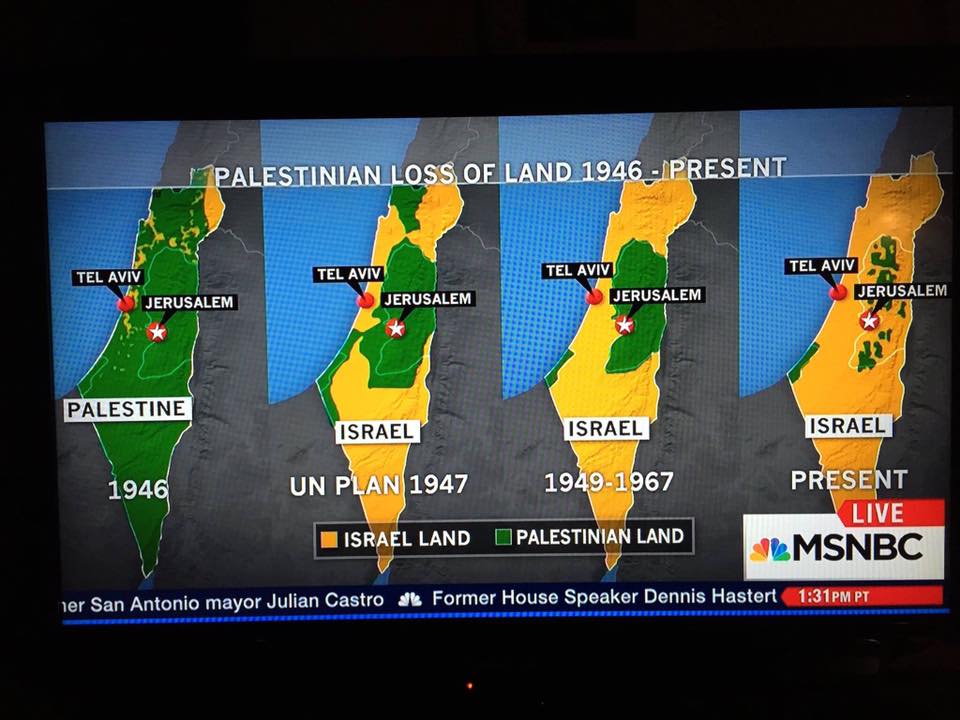
There is nothing new in Palestinian demonstrations about the loss of their land and Israel’s aggressive military response. But there may be particular reasons that a confrontation is happening now, such as Palestinian anger at President Trump’s decision in December to recognise Jerusalem as the capital of Israel and the move of the US embassy to there from Tel Aviv. This trumpeted Washington’s unconditional support for the Israeli position and the US disregard for the Palestinians and any remaining hopes they might have to win at least some concessions with US support.
There is nothing new in Palestinian demonstrations about the loss of their land and Israel’s aggressive military response. But there may be particular reasons that a confrontation is happening now, such as Palestinian anger at President Trump’s decision in December to recognise Jerusalem as the capital of Israel and the move of the US embassy to there from Tel Aviv. This trumpeted Washington’s unconditional support for the Israeli position and the US disregard for the Palestinians and any remaining hopes they might have to win at least some concessions with US support.

GENEVA (6 April 2018) - UN human rights experts have condemned the killings by Israeli security forces of at least 16 Palestinian protesters near the Gaza fence, and urged the international community to ensure accountability through an independent and impartial investigation into the Israeli response.
As many as 1,400 Palestinians have been wounded, some critically, since demonstrations began last Friday. Israeli forces used live ammunition and teargas against the demonstrators, who had gathered in occupied Gaza on the occasion of Land Day to call for their right to return to their homes. Most of Gaza’s population - which has been subjected to an air, land and sea blockade by Israel for 10 years - is comprised of Palestinians who have been forcibly expelled from their homes and lands since 1948.
“International law sets strict prohibitions on the use of force by law enforcement officials,” said the human rights experts, who echoed a call by the UN Secretary General for an investigation into Israel’s response. The experts expressed deep concern at reports that Israel’s Minister of Defense stated that there will not be any inquiry into Israel’s actions.
“The Basic Principles on the Use of Force and Firearms by Law Enforcement Officials require law enforcement officials to refrain from using lethal force on demonstrators unless strictly unavoidable in order to protect their own or others’ lives – their safety must be in actual danger,” the experts said.
“There is no available evidence to suggest that the lives of heavily armed security forces were threatened,” the experts said. “Israel has ignored repeated demands by the international community to credibly investigate and prosecute substantial allegations of wrongful killings by its security forces,” they added.
A number of the dead and wounded were shot in their upper bodies while at considerable distances from the Israeli security forces, the experts noted, expressing concern at the apparent disregard for the lives of Palestinian protesters. They noted that wilful killing or serious injury of the protected population amounts to grave breaches of the Fourth Geneva Convention.
The experts also noted with alarm reports that the Israeli Defence Forces posted the following message on its twitter feed on Saturday with respect to the events on Friday: “Nothing was carried out uncontrolled; everything was accurate and measured, and we know where every bullet landed.”
The experts remind the Government of Israel that peaceful protest is a legitimate exercise of the rights of freedom of expression, assembly, and association, and that Israel, as the occupying power, is obligated to protect and to respect the human rights of the Palestinians living in occupied Gaza.
The UN human rights experts pointed out that, while Israel is entitled to take measures to ensure its security, it must be guided by international human rights law in the force that it employs, exercising restraint and resorting to the use of lethal force only against an imminent threat of death or serious injury.
*The UN experts: Agnès Callamard, Special Rapporteur on extrajudicial, summary or arbitrary executions; Leilani Farha, Special Rapporteur on the right to adequate housing; David Kaye, Special Rapporteur on the promotion and protection of the right to freedom of opinion and expression; and Michael Lynk, Special Rapporteur on the situation of human rights in the Palestinian Territory occupied since 1967.
The Special Rapporteurs and Working Groups are part of what is known as the Special Procedures of the Human Rights Council. Special Procedures, the largest body of independent experts in the UN Human Rights system, is the general name of the Council’s independent fact-finding and monitoring mechanisms that address either specific country situations or thematic issues in all parts of the world. Special Procedures’ experts work on a voluntary basis; they are not UN staff and do not receive a salary for their work. They are independent from any government or organization and serve in their individual capacity.

O assassinato de 21 palestinos que manifestavam, desarmados, em Gaza no dia Dia da Terra, 30 de março, como da sexta-feira passada, dia 06 de abril, era previsível, mas podia ter sido evitada.
As vítimas estavam participando da marcha anual do Dia da Terra em comemoração à morte de seis palestinos em 1976 que protestavam contra o confisco de Israel de milhares de acres de terra. O evento deste ano também marca 70 anos de limpeza étnica dos palestinos e o deslocamento de suas terras durante o estabelecimento do Estado de Israel. Os participantes marcharam para a fronteira oriental do campo de concentração em que Israel os confina desde 2006, em uma demonstração simbólica de retorno à sua terra e às casas das quais eles e suas famílias se originam. No entanto, já antes da marcha começar, Israel anunciou que ia instalar mais de 100 atiradores, helicópteros com gás lacrimogêneo e tanques para atacar os manifestantes. No fim das contas, a IDF (forças israelenses de ocupação) matou no dia 30 vinte palestinos e feriu mais de 1.700, sem nenhum soldado ser nem arranhado.
A IDF confessou o crime premeditado no tweeter: “Nada foi realizado sem controle; tudo foi preciso e medido, e sabemos onde todas as balas caíram". Com o escândalo da vídeo de, o tweet foi logo deletado quando surgiu o video de soldados atirando nas costas de Abed el-Fatah Abed el-Nabi, de 19 anos.

Mas a hasbara (propaganda) continuou. Israel mentiu que estava agindo em legítima defesa, inventando que os manifestantes tinham ligações com o Hamas e que ativistas jogavam coquetéis molotov e pedras, entre outros projéteis. O diretor de Relações Exteriores do Partido Likud, do primeiro-ministro Benjamin Netanyahu, Eli Hazan, chegou a afirmar que "todos os 30 mil" manifestantes eram "alvos legítimos". Ainda assim, mesmo antes dos protestos da sexta-feira passada, um oficial do exército israelense twittou o que os críticos sugeriram ser um vídeo condenatório em antecipação ao Dia da Terra, com imagens de soldados israelenses carregando e disparando fuzis de franco-atirador junto com legendas em árabe alertando os palestinos a ficarem longe da fronteira.
No dia 6 o massacre se repetiu, apesar dos palestinos queimarem pneus para a fumaça impedir que os snipers os matassem ou aleijassem. Duas das seis vítimas foram dois meninos; Alaa de 15 anos e Hussein de 13 anos. Dezenas foram feridos para ficarem com deficiência física. Pois a ordem de "aleijar", já seguida pelos soldados israelenses na Cisjordânia há anos, passou a ser aplicada em Gaza. Israel disse que matar e ferir manifestantes palestinos em 31 de março foi "preciso e medido, sabemos onde todas as balas caíram". Agora, o YouTube proibiu em 28 países o vídeo do @EmpireFiles, abaixo, no qual o jornalista Max Blumenthal explica a fascização sionista.
A tragédia do que está acontecendo em Gaza não é definida apenas por snipers israelenses atirarem para matar e aleijar jovens e meninos palestinos desesperados, está também nas respostas de Israel e dos Estados Unidos à limpeza étnica sistemática. Tornou-se comum, e de fato esperado, que o assassinato de palestinos seja ignorado ou, mais assustadoramente, aplaudido pelos israelenses, assim como o assassinato em 2014 de mais de 2.200 palestinos em Gaza. É também esperado que os Estados Unidos e Israel bloqueiem uma investigação imparcial da ONU. Mas que o mundo fique de braços cruzados enquanto os criminosos agem é um escândalo inadmissível.
Uma investigação independente destacaria que Gaza está isolada do mundo; permanece à mercê de Israel por mais de 50 anos e sofre um bloqueio aéreo, terrestre e naval por mais de uma década. Com certeza destacaria também que, além da cerca eletrificada em volta de Gaza (versão sofisticada de Auschwitz) a norte e leste, é bloqueada com um muro de concreto ao sul e pelo bloqueio naval a oeste. Destacaria que todos os assassinados cometidos pela IDF desde o dia 30 de março foram cometidos de fora para dentro de Gaza, na “zona-tampão” imposta por Israel, que corta ainda mais o território de Gaza, em muitos lugares a largura é reduzida a quase a metade. Como disse um gazauí, “não fomos à zona de segurança; a zona-tampão chegou até nós".
Uma investigação independente, sem dúvida, destacaria que balas reais só podem ser usadas contra combatentes que participam de ação militar. Matar pessoas não é um videogame nem um esporte de tiro ao alvo; o que os soldados israelenses fazem é assassinato, crime de guerra que tem de ser punido na Haia.
Em suma, uma investigação revelaria que, para Israel, não importa que os palestinos protestem; as vidas deles são consideradas irrelevantes, descartáveis, com menos valor do que as dos animais.
É por isso que Washington e Tel Aviv estão bloqueando as investigações. É por isso que chegou a hora de estabelecer embargo de armas e sanções contra o apartheid de Israel como as Nações Unidas impuseram contra a África do Sul do apartheid. Isto não é sem precedentes nos Estados Unidos, onde a Lei de Controle de Exportação de Armas tem o poder de garantir o não fornecimento de armas a governos “que se envolvam em um padrão consistente de violações grosseiras de direitos humanos internacionalmente reconhecidos”.
O que falta é vontade política da União Europeia e dos Estados Unidos. E da nossa América Latina que poderia tomar uma posição mais contundente.
No nosso Brasil do Fora Temer, parece um sonho impossível. Espero que o Chile tome a iniciativa.

 O jornalista palestino Yasir Murtaja foi assassinado por um sniper israelense no dia 06 usando o colete, à prova de balas, de imprensa, bem visível. Foi visado, pessoalmente, no crime de tiro-ao-alvo. Um crime contra um de nós é contra todos nós.
Israeli army shot and killed Palestinian photo-journalist Yasir Murtaja. He was wearing a vest, marked PRESS, when he was sniped down.


Israeli army shot and killed Palestinian photo-journalist Yasir Murtaja. He was wearing a vest, marked PRESS, when he was sniped down.
A crime against one of us. Is a crime against all of us.

Meanwhile, as I mentioned on the open article, B'Tselem, the respected Israeli human rights NGO, began a media campaign on April 4th urging IDF (Israeli occupation army) soldiers posted on the Gaza border to disobey “patently illegal” shoot-to-kill orders against unarmed protesters. Last week, the IDF gunned down 17 such protesters and wounded more than 700 of them. Another wounded protester later died of his wounds. Fresh protests are expected on Friday and the IDF already announced it will keep its Rules of Engagement (ROE) as they are.
The ad appeared on line and is set to appear and in major newspapers. The text on B’Tselem’s ad reads: “Sorry Sir, I cannot shoot
Soldier, the order to use lethal force against civilians who do not pose mortal danger is patently illegal. Using lethal force is only allowed when an actual, immediate threat to human life exists, and when there is no other option.
The responsibility for issuing these unlawful orders rests first and foremost with the policy makers, including the prime minister, defense minister, and the chief of staff. Yet obeying patently illegal orders is a criminal offense and you are duty-bound to refuse complying with them.”
“Patently illegal” is an Israeli military concept, coined after the 1956 Qafr Qassem Massacre, when soldiers of the Border Police murdered 47 Israeli Palestinians after receiving an order to kill anyone outside his house after an impromptu curfew was announced. The defendants claimed they were duty-bound to follow a legal order. The judges found that there are “patently illegal” orders, which may be recognized as “a black flag flying over the order, saying ‘it’s forbidden!’”.
They continued: We’re not dealing with a formal, hidden or not, illegality, not one seen only by scholars of law, but a clear and obvious illegality, a certain and essential illegality of the order itself […] illegality which pierces the eye and enrages the heart, assuming the eye is not blind and the heart is not made of stone or corrupt.”
While the words are stirring, the nature of a “patently illegal” order was always debated. Soldiers are taught that their duty is to obey a merely illegal order, but that they legally obligated to disobey a “patently illegal” one.
By declaring the ROE used on the Gaza Border as patently illegal, B’Tselem is implicitly warning that not only are soldiers bound to disobey the orders, but obeying them would place the soldiers in legal jeopardy of committing war crimes.
This is the first time an Israeli NGO has explicitly warned Israeli soldiers that they are about to commit war crimes in advance of the act itself.
B’Tselem warned last week, in anticipation of the Friday massacre, that the IDF was about to commit war crimes if it stuck to its ROE.
B’Tselem has toughened its position towards the army and government in recent years. Two years ago, the NGO decided to stop cooperating with the IDF and its notoriously inept Military Police Criminal Investigation Division, citing the fact that the military justice system serves only “to cover up unlawful acts and protect perpetrators.” B’Tselem CEO Hagai El-Ad appeared in the UN Security Council in October 2016, calling upon the world to protect Palestinians from Israel.
Those decisions caused controversy not just in the general Israeli public, but also within the Israeli human rights NGOs sphere: Most NGOs rejected B’Tselem’s position regarding non-cooperation with the IDF, arguing that by so doing they would lose whatever shred of ability to change the system they still had.
In the debate raging in the human rights community about whether to continue and try to work with the military system or break totally with it, B’Tselem has taken an irrevocable, and breathtakingly brave, step today.

"I have asked for this statement to be read at today's demonstration supporting the Palestinian people in Gaza: The killing and wounding of yet more unarmed Palestinian protesters yesterday by Israeli forces in Gaza is an outrage. The majority of the people of the Gaza Strip are stateless refugees, subject to a decade long blockade and the denial of basic human and political rights. More than two thirds are reliant on humanitarian assistance, with limited access to the most basic amenities, such as water and electricity.
They have a right to protest against their appalling conditions and the continuing blockade and occupation of Palestinian land, and in support of their right to return to their homes and their right to self-determination.
Firing live ammunition into crowds of unarmed civilians is illegal and inhumane and cannot be tolerated.
We stand in solidarity with the Israelis who have taken to the streets this last week to protest their government’s actions.
The silence from international powers with the responsibility of bringing a just settlement of the Israel-Palestine conflict must end.
The UK government must support the UN Secretary-General’s call for an independent international inquiry into the killing of protesters in Gaza and review the sale of arms that could be used in violation of international law.
The events in Gaza and the threat of renewd conflict, underlines the urgent necessity of genuine negotiations to achieve a viable two-state settlement that delivers peace, justice and secutirty to both Palestinians and Israelis". Jeremy Corbyn, leader of British Labour Party.

Nir Dvori, repórter do Canal 2 israelense, twitou esta imagem ontem de compatriotas de um kibbutz, perto da cerca elétrica que os separa do campo de concentração de Gaza, que assistiam de camarote aos tiros dos snipers e aplaudiam cada vez que os soldados acertavam em um palestino. Nojento.
Christians and Muslins prey together in Ramallah for Palestinian Gazans

I may be wrong, but I think that Something is definitely happening in Gaza, for good.
Buffalo Springfield