Mostrando postagens com marcador opressão. Mostrar todas as postagens

domingo, 14 de fevereiro de 2021

Thou Shalt not Oppress II

 Israel is an apartheid state. This obvious fact, of which millions of Palestinians living under Israeli rule have been painfully aware for decades, finally made headlines in the West last month thanks to a report by Israel’s leading human rights organisation, B’Tselem.

The report, titled “A regime of Jewish supremacy from the Jordan River to the Mediterranean Sea: This is apartheid”, got the Western world talking about the real nature of the so-called “Israeli democracy” and paved the way for the many parallels between modern-day Israel and apartheid South Africa to be discussed in the mainstream.

Neither Edward Said nor Archbishop Desmond Tutu was able to do that. The UN special rapporteurs on the human rights situation in the occupied Palestinian territories, such as Richard Falk and John Dugard, were not able to do that either. To be taken seriously, and find itself a place in the pages of Western newspapers, the statement that “Israel is an apartheid state” had to come from Israeli Jews themselves.

Israel’s apartheid has always been an open secret.

The International Convention on the Suppression and Punishment of the Crimes of Apartheid (ICSPCA), Article 2, Part 3, defines apartheid as: “Any legislative measures and other measures calculated to prevent a racial group or groups from participation in the political, social, economic and cultural life of the country and the deliberate creation of conditions preventing the full development of such a group or groups, in particular by denying to members of a racial group or groups basic human rights and freedoms, including the right to work, the right to form recognized trade unions, the right to education, the right to leave and to return to their country, the right to a nationality, the right to freedom of movement and residence, the right to freedom of opinion and expression, and the right to freedom of peaceful assembly and association.”

This definition, in its entirety, clearly applies not only to the situation of Palestinian people residing in the West Bank and Gaza Strip – who are fully and permanently subject to Israel’s authority but do not hold any citizenship rights – but also that of those living in so-called “Israeli proper”.

Israel defines itself as a “Jewish state”. All Jews, regardless of where they were born, can assume Israeli citizenship and participate fully in Israel’s democracy. The land’s Indigenous inhabitants, the Palestinians, however, are openly denied most basic rights and freedoms in Israel. While some Palestinians do hold Israeli citizenship, even they are not considered equal to their Jewish compatriots in the eyes of the state.

Israeli Prime Minister Benjamin Netanyahu himself accepted this fact a few years ago, stating “Israel is not a state of all its citizens … [it] is the nation state of the Jewish people – and only it”.

ICSPCA, Article 2, Part 4, meanwhile, makes it crystal clear that the term “crime of apartheid” includes “[a]ny measures including legislative measures, designed to divide the population along racial lines by the creation of separate reserves and ghettos for the members of a racial group or groups … [and] the expropriation of landed property belonging to a racial group or groups or to members thereof”.

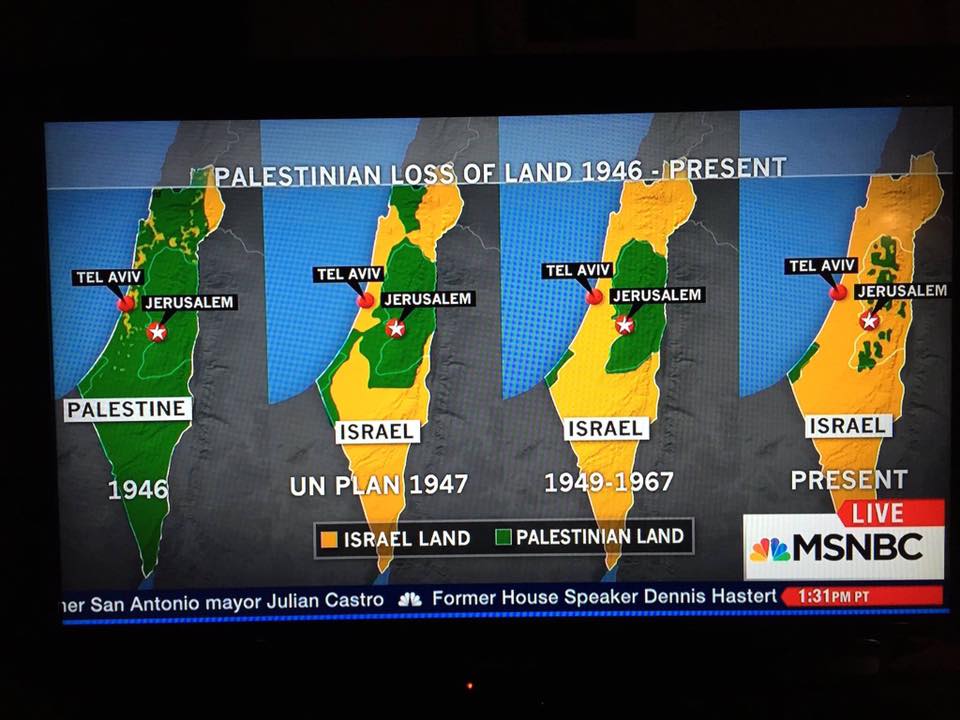
It is, of course, impossible to deny that the Israeli regime is forcing Palestinians to live in “separate reserves and ghettos”. The Israeli state not only took Palestinian lands and gave them to Israeli Jews, but it also banned us from freely moving within our own homeland.

Despite all this, until recently, comparisons between Israel and apartheid South Africa were completely taboo – anyone who dared to talk about “the Israeli apartheid” was swiftly accused of being an anti-Semite and silenced. The guilt white Europeans felt about the Holocaust, during which nearly six million innocent Jews were slaughtered by white, European racists, kept the Israeli regime safe from any criticism coming from the Palestinians and their allies.

Now that some Israeli Jews themselves appear to openly accept that their state has enacted a regime of Jewish supremacy over all the territories it controls, there is hope that the Israeli apartheid can one day be fully exposed and demolished.

For the time being, it’s an ‘apartheid’ framed as a ‘conflict’. Which was not the case of South Africa.

These two apartheid regimes had different fates not because they were materially different, but because the international community chose to denounce one and support the other.

Apartheid South Africa considered itself a democracy. Its institutions were indeed somewhat democratic, but only for the white citizens of the country. The international community eventually denounced this “white democracy” as illegitimate, and put its support behind Black South Africans working to build a state under which all of the country’s citizens enjoy equal rights and freedoms.

Just like apartheid South Africa, Israel considers itself a democracy. Its institutions are democratic, but only for the Jewish citizens of the country.

Unlike apartheid South Africa, however, Israel’s so-called “democracy” is still accepted as legitimate by an overwhelming majority in the international community thanks to the efforts of the Israeli state and its powerful allies in the West. »

The same forces that are trying to convince the world that Israel is indeed a “democracy” are also working to whitewash Israel’s apartheid regime in Palestine by framing it as a “conflict” between two equal sides. Instead of calling a spade a spade, and Israel an apartheid regime, they talk about the “Israeli-Palestinian conflict”.

Can anyone argue that in apartheid South Africa there were two equal parties, namely white and Black, with equal claims to the land and equal responsibility for the then-status quo?

No doubt, this would be a very bizarre and inaccurate interpretation of South African history. This is why we find it unacceptable, and infuriating, when our reality under Israeli apartheid is interpreted and framed in this way.

Israel and its supporters also try to whitewash the Israeli apartheid by focusing on the promise of a “two-state solution”. The two-state solution, as presented by the Israeli state and its Western allies, however, is nothing but an attempt to create “Bantustans” for the Palestinian people.

The South African Apartheid regime created several “Bantustans” to allegedly give Black citizens of the country a homeland of their own. In practice, however, Bantustans were regions that lack any real legitimacy or sovereignty, consisting of several unconnected enclaves. The “Palestinian state” imagined by Israel, which would similarly consist of several unconnected enclaves lacking any real sovereignty, therefore, would have no more legitimacy than South Africa’s racist and meaningless Bantustans.

The South Africans fighting against apartheid, and their allies across the world, had one goal: ending the racist system of apartheid for good. They made it clear that they would not accept any apartheid practices, including Bantustans, to survive. The system had to be dismantled in its entirety.

Today, the Palestinians are fighting against a similar apartheid regime. Like South African anti-apartheid activists, we are not willing to accept anything less than the complete dismantling of the racist system imposed on us.

B’tselem’s acknowledgement that Israel is indeed an apartheid state is a welcome development – we cannot defeat Israel’s regime of Jewish supremacy if the world continues to ignore its very existence.

However, merely accepting the true nature of Israel is not enough. It is time to hold the Israeli regime to account for its crime of apartheid, just like its ideological twin in South Africa was held to account many years ago.

The Palestinian civil society has long been calling for Israel to be sanctioned until it complies with international law and starts treating all human beings living under its rule equally. If B’tselem really wants to expose Israel’s crimes and hold it to account for its unacceptable and racist treatment of the Palestinians, its next step should be endorsing that call. 

PALESTINA

In the U.S.A., Republicans and Democrats alike are so ignorant about Palestinian History or/and so indebted towards the Zionist lobby in New York that they are not able to see or to face the reality of the situation.

For example, claims made by Democratic New York City mayoral candidate, Andrew Yang, in a recent op-ed in the Jewish weekly, ‘The Forward’, point to the prevailing ignorance that continues to dominate the US discourse on Palestine and Israel.

Yang, a former Democratic Presidential candidate, is vying for the Jewish vote in New York City. According to the reductionist assumption that all Jews must naturally support Israel and Zionism, Yan constructed an argument that is entirely based on a tired and false mantra equating criticism of Israel with anti-Semitism.

Yang’s pro-Israel logic is not only unfounded, but confused as well. “A Yang administration will push back against the BDS movement which singles out Israel for unfair economic punishment,” he wrote, referring to the Palestinian Boycott, Divestment and Sanctions movement.

Yang compared the BDS movement to the “fascist boycotts of Jewish businesses”, most likely a reference to the infamous Nazi boycott of Jewish businesses in Germany of 1933.

Not only does Yang fail to construct his argument in any historically defensible fashion, he  claims that BDS is “rooted in anti-Semitic thought and history.”

BDS is, in fact, rooted in history, not that of Nazi Germany, but of the Palestinian General Strike of 1936, when the Palestinian Arab population took collective action to hold colonial Britain accountable for its unfair and violent treatment of Palestinian Muslims and Christians. Instead of helping Palestine achieve full sovereignty, colonial Britain backed the political aspirations of White European Zionists who aimed to establish a ‘Jewish homeland’ in Palestine.

Sadly, the efforts of the Palestinian natives failed, and the new State of Israel became a reality in 1948, after nearly one million Palestinian refugees were uprooted and ethnically cleansed as a result of a decidedly violent campaign, the aftershocks of which continue to this day. Indeed, today’s ongoing military occupation and apartheid are all rooted in that tragic history.

This is the reality that the boycott movement is fighting to change. No anti-Semitic, Nazi – or, according to Yang’s ahistorical account, ‘fascist’ – love affair is at work here; just a beleaguered and oppressed nation fighting for its most basic human rights.

Yang’s ignorant and self-serving comments were duly answered most appropriately, including by many anti-Zionist Jewish intellectuals and activists throughout the US and the world. Alex Kane, a writer in ‘Jewish Currents’ tweeted that Yang made “a messed up, wrong comparison”, and that the politician “comes across as deeply ignorant about Palestine, Palestinians and BDS”.  US Muslim Congresswoman, Ilhan Omar, and the American Arab Anti-Discrimination Committee (ADC) added their voices to numerous others, all pointing to Yang’s opportunism, lack of understanding of history and distorted logic.

But this goes beyond Yang, as the debate over BDS in the US is almost entirely rooted in fallacious comparisons and ignorance of history.

Those who had hoped that the unceremonious end of the Donald Trump Administration would bring about a measure of justice for the Palestinian people will surely be disappointed, as the American discourse on Palestine and Israel rarely changes, regardless which President resides in the White House and what political party dominates the Congress.

So, reducing the boycott debate to Yang’s confused account of history and reality is, itself, a reductionist understanding of US politics. Indeed, similar language is regularly infused, like that used by President Joe Biden’s nominee for United Nations envoy, Linda Thomas-Greenfield while addressing her confirmation hearing at the Senate’s Foreign Relations Committee on January 27. Like Yang, Thomas-Greenfield also found boycotting Israel an “unacceptable” act that “verges on anti-Semitism.”

While the presumptive envoy supported the return of the US to the Human Rights Council, UNESCO and other UN-affiliated organizations, her reasoning for such a move is merely to ensure the US has a place “at the table” so that Washington may monitor and discourage any criticism of Israel.

Yang, Thomas-Greenfield and others perpetuate such inaccurate comparisons with full confidence that they have strong support among the country’s ruling elites from the two dominant political parties. Indeed, according to the latest count produced by the pro-Israel Jewish Virtual Library website, “32 states have adopted laws, executive orders or resolutions that are designed to discourage boycotts against Israel.”

In fact, the criminalization of the boycott movement has taken center stage of the federal government in Washington DC. Anti-boycott legislation was passed with overwhelming majorities in both the Senate and the House of Representatives in recent years and more are expected to follow.

The popularity of such measures prompted former Secretary of State, Mike Pompeo, to declare the Israel boycott movement to be anti-Semitic, describing it at as ‘a cancer’ at a press conference in November, alongside Israeli Prime Minister, Benjamin Netanyahu, while in the illegal settlement of Psagot.

While Pompeo’s position is unsurprising, it behooves Yang and Thomas-Greenfield, both members of minority groups that suffered immense historical racism and discrimination, to brush up on the history of popular boycott movements in their own country. The weapon of boycott was, indeed, a most effective platform to translate political dissent into tangible achievements for oppressed Black people in the US during the civil rights movement in the mid-20th century. Most memorable, and consequential of these boycotts was the Montgomery Bus Boycott of 1955.

Moreover, outside the US, numerous volumes have been written about how the boycott of the White supremacist apartheid government in South Africa (of which I spoke above) ignited a global movement which, combined with the sacrifices of Black South Africans, brought apartheid to an end in the early 1990s.

The Palestinian people do not learn history from Yang and others, but from the collective experiences of oppressed peoples and nations throughout the world. They are guided by the wisdom of Martin Luther King Jr., who once said that “We know through painful experience that freedom is never voluntarily given by the oppressor, it must be demanded by the oppressed.”

The boycott movement aims at pacifically holding the oppressor accountable as it places a price tag on military occupation and apartheid. Not only is the Palestinian boycott movement not racist, it is essentially a rallying cry against racism and oppression.

I boycott Israel as I boycotted South Africa in the 80s and 90s.

I don’t buy anything that comes from Israel or its illegal colonies in the West Bank, that is, “from the Jordan Valley», a covert attempt to misguide foreign buyers. I do my part following the guidelines of the BDS Movement - Boycott Divest Sanction Israel.

What about you ?

To speak is good. But to act through boycott and divestment is even better ; and utmost important, and effective. 

PALESTINA


INTERACTIVE: Palestinian Remix

Addameer

OCHA

Palestinian Center for Human Rights

B'Tselem 

International Solidarity Movement – Nonviolence. Justice. Freedom

Defense for Children 
Breaking the Silence

BRASIL

Carlos Latuff Twitter

The Intercept Brasil

AOS FATOS: As declarações de Bolsonaro, checadas


domingo, 31 de março de 2019

The Great March of Return to their ancestral Land, Palestine


The Great March of Return


Eleições em Israel representam o maior perigo para a segurança dos palestinos. Toda vez que elas se aproximam, os bombardeios a Gaza se intensificam, os hospitais transbordam de feridos, dezenas e centenas de famílias choram seus entes perdidos, e o mundo acorda para a ocupação israelense ilegal e desumana da Palestina.
A história se repete também em 2019.
E a fachada democrática que Israel divulga na grande mídia soa extremamente vazia.
É preciso lembrar que a Grande Marcha Palestina do Retorno é um movimento não-violento e os participantes estão desarmados. No aniversário do dia 30 de março, três menores e um rapaz de 20 anos foram mortos pelos soldados israelenses que feriram gravemente cerca de 300 dos milhares de manifestantes que comemoraram a data pacificamente.
The United Nations recently released statistics stating that the Israeli army has killed 195 Palestinians since March 30 2018 only in Gaza. 41 of which were children. Around 29.000 Palestinians were wounded, 25% of them with live fire. One Israeli soldier was killed and 50 Israelis were reported injured by Palestinian actions in the same period
It is crucial to remember that the Palestinian Great March of Return is a non-violent protest and demonstrators are unarmed.
Land Day is a yearly event during which Palestinians commemorate the Israeli government’s confiscation of thousands of dunums of land from Palestinian citizens of Israel in 1976, and the killing of six Palestinians in the protests that followed.
This year, protesters also came out in support of Gaza and to mark the one-year anniversary of the Great March of Return. The series of marches and protests started one year ago to protest the blockade and demand the Palestinian right of return, to which Israeli soldiers have responded with lethal force.

March 30th is Palestinian Land Day. Day in which the Gaza Strip marked one-year anniversary of the Great March of Return protests, anticipating more of the same lethal violence that has characterised Israel's approach since the demonstrations began.
Last month, the United Nations Commission of Inquiry (COI) published a damning indictment of Israeli forces' conduct in suppressing the protests.
According to the COI, Israeli soldiers have been deliberately shooting civilians, killing and maiming protesters - including children, as well as journalists and medics.
The COI's findings were welcomed by human rights groups who last year unsuccessfully challenged the army's rules of engagement and its shooting policy in Israel's Supreme Court.
Those rules permit soldiers to target so-called "main inciters" - civilians deemed to be encouraging protesters to approach the fence.
"Israel has simply invented the concept of 'main inciters,'" said Professor Kevin Jon Heller, associate professor of public international law at the University of Amsterdam. "No such status exists under international humanitarian law (IHL) or international human rights law (IHRL). Under IHL, you are either a combatant or a civilian. Under IHRL, force of any kind requires the target to pose some kind of actual threat. You can't simply shoot someone in the leg because you think they are leading a demonstration. And lethal force requires the target to post an imminent threat to life."
No, you can't; no civilized army can; except the rogue IDF of Israel. And Nothing happens. No sanctions, No restrains. No intervention whatsoever.
More than 250 Palestinians have been killed since the protests began and thousands more have been injured.
In its new report, the UN found that 189 Palestinians were killed between March 30 and December 31 last year.
Israel's response to the Great March of Return protests is only the latest in a series of actions in Gaza that have drawn international condemnation.
During the 50-day offensive in 2014, for example, Israeli officials were slammed for a policy that saw Palestinian family homes repeatedly targeted over supposed links to armed faction members.
"Israel constantly stretches the limits of IHL and IHRL to justify its use of force against Palestinians," said Heller. 
Legal opinion confirmed by a B'Tselem spokesperson: "Instead of using international law as a minimal standard designed to protect civilians, Israel uses it as a 'war manual' ... looking for loopholes and basing its actions on unreasonable and legally flawed interpretation, founded on a morally repugnant world view. "This is not a legalistic or theoretical issue: this guise of legality legitimizes Israel's immoral, lethal policies in the eyes of both the Israeli public and the international community, which allows Israel to persist in its action with their fatal outcomes."
And the hasbara - vile propaganda - too is a lethal weapon. At first, it was a rocket, Israel claimed, which prompted another round of bombing of the civilians in the Gaza Strip. After damaging 500 Palestinian homes, and with talk of the Zionist state increasing its military presence on the nominal Gaza borders, the first anniversary commemorating the Great March of Return protests on 30 March is being cited as the next stage for the colonial entity’s premeditated bloodshed.
Former Israel Defence Forces (IDF) Chief Benny Gantz is still pushing for more violence and has, once again, mentioned a return to targeted assassinations of Palestinians if he is elected next month.


Yes, Israeli public opinion backs Netanyahu's crimes, despite his lies.

Over half of Israelis believe that Israel’s recent attack on the Gaza Strip was too weak, while only three per cent thought it constituted an excessive approach.
The poll – which was published by Israel’s public broadcaster Kan this morning – found that 53 per cent of respondents think Israel’s attack on Gaza in the past few days was “too weak”. Only three per cent said Israel’s response was “excessive”, while 29 per cent said Israel’s response was “sufficient without being excessive,” Arutz Sheva reported.
The poll also found that Israelis were divided over Prime Minister Benjamin Netanyahu’s performance throughout the attack, with only 24 per cent of Israelis characterising his performance as “good”. A further 33 per cent said it was “poor”, while 33 per cent gave the prime minister a “moderate” rating.
This comes after Israel on Monday launched an attack on the already-besieged Gaza Strip, continuing to bombard the coastal enclave throughout the week. In what the Israeli army claimed to be a response to a rocket fired from Gaza at a town north of Tel Aviv, Israel sent two army brigades – amounting to over 1,000 soldiers – to the Gaza fence and called up reservists from aerial units in preparation for air strikes.
It also locked down the Strip, closing the Kerem Shalom (Karm Abu Salem) and Erez (Beit Hanoun) crossings – which allow goods and medical supplies into Gaza – and reduced the fishing zone it imposes off the Strip’s Mediterranean coast.
This was followed by a series of intense bombardments of Gaza which saw multiple buildings destroyed, including a mosque and the office of Ismail Haniyeh, the head of Hamas which governs the enclave. Images of the destruction have since revealed that, contrary to the Israeli army’s claims to have only targeted military positions, civilian infrastructure including Palestinians’ homes was also hit. Palestine’s Public Works Minister, Mufeed Al-Hasayneh, announced that in only one day “30 houses were completely destroyed and 500 houses were damaged” across Gaza.

One of the Palestinian teenagers killed by Israeli occupation forces in the Palestinian occupied territories, was a volunteer medic in Bethlehem, in the West Bank.
Sajid Muzher, 18, was shot while trying to treat wounded Palestinians, during a predawn raid of Dheisheh camp by the Israeli army.


In democratic countries, elections are conventionally described as “a celebration of democracy.” But in an undemocratic reality, elections sadly become an overt celebration of violence.
In Israel, election campaigns like the one that is going on  thoughtlessly celebrate the privileges of those eligible to vote, while showing almost complete apathy to the exclusion of millions of subjects. Palestinians, of course, have no need to be reminded of their condition — they are well aware of the reality in which they live. But even so, a situation in which every few years Israelis spend months wondering exactly how they should continue to control the lives of others marks a nadir in the violence we have internalized.

Whether public discourse during the elections includes a debate on these issues, or whether politicians and the public do everything they can to avoid mentioning the occupation, the political choices Israelis make determine how to entrench the occupation regime. Israeli Jews are the ones that determine how they will manage the enormous prison that is the Gaza Strip from the outside; how many homes they will demolish and how many communities they will displace in the West Bank; and how many Palestinian families will be deprived of their homes in East Jérusalem.
Immediately after the election Campaign, and in the intervening years before the next one, Israeli Jews will rely on these "democratic elections" to both justify what Israel does to the people it  subjects on both sides of the Green Line as well as to market this reality as an acceptable one.
In this way, the election actually forms a vital component in legitimizing the ongoing control of Israell's crimes againts the people whose country they occupy.
After all, every Israeli decision, no matter how arbitrary, is seen as the product of these elections. This is an inherently violent situation, since it is impossible to justify the ongoing ethnic cleansing along with land-house-natural ressources  theft without being part of these crimes itself.
Israeli violence is manifed not only when a soldier shoots or beats a Palestinian. It is there every time a lawyer in Israel's State Attorney's Office closes a file of a Killing, or when a official prevents another Palestinian student from travelling abroad to continue their studies or deny sick or wounded Palestinians the right to treatment, or hold 2 million Palestinians in a concentration camp which has bein called an open air prison which they bomb once in a while while starving the human beings they see as disposable animals.
Every single Palestinian life lies in the hads of the Israeli Jewish citizens and they Apply this violence through a slow, protacted and arbitrary bureaucracy.
Moreover, the presence of "democratic elections" is of great importance not only in terms of image and propaganda, but also as a crucial valve that hinders assertive action by the international Community that would, at last, express its rejection of this horrendous reality.
Bottomline, Israel upcoming elections in April are just a sham.
A way to hide the crimes of a Jewish supremacist society, as says Norman Finkelstein. 


Israel is not interested in the Golan Heights for security

VENEZUELA


In the weeks since Jose Guaidó declared to a crowd of supporters in Venezuela that he was the new president of Venezuela a lot has happened and very little has happened. The United States, Brasil and Colombia—three of the most right-wing governments in the Americas—unsurprisingly declared their support of Guaidó. Others followed. Indeed, it is more than reasonable to assume that it was the United States that not only encouraged Guaidó’s declaration but was intimately involved in preparing it. As much as been verified by numerous news articles and even a few statements from US Secretary of State John Bolton.
Venezuela is the first new country hit by the Trump administration’s indispensable need to establish its American-exceptionalist, “Presidentialist,” bona fides. It is the Goldilocks target. 
Not too small: It is, in fact, a significant country with world’s largest oil reserves, and a proclaimed socialist government that’s been a thorn in the gringo boot on Latin America for almost twenty years. 
Not too big: It’s no military match for U.S. & Latin American proxy armed forces, and nobody will start WWIII to defend it. 
Just right: A decisive win, at little apparent cost. And just the kind of amuse-boucheneeded to get the U.S. population’s juices flowing for a more costly and difficult attack on the ultimate target—Iran. At least, that’s the way they think.
It seems that very few statements from anti-intervention organizations and individuals do not include some kind of disclaimer that distances the writer, organization or speaker from the Maduro government. Many of these disclaimers call Maduro a dictator. Others have used essentially racist tropes by comparing Maduro to “the kind of guy who tied ladies to railway lines in silent movies.” 
And there are those writers and folks who are opposed to US intervention in Venezuela but tend to emphasize how much they do not like Maduro as much if not more than their opposition to the coup and sanctions. I can’t help but be reminded of the proverb: “Those who live in glass houses should not throw stones.”
In other words, if one doesn’t consider the United States to be a weird democracy then they would be hard-pressed to label Venezuela as a dictatorship. The only reasoning that would allow this distortion would be one that sees the United States as an exemplary exception to the rest of the world. 
It would be a perception that ignored the fact of Trump’s installation in the White House despite losing the popular vote. 
It would be a perception that ignored the fact that the US Senate guarantees an unequal representation that has historically granted the monied right-wing elements of the US polity more power than the majority. Besides the almighty influence of the Zionist lobby AIPAC.
It is a perception that ignores the fundamental inequality based on class and race that is part and parcel of US history. In other words, it is American exceptionalism, a myth that too many on what passes for the US liberals have accepted as reality.

PALESTINA
Daily Life Occupation 

NO to Eurovision in Tel Aviv

A Semana Anual do Apartheid israelense está acontecendo até o dia 8 de abril no mundo inteiro.
Ainda há tempo de ativar um comitê em sua cidade, escola, universidade.
Para organizar as manifestações político-culturais, entre em contato com o BDS Brasil (https://bdsmovement.net/pt) ou acesse diretamente o link internacional apartheidweek.org e organize as atividades de solidariedade com o povo palestino há 71 anos ocupado.
O tema deste ano é "Parem de armar o Colonialismo".
E não se esqueça de checar a origem dos produtos que consome para boicotar Israel, inclusive Hewlett Packard.
The 15th Annual Israeli Apartheid Week of actions will take place all around the world between March 18th and April 8th 2019 under the theme “Stop Arming Colonialism”. 
Israeli Apartheid Week (IAW) is an international series of events that seeks to raise awareness about Israel’s apartheid regime over the Palestinian people and build support for the growing Boycott, Divestment and Sanctions (BDS) movement. It now takes place in over 200 cities across the world, where events such as lectures, film screenings, direct action, cultural performances, postering, among many more help in grassroots organizing for effective solidarity with the Palestinian liberation struggle.
Israel is able to maintain its illegal occupation and apartheid regime over Palestinians partly due to its arms sales and the military support it receives from governments across the world. The United States alone is the single largest supplier of arms and military aid to Israel, followed by European states. These directly sustain Israel’s oppression and human rights violations.
In the Global South, Israel has been known to supply weapons to genocidal regimes in Rwanda, Sri Lanka, Myanmar and elsewhere. Presently, Israel is a major arms exporter to right-wing, authoritarian regimes from Brazil to India, the Philippines and beyond. These weapons are promoted as ‘field-tested’, which means they have been used to kill or injure Palestinians. In fact, Israel is already promoting the technology it has used to repress the Great March of Return in Gaza calling for the right of refugees to return home and an end to the siege. These arms deals finance Israel’s apartheid regime and its illegal occupation while simultaneously deepening militarization and persecution of people’s movements and oppressed communities in countries where they are bought.
The Palestinian-led BDS movement has reiterated the demand for a military embargo on Israel in the light of Israel’s violent repression of the Great March of Return. International human rights organizations such as Amnesty International have also responded to the Israeli massacre in Gaza with this demand. The UK Labour Party, in its conference in September 2018, passed a motion condemning Israel’s killing of Palestinian protesters in Gaza and called for a freeze of arms sales to Israel.
Ending arms trade, military aid and cooperation with Israel will undercut financial and military support for its regime of apartheid, settler-colonialism and illegal occupation. It will also end the flow of Israeli weapons and security technology and techniques to governments that suppress resistance of their own citizens, people’s movements and communities against policies that deprive them of fundamental rights, including the right to the natural resources of their country.
A military embargo on Israel is a measure for freedom and justice of Palestinians and oppressed peoples in many parts of the world. It can successfully be achieved with massive grassroots efforts, similar to the sustained global mobilization that eventually compelled the United Nations to impose a binding international military embargo against South Africa’s apartheid regime.
Israeli Apartheid Week 2019 will be an important platform for building the campaign for a military embargo on Israel. We invite progressive groups to organize events on their campuses and in their cities to popularize and build momentum in this direction.
If you would like to organize and be part of Israeli Apartheid Week 2019 on your campus or in your city, check out what events are already planned at apartheidweek.org, find us on Facebook and Twitter, register onlinehttp://apartheidweek.org/organise/ and get in touch with IAW coordinators in your region.


Daily Life Under Occupation


OCHA  


AOS FATOS:Todas as declarações de Bolsonaro, checadas