Mostrando postagens com marcador Iraque. Mostrar todas as postagens

sábado, 26 de setembro de 2020

Reality check: For the Middle East, Biden is no better than Trump

The polarized nature of American politics often makes it difficult to address fundamental differences between the country’s two main political rivals, Republicans and Democrats. As each side is intent on discrediting the other at every opportunity, unbiased information regarding the two parties’ actual stances on internal and external issues can be difficult to decipher.

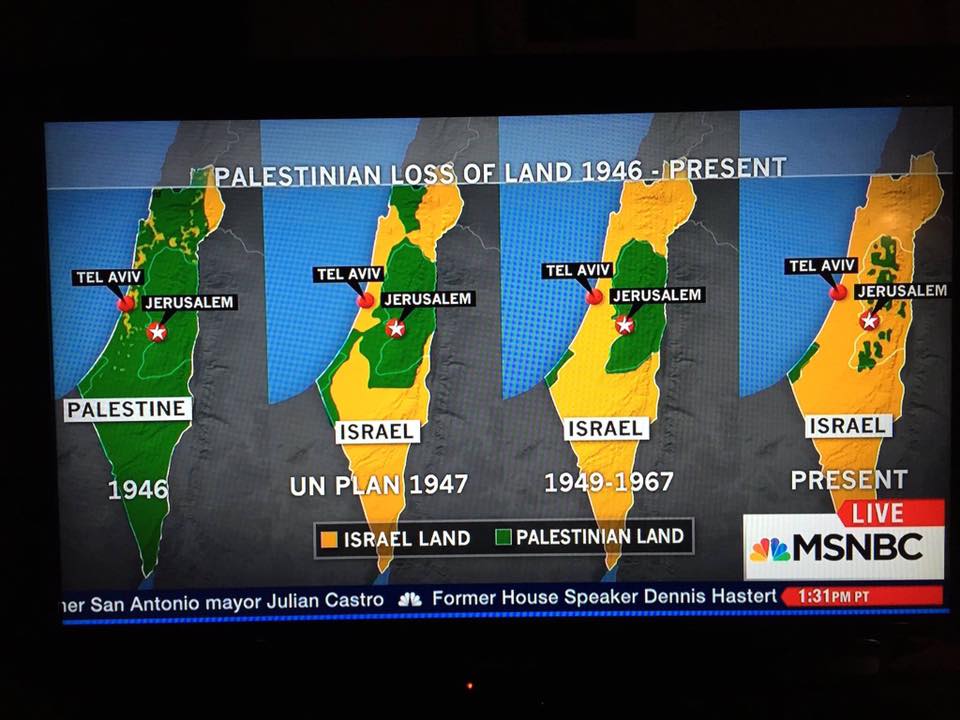
Regarding Palestine and Israel, however, both parties’ establishments are quite clear on offering Israel unlimited and unconditional support. The discrepancies in their positions are, at times, quite negligible, even if Democrats, occasionally, attempt to present themselves as fairer and even-handed.

Judging by statements made by Democrat presidential candidate, Joe Biden, his running mate, Kamala Harris, and people affiliated with their campaign, a future President Biden does not intend to reverse any of the pro-Israel political measures adopted by the Donald Trump Administration.

Moreover, a Democrat administration, as revealed, will not even consider the possibility of conditioning US financial and military support to Israel on the latter’s respect for Palestinian human rights, let alone international law altogether.

“Joe Biden has made it clear … he will not tie US security assistance to Israel to political decisions Israel makes, and I couldn’t agree more,” Harris, who is promoted enthusiastically by some as a ‘progressive’ politician, was quoted as saying in a telephone call on August 26. The call was made to what Israeli newspaper, Haaretz, termed as “Jewish supporters.” The Jerusalem Post and the Times of Israel referred to this crucial constituency as “Jewish donors.”

Although the view of the party’s rank and file has significantly shifted against Israel in recent years, the Democrat’s upper echelon still caters to the Israel lobby and their rich backers, even if this means continuing to mold US foreign policy in the Middle East so that it serves Israeli interests.

Republicans, on the other hand, have cemented their support for Israel, but no longer around geostrategic issues pertaining to Israel’s ‘security’ or US interests. The speeches made by Republican leaders at the Republican National Convention (RNC), held in  Charlotte, North Carolina last month, were all aimed at reassuring ‘Evangelical-Christian Zionists’, who represent the most powerful pro-Israel constituency in the US. The once relatively marginal impact of Evangelical-Christian Zionists in directly shaping US foreign policy has morphed, over the years, to define the core values of Republicans.

Regardless of the nature of the discourse through which Republican and Democrat leaders express their love and support for Israel, the two parties are decidedly ‘pro-Israel’. There are many recent examples that corroborate this assertion.

On November 18, 2019, US Secretary of State Mike Pompeo announced that Washington would no longer consider Jewish settlements illegal or a violation of international law. That position was later cemented in Trump’s so-called ‘Deal of the Century’, published on January 28.

Democrats, however, continue to perceive illegal Jewish settlements as, indeed, illegal. “This decision harms the cause of diplomacy, takes us further away from the hope of a two-state solution, and will only further inflame tensions in the region,” Joe Biden’s campaign said in a statement, in response to Pompeo’s declaration.

Although markedly different, it is hard to imagine a Democrat administration upholding the above position, while simultaneously refraining from reversing previous decisions made by the Trump administration. It can only be one or the other.

One’s cynicism is fully justified, as we recently learned, that the Democrat establishment has refused to even use the word ‘occupation’, with reference to Israel’s occupation of Palestine, in their party platform released on July 15. According to Foreign Policy, the decision “followed heavy last-minute lobbying by pro-Israel advocacy groups.”

On December 6, 2017, the Trump administration made one of the boldest pro-Israel decisions, when he formally recognized Jerusalem as the capital of Israel. A few months later, on May 14, 2018, the US embassy was moved from Tel Aviv to Jerusalem, a brazen violation of international law.

The legal foundation of Trump’s decision was the Jerusalem Embassy Act of 1995. This Act was the outcome of bipartisan efforts, bringing together Republicans and Democrats in Congress. Interestingly, leading Democrats, such as Joe Biden and John Kerry, were the main cheerleaders of the embassy move, back then. Only one Democrat senator, the late Robert Byrd, voted against the Bill. In the House of Representatives, only 30 out of 204 Democrats voted ‘no’.

Even though many Democrats rejected the timing of Trump’s implementation of the Jerusalem Embassy Act, their criticism was largely political, primarily motivated by Democrats’ attempts to discredit Trump. The fact that the Biden campaign, later on, made it clear that the decision will not be reversed should he become president, is a further illustration highlighting the moral bankruptcy of the Democrat establishment, as well.

The truth is, US unconditional backing for Israel is a common cause among all American administrations, whether Democrat or Republican. What they may differ on, however, is their overall motive and primary target audience during election time.

Political polarization and misinformation aside, both Democrats and Republicans head to the November elections with strong pro-Israel sentiments, if not outright support, while completely ignoring the plight of occupied and oppressed Palestinians. 

All over the Middle East, the problems caused by the US shall remain, despite a lip service to show otherwise. It was announced on September 9 that the U.S. Administration would reduce troop numbers in Iraq from 5,200 to 3,000 by the end of the month.  The commander Central Command, General McKenzie, said the withdrawal was to take place because of “the great progress the Iraqi forces have made” and that the “ultimate goal” was having local forces who were capable of preventing a resurgence of Islamic State in the country.”

In April 2003 the U.S. invaded Iraq in a wave of exuberant militarism that amongst other things was intended to stabilize the Middle East.  As one means of achieving stabilization the deposed ruler of Iraq, Saddam Hussein, was tried by a kangaroo court in 2006 and hanged in a disgusting travesty of justice, which summed up the direction in which Iraq was headed.

The Washington administration of the era, headed by the pathetic oddball George W Bush (he of ‘Mission Accomplished’), was responsible for initiating the chaos which fell on the region, and no occupant of the White House has managed to achieve stability in the Middle East — or anywhere else, for that matter. The policy of the times was encapsulated by Vice-President Cheney, a truly foul person who will be best remembered for his lip-curling malevolence.  Six months before the invasion he declared that Iraq had weapons of mass destruction, a downright lie that was enthusiastically embraced by a wide spectrum of gullible idiots, including present presidential contender Joe Biden, who said America’s war on Iraq would be part of “a march to peace and security.”

Cheney went much further, with the mainstream media lapping up his bizarre predictions, especially when he forecast that “Regime change in Iraq would bring about a number of benefits to the region” and that after the war, “With our help, a liberated Iraq can be a great nation once again . . .  Our goal would be an Iraq that has territorial integrity, a government that is democratic and pluralistic, a nation where the human rights of every ethnic and religious group are recognized and protected.”

The results have been starkly contrary to everything predicted by Cheney and all the other war-slavering savages who helped plunge Iraq and the region into chaotic carnage. The country’s territorial integrity is threatened by nationwide instability and, for example, as the UK Foreign Office states, “Turkey conducts regular military action in the north of the Kurdistan Region of Iraq and, occasionally, further south. There is particular risk in mountainous areas . . . and near the border with Turkey.”

The government in Baghdad is hardly democratic, because under the quota system “the president comes from the Kurdish minority, the speaker of the parliament from the Sunni Arab minority, and the prime minister from the Shiite majority. Influential ministry posts are divided among the country’s religious groups” — but not, of course, of religions that are at variance with Islamic theocracy. The Council For Foreign Relations noted in August that “experts say the system contributes to entrenched corruption in Iraq, which ranks as one of the most corruptcountries in the world,” and the regular summation in the Iraq Daily Roundup by Margaret Grifis of Antiwar is indicative of the ever-increasing carnage and chaos in that stricken land.

As recorded by Associated Press, there are many militias, some being strongly supported by the loony leaders of Shia Iran and none of which contribute to “recognition and protection” of ethnic or religious communities which even under the tyrant Saddam Hussein were indeed treated in such a fashion.  The Israeli newspaper Haaretz reported that the Jews had constituted “a privileged group, protected and left to worship as they wished.”  So far as is known, there are about five Jews left in Iraq.

As for Christians, the Archbishop of Irbil, the Right Reverend Bashar Warda, said in London last year that since the US invasion the Christian community had fallen from around 1.5 million to just 250,000.  He asked if “a peaceful and innocent people [will] be allowed to be persecuted and eliminated because of their faith? And, for the sake of not wanting to speak the truth to the persecutors, will the world be complicit in our elimination?”  But there has been no answer to that, and no comment from the Bush people who started the war, or any of those who followed it up with their stupid “surge” and other futile fandangos. And not a word from the Trump or Biden electioneering merry-go-round.

Trump is the supposed Christian Believer who announced in February that “In America, we don’t punish prayer.  We don’t tear down crosses.  We don’t ban symbols of faith.  We don’t muzzle preachers . . . In America, we celebrate faith, we cherish religion, we lift our voices in prayer, and we raise our sights to the Glory of God.”  Biden believes that “Personally for me, faith, it’s all about hope and purpose and strength, and for me, my religion is just an enormous sense of solace.”

Unfortunately they are both hypocrites.

Trump is a hypocrite about religion because he doesn’t believe in anything but money and power, and it is significant that his bible-brandishing charade in June was described by the former Archbishop of Canterbury as “an act of idolatry . . .   In a context where racial privilege itself has long been an idolatry, where long-unchallenged institutional violence has been a routine means for the self-defense of that privilege, the image of the President clinging to the Scriptures as if to an amulet is bizarre even by the standards of recent years.”  Biden, on the other hand, appears to be a genuine Believer, but cynically uses religion to attract votes in his campaign to be president.  For example, he was a longtime supporter of the Hyde Amendment that forbade use of government money to pay for abortions, but when it looked as if he was going to lose votes by that stance he performed what the Brits call a reverse ferret and joined the majority.

It is apparent that the Iraq policies of Trump and Biden don’t rest on religious belief or indeed any sort of conviction, and that both are prepared to change course as the voting breezes might blow.  Trump’s order of troop withdrawal from Iraq is nothing but a public relations ploy and Biden’s declaration on September 10 that he “supports drawing down the troops” was entirely negated by his follow-up that he would keep a “small force” in the Middle East to “prevent extremists from posing a threat to the United States.” What garbage.

Nobody knows what the long-term U.S. policy might be for the country that Washington destroyed, and neither presidential candidate has the courage, conviction or ability to produce one.

Reports by Amnesty International and Human Rights Watch are depressing in their descriptions of the situation in Iraq, and it is obvious that Iraq is going further down the drain while Washington is incapable of preventing the slide that will ruin the lives of even more Iraqi citizens.  Whether it’s Trump or Biden in the White House next year, Iraq too is doomed. As well as Yemen, and Syria, and Lybia, etcetera, etcetera. 

PALESTINA

Palestine can never be truly understood through numbers, because numbers are dehumanizing, impersonal, and, when necessary, can also be contrived to mean something else entirely. Numbers are not meant to tell the story of the human condition, nor should they ever serve as a substitute for emotions.

Indeed, the stories of life, death – and everything in-between – cannot be truly and fully appreciated through charts, figures and numbers. The latter, although useful for many purposes, is a mere numerical depository of data. Anguish, joy, aspirations, defiance, courage, loss, collective struggle, and so on, however, can only be genuinely expressed through the people who lived through these experiences.

Numbers, for example, tell us that over 2,200 Palestinians were killed during the Israeli war on the Gaza Strip between July 8 and August 27, 2014, over 500 of them being children. Over 17,000 homes were completely destroyed, and thousands of other buildings, including hospitals, schools and factories were either destroyed or severely damaged during the Israeli strikes.

This is all true, the kind of truth that is summarized into a neat infographic, updated occasionally, in case, inevitably, some of the critically wounded eventually lose their lives.

But a single chart, or a thousand, can never truly describe the actual terror felt by a million children who feared for their lives during those horrific days; or transport us to a bedroom where a family of ten huddled in the dark, praying for God’s mercy as the earth shook, concrete collapsed and glass shattered all around them; or convey the anguish of a mother holding the lifeless body of her child.

It is easy – and justifiable – to hold the media accountable for the dehumanization of the Palestinians or, sometimes, ignoring them altogether. However, if blame must be apportioned, then others too, including those who consider themselves ‘pro-Palestine’, must reconsider their own position. We are all, to an extent, collectively guilty of seeing Palestinians as sheer victims, hapless, passive, intellectually stunted and ill-fated people, desperate to be ‘saved.’

When numbers monopolize the limelight in a people’s narrative, they do more damage than merely reduce complex human beings to data; they erase the living, too. Regarding Palestine, Palestinians are rarely engaged as equals; they persist at the receiving end of charity, political expectations and unsolicited instructions on what to say and how to resist. They are often the fodder for political bargains by factions or governments but, rarely, the initiative takers and the shapers of their own political discourse.

The Palestinian political discourse has, for years, vacillated between one constructed around the subject of victimhood – which is often satisfied by numbers of dead and wounded – and another pertaining to the elusive Fatah-Hamas unity. The former only surfaces whenever Israel decides to bomb Gaza under any convenient pretext at the time, and the latter was a response to western accusations that Palestinian political elites are too fractured to constitute a potential ‘peace partner’ for Israeli rogue Prime Minister, Binyamin Netanyahu. Many around the world can only understand – or relate to – Palestinians through their victimization or factional affiliation – which, themselves, carry subsidiary meanings relevant to ‘terrorism’, ‘radicalism’, among others.

The reality is, however, often different from reductionist political and media discourses. Palestinians are not just numbers. They are not spectators either, in a political game that insists on marginalizing them. Soon after the 2014 war, a group of Palestinian youth, together with supporters from around the world, launched an important initiative that aimed to liberate the Palestinian discourse, at least in Gaza, from the confines of numbers and other belittling interpretations.

‘We Are Not Numbers’ was launched in early 2015. The group’s ‘About Us’ page reads: “numbers don’t convey … the daily personal struggles and triumphs, the tears and the laughter, the aspirations that are so universal that if it weren’t for the context, they would immediately resonate with virtually everyone.”

It is inspiring to hear young, articulate and profoundly resolute Palestinians such as Issam Adwan, the Gaza Project Manager, speaking a language that transcends all the stereotypical discourses on Palestine. They were neither victims nor factional, and were hardly consumed by the pathological need to satisfy western demands and expectations.

“We have talents – we are writers, we are novelists, we are poets, and we have so much potential that the world knows little about,” says Issam.

Khalid Dader, one of the Organization’s nearly 60 active writers and bloggers in Gaza, contends with the designation that they are ‘storytellers.’ “We don’t tell stories, rather stories tell us … stories make us,” he told me. For Khalid, it is not about numbers or words, but the lives that are lived, and the legacies that often go untold.

Somaia Abu Nada wants the world to know her uncle, because “he was a person with a family and people who loved him.” He was killed in the 2008 Israeli war on Gaza, and his death has profoundly impacted his family and community. Over 1,300 people were also killed in that war. Each one of them was someone’s uncle, aunt, son, daughter, husband or wife. None of them was just a number.

“‘We Are Not Numbers’ made me realize how necessary our voices are,” Mohammed Rafik told me. This assertion cannot be overstated. So many speak on behalf of Palestinians but rarely do Palestinians speak for themselves. “These are unprecedented times of fear, when our land appears to be broken and sad,” Mohammed said, “but we never abandon our sense of community.”

Issam reminds me of Arundhati Roy’s famous quote, “There’s really no such thing as the ‘voiceless’. There are only the deliberately silenced, or the preferably unheard.”

It was refreshing to talk to Palestinians who are taking the decisive step of declaring that they are not numbers, because it is only through this realization and resolve that Palestinian youth can challenge all of us and assert their own collective identity as a people.

Indeed, Palestinians do have a voice, although silenced and unheard by Western mainstream media. And it is a strong, resonating voice at that. 

INTERACTIVE: Palestinian Remix

Addameer

OCHA

Palestinian Center for Human Rights

B'Tselem 

International Solidarity Movement – Nonviolence. Justice. Freedom

Defense for Children 
Breaking the Silence


BRASIL

Carlos Latuff Twitter

The Intercept Brasil

AOS FATOS: As declarações de Bolsonaro, checadas

domingo, 1 de dezembro de 2019

Reality Check on Iraq rebellion


As Americans sat down to Thanksgiving dinner, Iraqis were mourning 40 protesters killed by police and soldiers on Thursday in Baghdad, Najaf and Nasiriyah. Nearly 400 protesters have been killed since hundreds of thousands of people took to the streets at the beginning of October. Human rights groups have described the crisis in Iraq as a “bloodbath,” Prime Minister Abdul-Mahdi has announced he will resign, and Sweden has opened an investigation against Iraqi Defense Minister Najah Al-Shammari, who is a Swedish citizen, for crimes against humanity.
Protesters are demanding the overthrow of a political class seen as corrupt and serving foreign powers while many Iraqis languish in poverty without jobs, healthcare or education. Only 36% of the adult population of Iraq have jobs, and despite the gutting of the public sector under U.S. occupation, its tattered remnants still employ more people than the private sector, which fared even worse under the violence and chaos of the U.S.’s militarized shock doctrine.
Western reporting conveniently casts Iran as the dominant foreign player in Iraq today. But while Iran has gained enormous influence and is one of the targets of the protests, most of the people ruling Iraq today are still the former exiles that the U.S. flew in with its occupation forces in 2003, “coming to Iraq with empty pockets to fill” as a taxi-driver in Baghdad told a Western reporter at the time. The real causes of Iraq’s unending political and economic crisis are these former exiles’ betrayal of their country, their endemic corruption and the U.S.’s illegitimate role in destroying Iraq’s government, handing it over to them and maintaining them in power for 16 years.
The corruption of both U.S. and Iraqi officials during the U.S. occupation is well documented. UN Security Council resolution 1483 established a $20 billion Development Fund for Iraq using previously seized Iraqi assets, money left in the UN’s “oil for food” program and new Iraqi oil revenues. An audit by KPMG and a special inspector general found that a huge proportion of that money was stolen or embezzled by U.S. and Iraqi officials.
Lebanese customs officials found $13 million in cash aboard Iraqi-American interim Interior Minister Falah Naqib’s plane. Occupation crime boss Paul Bremer maintained a $600 million slush fund with no paperwork. An Iraqi government ministry with 602 employees collected salaries for 8,206. A U.S. Army officer doubled the price on a contract to rebuild a hospital, and told the hospital’s director the extra cash was his “retirement package.” A U.S. contractor billed $60 million on a $20 million contract to rebuild a cement factory, and told Iraqi officials they should just be grateful the U.S. had saved them from Saddam Hussein. A U.S. pipeline contractor charged $3.4 million for non-existent workers and “other improper charges.” Out of 198 contracts reviewed by the inspector general, only 44 had documentation to confirm the work was done.
U.S. “paying agents” distributing money for projects around Iraq pocketed millions of dollars in cash.The inspector general only investigated one area, around Hillah, but found $96.6 million dollars unaccounted for in that area alone.  One American agent could not account for $25 million, while another could only account for $6.3 million out of $23 million. The “Coalition Provisional Authority” used agents like these all over Iraq and simply “cleared” their accounts when they left the country. One agent who was challenged came back the next day with $1.9 million in missing cash.
The U.S. Congress also budgeted $18.4 billion for reconstruction in Iraq in 2003, but apart from $3.4 billion diverted to “security,” less than $1 billion of it was ever disbursed. Many Americans believe U.S. oil companies have made out like bandits in Iraq, but that’s not true either. The plans that Western oil companies drew up with Vice President Cheney in 2001 had that intent, but a law to grant Western oil companies lucrative “production sharing agreements” (PSAs) worth tens of billions per year was exposed as a smash and grab raid and the Iraqi National Assembly refused to pass it.
Finally, in 2009, Iraq’s leaders and their U.S. puppet-masters gave up on PSAs (for the time being…) and invited foreign oil companies to bid on “technical service agreements” (TSAs) worth $1 to $6 per barrel for increases in production from Iraqi oilfields. Ten years later, production has only increased to 4.6 million barrels per day, of which 3.8 million are exported. From Iraqi oil exports of about $80 billion per year, foreign firms with TSAs earn only $1.4 billion, and the largest contracts are not held by U.S. firms. China National Petroleum Corporation (CNPC) is earning about $430 million in 2019; BP earns $235 million; Malaysia’s Petronas $120 million; Russia’s Lukoil $105 million; and Italy’s ENI $100 million. The bulk of Iraq’s oil revenues still flow through the Iraq National Oil Company (INOC) to the corrupt U.S.-backed government in Baghdad.
Another legacy of the U.S. occupation is Iraq’s convoluted election system and the undemocratic horse-trading by which the executive branch of the Iraqi government is selected. The 2018 election was contested by 143 parties grouped into 27 coalitions or “lists,” plus 61 other independent parties. Ironically, this is similar to the contrived, multi-layered political system the British created to control Iraq and exclude Shiites from power after the Iraqi revolt of 1920.
Today, this corrupt system keeps dominant power in the hands of a cabal of corrupt Shiite and Kurdish politicians who spent many years in exile in the West, working with Ahmed Chalabi’s U.S.-based Iraqi National Congress (INC), Ayad Allawi’s U.K.-based Iraqi National Accord (INA) and various factions of the Shiite Islamist Dawa Party. Voter turnout has dwindled from 70% in 2005 to 44.5% in 2018.
Ayad Allawi and the INA were the instrument for the CIA’s hopelessly bungled military coup in Iraq in 1996. The Iraqi government followed every detail of the plot on a closed-circuit radio handed over by one of the conspirators and arrested all the CIA’s agents inside Iraq on the eve of the coup. It executed thirty military officers and jailed a hundred more, leaving the CIA with no human intelligence from inside Iraq.
Ahmed Chalabi and the INC filled that vacuum with a web of lies that warmongering U.S. officials fed into the echo chamber of the U.S. corporate media to justify the invasion of Iraq. On June 26th 2002, the INC sent a letter to the Senate Appropriations Committee to lobby for more U.S. funding. It identified its “Information Collection Program” as the primary source for 108 stories about Iraq’s fictitious “Weapons of Mass Destruction” and links to Al-Qaeda in U.S. and international newspapers and magazines.
After the invasion, Allawi and Chalabi became leading members of the U.S. occupation’s Iraqi Governing Council. Allawi was appointed Prime Minister of Iraq’s interim government in 2004, and Chalabi was appointed Deputy Prime Minister and Oil Minister in the transitional government in 2005. Chalabi failed to win a seat in the 2005 National Assembly election, but was later elected to the assembly and remained a powerful figure until his death in 2015. Allawi and the INA are still involved in the horse-trading for senior positions after every election, despite never getting more than 8% of the votes – and only 6% in 2018.
These are the senior ministers of the new Iraqi government formed after the 2018 election, with some details of their Western backgrounds:
Adil Abdul-Mahdi - Prime Minister (France). Born in Baghdad in 1942. Father was a government minister under the British-backed monarchy. Lived in France from 1969-2003, earning a Ph.D in politics at Poitiers. In France, he became a follower of Ayatollah Khomeini and a founding member of the Iran-based Supreme Council for the Islamic Revolution in Iraq (SCIRI) in 1982. Was SCIRI’s representative in Iraqi Kurdistan for a period in the 1990s. After the invasion, he became Finance Minister in Allawi’s interim government in 2004; Vice President from 2005-11; Oil Minister from 2014-16.
Barham Salih – President (U.K. & U.S.). Born in Sulaymaniyah in 1960. Ph.D. in Engineering (Liverpool – 1987). Joined Patriotic Union of Kurdistan (PUK) in 1976. Jailed for 6 weeks in in 1979 and left Iraq for the U.K.  PUK representative in London from 1979-91; head of PUK office in Washington from 1991-2001. President of Kurdish Regional Government (KRG) from 2001-4; Deputy PM in interim Iraqi government in 2004; Planning Minister in transitional government in 2005; Deputy PM from 2006-9; Prime Minister of KRG from 2009-12.
Mohamed Ali Alhakim – Foreign Minister (U.K. & U.S.). Born in Najaf in 1952. M.Sc. (Birmingham), Ph.D. in Telecom Engineering (Southern California), Professor at Northeastern University in Boston 1995-2003. After the invasion, he became Deputy Secretary-General and Planning Coordinator in the Iraqi Governing Council; Communications Minister in interim government in 2004; Planning Director at Foreign Ministry, and Economic Adviser to VP Abdul-Mahdi from 2005-10; and UN Ambassador from 2010-18.
Fuad Hussein – Finance Minister & Deputy PM (Netherlands & France). Born in Khanaqin (majority Kurdish town in Diyala province) in 1946. Joined Kurdish Student Union and Kurdish Democratic Party (KDP) as a student in Baghdad. Lived in Netherlands from 1975-87; incomplete Ph.D. in International Relations; married to Dutch Christian woman. Appointed deputy head of Kurdish Institute in Paris in 1987. Attended Iraqi exile political conferences in Beirut (1991), New York (1999) & London (2002). After the invasion, he became an adviser at the Education Ministry from 2003-5; and Chief of Staff to Masoud Barzani, President of the KRG, from 2005-17.
Thamir Ghadhban – Oil Minister & Deputy PM (U.K.). Born in Karbala in 1945. B.Sc. (UCL) & M.Sc. in Petroleum Engineering (Imperial College, London). Joined Basra Petroleum Co. in 1973. Director General of Engineering and then Planning at Iraqi Oil Ministry from 1989-92. Imprisoned for 3 months and demoted in 1992, but did not leave Iraq, and was reappointed Director General of Planning in 2001. After the invasion, he was promoted to CEO of Oil Ministry; Oil Minister in the interim government in 2004; elected to National Assembly in 2005 and served on 3-man committee that drafted the failed oil law; chaired Prime Minister’s Advisors’ Committee from 2006-16.
Major General (Retd) Najah Al-Sha – Defense Minister (Sweden). Born in Baghdad in 1967. The only Sunni Arab among senior ministers. Military officer since 1987. Has lived in Sweden and may have been member of Allawi’s INA before 2003. Senior officer in U.S.-backed Iraqi special forces recruited from INC, INA and Kurdish Peshmerga from 2003-7. Deputy commander of “counterterrorism” forces 2007-9. Residency in Sweden 2009-15. Swedish citizen since 2015. Reportedly under investigation for benefits fraud in Sweden, and now for crimes against humanity in killing of over 300 protesters in October-November 2019.
In 2003, the U.S. and its allies unleashed unspeakable, systematic violence against the people of Iraq. Public health experts reliably estimated that the first three years of war and hostile military occupation cost about 650,000 Iraqi lives. But the U.S. did succeed in installing a puppet government of formerly Western-based Shiite and Kurdish politicians in the fortified Green Zone in Baghdad, with control over Iraq’s oil revenues. As we can see, many of the ministers in the U.S.-appointed interim government in 2004 are still ruling Iraq today.
U.S. forces deployed ever-escalating violence against Iraqis who resisted the invasion and hostile military occupation of their country. In 2004, the U.S. began training a large force of Iraqi police commandos for the Interior Ministry, and unleashed commando units recruited from SCIRI’s Badr Brigade militia as death squads in Baghdad in April 2005. This U.S.-backed reign of terror peaked in the summer of 2006, with the corpses of as many as 1,800 victims brought to the Baghdad morgue each month. An Iraqi human rights group examined 3,498 bodies of summary execution victims and identified 92% of them as people arrested by Interior Ministry forces.
The U.S. Defense Intelligence Agency tracked “enemy-initiated attacks” throughout the occupation and found that over 90% were against U.S. and allied military targets, not “sectarian” attacks on civilians.  But the U.S. officials used a narrative of “sectarian violence” to blame the work of U.S.-trained Interior Ministry death squads on independent Shiite militias like Muqtada al-Sadr’s Mahdi Army.
The government Iraqis are protesting against today is still led by the same gang of U.S.-backed Iraqi exiles who wove a web of lies to stage manage the invasion of their own country in 2003, and then hid behind the walls of the Green Zone while U.S. forces and death squads slaughtered their people to make the country “safe” for their corrupt government.
More recently they again acted as cheerleaders as American bombsrockets and artillery reduced most of Mosul, Iraq’s second city, to rubble, after twelve years of occupation, corruption and savage repression drove its people into the arms of the Islamic State. Kurdish intelligence reports revealed that more than 40,000 civilians were killed in the U.S.-led destruction of Mosul. On the pretext of fighting the Islamic State, the U.S. has reestablished a huge military base for over 5,000 U.S. troops at Al-Asad airbase in Anbar province.
The cost of rebuilding Mosul, Fallujah and other cities and towns is conservatively estimated at $88 billion. But despite $80 billion per year in oil exports and a federal budget of over $100 billion, the Iraqi government has allocated no money at all for reconstruction. Foreign, mostly wealthy Arab countries, have pledged $30 billion, including just $3 billion from the U.S., but very little of that has been, or may ever be, delivered.
The history of Iraq since 2003 has been a never-ending disaster for its people. Many of this new generation of Iraqis who have grown up amid the ruins and chaos the U.S. occupation left in its wake believe they have nothing to lose but their blood and their lives, as they take to the streets to reclaim their dignity, their future and their country’s sovereignty.
The bloody handprints of U.S. officials and their Iraqi puppets all over this crisis should stand as a dire warning to Americans of the predictably catastrophic results of an illegal foreign policy based on sanctions, coups, threats and the use of military force to try to impose the will of deluded U.S. leaders on people all over the world.
PALESTINA

Last Friday, November 29, two major global events of great importance to me will coincide - the fourth Global Climate Strike, and the United Nation's annual International Day of Solidarity with the Palestinian People. This convergence also symbolically represents an important reality - that the fight for climate justice for all is directly connected to the Palestinian struggle. Palestine is a climate justice issue. 
In my work coordinating Palestinian environmental organisations, I witness daily that for Palestinians, climate change is not just a natural phenomenon, but a political one. Israel's regime of occupation and apartheid, which denies us the right to manage our land and resources, exacerbates the climate crisis Palestinians face, making us more vulnerable to climate-related events. 
The most extreme example is the Gaza Strip, where two million Palestinians live in an open-air prison under Israeli occupation and siege. The UN projected that Gaza will be unlivable by 2020. Many say it already is. 
Gaza's acute shortage of potable water has been worsened, not only by climate change but also by Israel's restrictions on the entry of materials and fuel needed for wastewater treatment. As a result, sewage has infiltrated Gaza's aquifer and is flowing untreated into Gaza's coastal waters, damaging marine life and health. Ninety-seven percent of Gaza's scarce water is now unfit for human consumption and contaminated water causes 26 percent of all illnesses in Gaza, and is a leading cause of child deaths
In one of the countless tragic examples of the impacts, a five-year-old boy, Mohammed al-Sayis, who went to Gaza's beach with his family to escape the heat, died in 2017 after swimming in seawater contaminated by sewage.
Israel has also damaged Gaza's land and agriculture. Israel's military prevents Palestinians from using the 20 percent of Gaza's arable land next to Israel's militarised fence, and targets Gaza's farmland with dangerous herbicidesA study conducted by our organisationPalestinian Environmental NGOs Network - FoE Palestine, found that Israel's 2014 war on Gaza, during which Israel dropped 21,000 tonnes of explosives on the strip, may have resulted in extensive soil damage that reduced agricultural productivity.
In the occupied West Bank, Israel systematically steals and destroys Palestinian land and water. Israel controls more than 60 percent of West Bank land, where 640,000 Israelis now live in illegal settlements. Israeli settlers consume six times as much water as the West Bank's 2.9 million Palestinian residents. Israel has also uprooted 800,000 olive trees since 1967. 
The livelihoods of Palestinian agricultural communities have been transformed by the combination of seizure of land and water, and climatic shifts. Palestinian farmers face some of their most severe problems in the Jordan Valley, an agricultural area that comprises 30 percent of the West Bank. 
The Jordan Valley village of al-Auja is one illustrative case. Some of al-Auja's land has been seized for four Israeli settlements. Adding insult to injury, al-Auja's main spring, which used to provide a continual flow of water for farming, now provides water for only a few weeks to a few months each year. This reduction occurred after Mekorot, Israel's national water company, dug wells upstream in the same aquifer. The drying up of al-Auja's spring has greatly reduced agricultural production.
And while villages like al-Auja struggle to adapt to water scarcity, the illegal Israeli settlements nearby enjoy plentiful access to water for drinking, to irrigate crops and lawns, and for swimming pools. We call this severe discrimination water apartheid, a major component of the larger regime of climate apartheid that Israel is imposing on Palestinians. 
Israel cultivates an image worldwide as "green", but the reality is dramatically different. Israel relies on unsustainable agricultural and water use practices that depend upon the exploitation of Palestinians' land and water. Additionally, 97.7 percent of Israel's electricity production comes from fossil fuels, and Israel is seeking to export natural gas and electricity generated from fossil fuels to Europe.
On the International Day of Solidarity with the Palestinian People, our Palestinian environmental organisations call for global pressure on Israel to end climate apartheid through boycotts of the Israeli government and institutions and companies that are complicit in destroying the environment, violating our rights and profiting from our resources.
This includes boycotting the international projects of Mekorot, which support water apartheid by depriving Palestinians of access to water and supplying Israel's illegal settlements; boycotting all Israeli mejdoul dates, which are grown in the Jordan Valley using land and water stolen from Palestinians; and opposing Israel's export of natural gas and electricity to Europe. 
As people rallied worldwide last Friday for an end to fossil fuel use and for climate justice for all, organisers should have included such boycotts among their strategies and demands in support of Palestinian freedom, justice and equality.
Unfortunately, Palestine is not fashionable. It is controversial. Fight for justice for all is not as glamerous as campaigning for reduction of carbon print or any other ecological battle to preserve Western quality of life. 

The Politics of Food in Jerusalem


OCHA  


BRASIL


AOS FATOS:Todas as declarações de Bolsonaro, checadas