sábado, 8 de agosto de 2020

Beirut destroyed and in turmoil, again and again

The devastation caused by the massive explosion that ripped through Beirut on August 4 is beyond any worst nightmare for the country. The blast, which officials have linked to the improper storage of some 2,750 tonnes of ammonium nitrate at the Beirut port since September 2013, left at least 137 dead and 5,000 wounded. It sent shockwaves across the city, causing widespread damage to buildings and shattered windows even on the outskirts of the Lebanese capital.

Beirut is a city that knows how to rise from the ashes - it is said to have been destroyed and rebuilt seven times during its 5,000-year history. I have seen it destroyed repeatedly by Israeli bombs in the 1980’s and I have seen it revive.

However, this most recent catastrophe is more haunting than any past war, invasion or earthquake that ravaged the ancient city, because it was brought on not by a hostile outside force or natural disaster, but Lebanon's own ruling elites. 

It is still not entirely clear what sparked the blast in cargo vessel loaded with a highly combustible material recklessly left in a civilian port since it was abandoned in Beirut port nearly seven years ago. There is no doubt, however, that what happened on Tuesday was not merely an accident. It was the latest deadly consequence of the deep-rooted culture of corruption, incompetence, and negligence in the Lebanese state apparatus. 

The Port of Beirut functions without any real governmental supervision. It is jointly managed by the Customs Authority and the Beirut Port Authority. While the former is under the control of President Michel Aoun's loyalists, the latter is managed by bureaucrats loyal to former prime minister Saad Hariri. Both of these public authorities are technically supervised by the government, but in practice, they do not succumb to any official hierarchy or parliamentarian control like all the other Lebanese authorities and institutions that only report to the sectarian leader or group protecting them.

Given Lebanon's abysmal record in investigating governmental negligence and corruption, many who contributed to the tragedy at the highest level of the Lebanese state will likely never face justice. This is problematic, as it contributes to the erosion of public trust in government. 

The explosion is also going to have a devastating impact on Lebanon's long-struggling economy, fragile political status quo, and international standing. 

It is not clear whether the government is able to secure the amount of cash it needs to provide shelter for 300,000 who lost their home and to ensure the flow of basic commodities in the aftermath of the explosion. It will eventually be forced to add to its existing domestic and foreign debt to pay for recovery and reconstruction, causing the Lebanese government to become even more dependent on foreign aid, and weaken its negotiating position against the International Monetary Fund (IMF). As a result, the country's existing divisions on foreign policy will deepen, with rival political groups fighting over where Beirut should turn for help at this time of grave need. The US, France and Iran are already weighing in to offer assistance, and some in Lebanon are already entertaining the idea of inviting China to rebuild the Beirut port.

The devastation and public anger caused by the explosion, coupled with the increased involvement of foreign powers in the country, will further weaken the Lebanese government and add fire to existing domestic political tensions. Prime Minister Hassan Diab and his backers will likely try to use the explosion to reduce former Prime Minister Saad Hariri's influence over the state. Hariri, in return, may team up with Druze leader Walid Jumblatt to launch a campaign against the Lebanese government and potentially the presidency. Hezbollah, another major player in Lebanon's corrupt political system, meanwhile, will try to manage these tensions to maintain its influence in the country.

Today, the Lebanese people are facing an unprecedented tragedy. After experiencing a devastating economic collapse and trying to fend off a pandemic with limited resources, they are now faced with the enormous task of healing their wounded and rebuilding their capital city and main port. There is a sense of exasperation and fatigue after all what the country has been going through.

The Lebanese people undoubtedly need all the help they can get from the international community. But the country's elites, who are directly or indirectly responsible for this tragedy, should not be allowed to use international aid as a life vest to save themselves from scrutiny. The international community appears to be inclined to view the explosion in Beirut solely as a humanitarian crisis. Offering assistance to the Lebanese political system without questioning its role in bringing about this tragedy and the economic collapse, however, will harm, not help, the Lebanese people. It will provide yet another opportunity for the corrupt elites to dodge accountability, shift responsibility and avoid implementing the structural reforms the country desperately needs. There are ways to help Lebanon without going through the traditional official channels.

This is why if the international community really wants to help Lebanon heal, it should not only send aid and offer support, but also acknowledge what really happened in Beirut on August 4: a failing political elite that, through negligence, incompetence and corruption, destroyed its own capital and killed its own citizens. 

PALESTINA

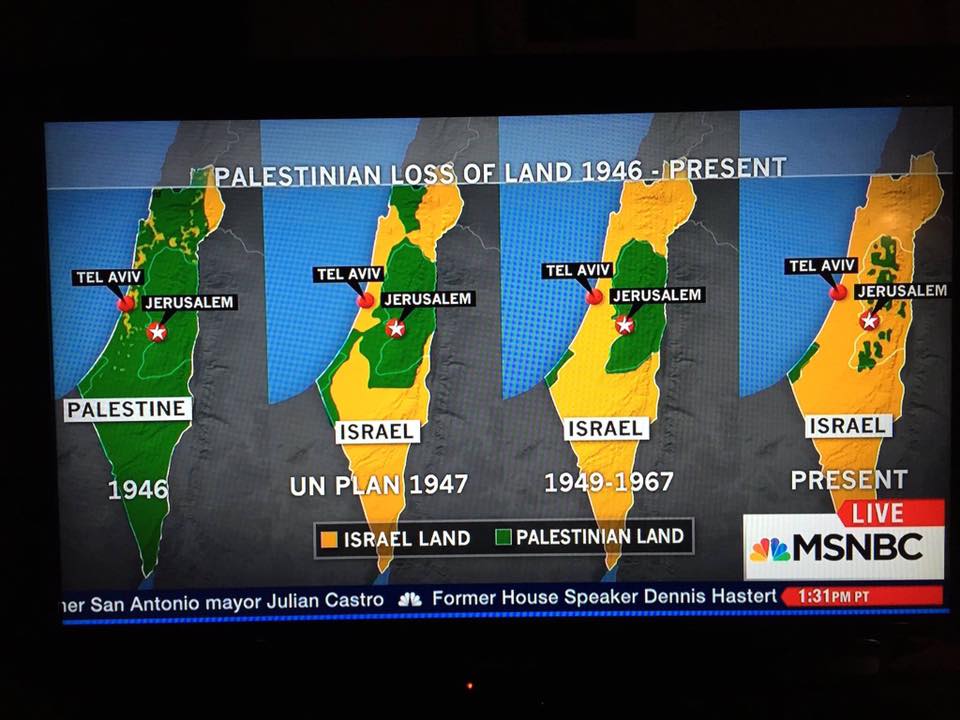
For decades, before Israeli Prime Minister Binyamin Netanyahu made his formal call to annex Palestinian lands, Palestinians have been experiencing persistent annexation. Illegal Israeli settlements spring up so quickly, you would think they were built overnight. And just as quickly, they continue to expand, creeping ever closer towards our villages and towns.

"When was this settlement so close? I can see the insides of the houses!" has become a common refrain across the occupied and colonised West Bank. "They never built the settlements in a temporary fashion."

In parallel, Israeli checkpoints have also proliferated throughout the West Bank to provide security for colonisation activities. "Flying checkpoints" manned by Israeli soldiers in armoured vehicles would sporadically appear and disappear, obstructing Palestinian movement at every step, causing millions of dollars of damage to Palestinian economy. The 25km trip between Ramallah and Bethlehem, for example, can take a Palestinian hours.

There are also the more permanent checkpoints, such as the infamous Qalandia, which separates Jerusalem from the West Bank and through which Palestinians can enter the rest of historic Palestine (present-day Israel), if they have permits. In 2019, the Israelis added a massive structure to the checkpoint. It looks like an airport terminal, rather than a checkpoint. It is a massive building with electronic doors, surveillance cameras and Israeli soldiers sitting behind large glass windows, barking orders: "Move further, come closer, you can enter, you cannot, you need to be checked!"

Beyond taking Palestinians’ freedom to move within the West Bank, Israel has also annexed their freedom to leave. Allenby bridge, connecting the West Bank with Jordan, was once meant to be an interim humanitarian crossing. Today it is the only port of entry/exit for West Bank Palestinians and it is operated by the Israeli Airport Authority, which can deny Palestinian travellers the right to leave.

The Palestinian population is facing the looming annexation divided, not just politically and geographically, but also in their experience of occupation. Palestinians in Area C - de facto under the control of Israel - or in Gaza have a different reality than those of us residing in Areas A and B.

A Palestinian who lives in Ramallah feels that the imminent threat to be expelled is less acute than for Palestinians living in Ramallah than in Area C or in East Jerusalem, who are regularly evicted and their land and property confiscated to make way for Israeli settlers. They also know that unlike Palestinians in Gaza, they are safe from Israeli bombardment, because the West Bank is surrounded by Israeli settlers and settlements. Bombing is not an option. Perhaps that is why the Palestinian Authority officials do not defend their people’s interests as they should.

Living in Ramallah also means that a Palestinian does not face the hostility of a host nation, denied the right to work or receive healthcare, like millions of Palestinian refugees in Arab countries. Living in Ramallah, also means that they do not experience the discrimination faced by Palestinians living in the West. 

They too face the violence of the occupation and the precarity of being Palestinian in this world. If they are not shot randomly at a checkpoint, their homes can still be raided at any Israeli official's whim, or attacked by settlers surrounding their villages. And if not that, then the Palestinian Authority (PA) may decide that a resistant is a political threat and detain him or her.

In this sense, the annexation will be felt differently by different Palestinian communities. And this is probably what the occupier is counting on - that divided in their experiences, they will not be able to unite in our response.

Many Palestinians live in such destitution due to the occupation and their expulsion from their lands that their main concern is physical survival. This further erodes their ability to mobilise politically.

The 1994 Paris Protocol meant as an interim measure, has effectively ensured the economic insecurity of Palestinians through its "customs union" model making the Palestinian economy dependent on Israel. This allowed Israel to rein in the Palestinian resistance.

In the West Bank and Gaza, hundreds of thousands of families depend on salaries from the PA, which itself is depending on Israel to allow the transfer of its budget and its Western backers to donate the funds for it. The private sector is completely dominated by and dependent on the Israeli economy and political mercy. The PA's talk about "economic disengagement » from Israel is simply laughable. 

Palestinians who cannot make a living in the economically underdeveloped West Bank and Gaza are forced to seek employment in Israel, where they are thoroughly exploited and left at the mercy of their Israeli employers. They face the risk of their work permits being revoked if they or their relatives show any sign of political resistance.

After 13 years of a military-imposed siege aided by Egypt and the PA and several murderous Israeli assaults, Gaza is a living human catastrophe. The strip is unliveable and its economy is in shambles. The Palestinian population there is left in permanent economic, health, nutritional and sanitation crises. In the Arab neighbourhood, Palestinian refugees are barely scraping a living.

The occupier hopes to starve Gaza population into apathy. But just in case, it constantly deploy military force, political oppression and control.

Palestinian resistance is more than 100 years old. They have fought the British empire, Zionist massacres, Israel colonialism and international complicity with Israeli crimes.  

As far as I can remember, the Palestinians have tried to stop Israeli colonisation of our lands by any means available to them.

They have tried armed resistance, and have been met with the brutal response of a nuclear army; we have attempted peaceful protest only to be shot at, arrested and tortured; we have appealed to international institutions and law and have been foiled by Israeli and American diplomatic bullying; and we have also tried to promote the non-violent boycott, divestment and sanctions (BDS) movement, which has been viciously attacked with various laws seeking to criminalise it as "anti-Semitic".

Nothing has worked on the ground for the Palestinians. Nothing has stopped Israeli encroachment on their rights and theft of their land. They have been abandoned by friendly governments and Arab allies, while the international community has continued to maintain its complicity in Israeli crimes.

Apart from Israeli colonialism, they have also had to face the authoritarianism of their own Palestinian leadership. The Palestinian Authority has deliberately quashed our ability to mobilise by imprisoning political activists, violently repressing protest, and pumping more resources towards their security forces rather than community development and empowerment.

Under these conditions, a 1987 or 2000-style mass uprising seems unlikely. Israel has learned its lessons and has worked hard to undermine their ability to mass mobilise.

This, of course, does not mean they will not resist. The Great March of Return of 2018 demonstrated to the Israelis and the world that they can and will march for their rights even as live bullets rain on them. The Al-Aqsa protests of 2017 proved they can mobilise momentarily without or even despite the Palestinian political factions. The Bedouins of Araqib rebuilding their homes after they were bulldozed 173 times by the Israelis shows they can persevere. Resistance will most likely be carried out at a community level. The residents of the Jordan Valley have already vowed to remain on their land, no matter what.

I admit, with all that is happening in Palestine, freedom seems to be increasingly more distant. It is a heart-breaking experience to drive between Palestinian towns and villages in the West Bank and observe how blatant the violence of the occupation has become in taking over what little remains of Palestine.

It makes me think of cities like Yaffa, Safad and Haifa. They too were once Palestinian cities but now almost no one remembers that. They have been annexed, Israelised, their Palestinian population ethnically cleansed, their Palestinian character and flavour completely scraped off. 

I leave the last word to a Ramallah resident : “I can see the Tel Aviv skyline from my balcony and I wonder, will Ramallah wake up one day to the glitzy new buildings of a European colonial city, thoroughly sanitised and scrubbed free of its Palestinianness? And will I survive the violence that this process will entail?»

 INTERACTIVE: Palestinian Remix

Addameer

OCHA  

Palestinian Center for Human Rights 

B'Tselem  

International Solidarity Movement – Nonviolence. Justice. Freedom

Defense for Children 

Breaking the Silence  

BRASIL

Carlos Latuff Twitter

The Intercept Brasil

AOS FATOS:Todas as declarações de Bolsonaro, checadas 

quarta-feira, 5 de agosto de 2020

Beirut's drama

It was only after a massive explosion ripped through Beirut that most people in Lebanon learned about the 2,750 tonnes of ammonium nitrate stored in a hangar at the city's port.

The detonation of the material - used in bombs and fertilisers - sent shockwaves through the Lebanese capital, killing scores of people, injuring thousands, and leaving much of the city a mangled mess.

In the explosion's devastating aftermath, many Lebanese are expressing immense shock and sadness at the destruction, and great anger towards those who allowed this to happen.

Analysis of public records and documents published online show senior Lebanese officials knew for more than six years that the ammonium nitrate was stored in Hangar 12 of Beirut's port.

And they were well aware of the dangers it posed.

So how did this happen? Here's what we know so far.

The cargo of ammonium nitrate arrived in Lebanon in September 2013, on board a Russian-owned cargo vessel flying a Moldovan Flag. The Rhosus, according to information from the ship-tracking site, Fleetmon, was heading from Georgia to Mozambique.

It was forced to dock in Beirut after facing technical problems at sea, according to (PDF) lawyers representing the boat's crew. But Lebanese officials prevented the vessel from sailing, and eventually, it was abandoned by its owners and crew - information partially corroborated by Fleetmon.

The ship's dangerous cargo was then offloaded and placed in Hangar 12 of Beirut port, a large grey structure facing the country's main north-south highway at the main entrance to the capital.

Months later, on June 27, 2014, then-director of Lebanese Customs Shafik Merhi sent a letter addressed to an unnamed "Urgent Matters judge", asking for a solution to the cargo, according to documents shared online.

Customs officials sent at least five more letters over the next three years - on December 5, 2014, May 6, 2015, May 20, 2016, October 13, 2016, and October 27, 2017 - asking for guidance. They proposed three options: Export the ammonium nitrate, hand it over to the Lebanese Army, or sell it to the privately-owned Lebanese Explosives Company.

One letter sent in 2016 noted there had been "no reply" from judges to previous requests.

It pleaded: "In view of the serious danger of keeping these goods in the hangar in unsuitable climatic conditions, we reaffirm our request to please request the marine agency to re-export these goods immediately to preserve the safety of the port and those working in it, or to look into agreeing to sell this amount" to the Lebanese Explosives Company.

Again, there was no reply.

A year later, Badri Daher, the new Lebanese Customs Administration director, wrote to a judge once again.

In the October 27, 2017, letter, Daher urged the judge to come to a decision on the matter in view of "the danger ... of leaving these goods in the place they are, and to those working there".

Nearly three years later, the ammonium nitrate was still in the hangar.

Lebanon's Prime Minister Hassan Diab on Tuesday declared the explosion at the port a "great national disaster" and promised that "all those responsible for this catastrophe will pay the price".

Lebanese President Michel Aoun called the failure to deal with the ammonium nitrate "unacceptable" and vowed the "harshest punishment" for those responsible. An investigation has now been launched, and the committee is to refer its findings to the judiciary within five days.

The cause of the explosion is still not clear, but many Lebanese were quick to point out what they believe to be the root causes; immense mismanagement in a broken state run by a corrupt political class who they say treat the country's inhabitants with contempt.

It is also not lost on Beirut's residents that this tragedy emanated from the city's port, a public utility known locally as the "Cave of Ali Baba and the 40 Thieves" for the vast amount of state funds that have reportedly been stolen there over the decades.

The allegations include claims that billions of dollars in tax revenue never reached the state treasury due to schemes to undervalue imports, as well as accusations of systematic and widespread bribery to avoid paying customs taxes.

"Beirut is gone and those who ruled this country for the past decades cannot get away with this," Rima Majed, a Lebanese political activist and sociologist said in a tweet.

"They are criminals and this is probably the biggest of their (too many) crimes so far."


domingo, 2 de agosto de 2020

Reality check on the ICC vs Israeli war criminals


When International Court of Justice (ICC) Prosecutor, Fatou Bensouda, confirmed last December that the Court has ample evidence to pursue a war crimes investigation in occupied Palestine, the Israeli government responded with the usual rhetoric, accusing the international community of bias and insisting on Israel’s ‘right to defend itself.’
Beneath the platitudes and typical Israeli discourse, the Israeli government knew too well that an ICC investigation into war crimes in Palestine could be quite costly. An investigation, in itself, represents an indictment of sorts. If Israeli individuals were to be indicted for war crimes, that is a different story, as it becomes a legal obligation of ICC members to apprehend the criminals and hand them over to the Court.
Israel remained publicly composed, even after Bensouda, last April, elaborated on her December decision with a 60-page legal report, titled: “Situation in the State of Palestine: Prosecution Response to the Observations of Amici Curiae, Legal Representatives of Victims, and States.”
In the report, the ICC addressed many of the questions, doubts and reports submitted or raised in the four months that followed her earlier decision. Countries such as Germany and Austria, among others, had used their position as amici curiae – ‘friends of the court’ – to question the ICC jurisdiction and the status of Palestine as a country.
Bensouda insisted that “the Prosecutor is satisfied that there is a reasonable basis to initiate an investigation into the situation in Palestine under article 53(1) of the Rome Statute, and that the scope of the Court’s territorial jurisdiction comprises the West Bank, including East Jerusalem, and Gaza (“Occupied Palestinian Territory”).”
However, Bensouda did not provide definitive timelines to the investigation; instead, she requested that the ICC’S Pre-Trial Chamber “confirm the scope of the Court’s territorial jurisdiction in Palestine,” an additional step that is hardly required since the State of Palestine, a signatory of the Rome Statute, is the one that actually referred the case directly to the Prosecutor’s office.
The April report, in particular, was the wake-up call for Tel Aviv. Between the initial decision in December till the release of the latter report, Israel lobbied on many fronts, enlisting the help of ICC members and recruiting its greatest benefactor, Washington – which is not an ICC member – to bully the Court so it may reverse its decision.
On May 15, US Secretary of State, Mike Pompeo, warned the ICC against pursuing the investigation, targeting Bensouda, in particular, for her decision to hold war criminals in Palestine accountable.
The US slapped unprecedented sanctions against the ICC on June 11, with President Donald Trump issuing an ‘executive order’ that authorizes the freezing of assets and a travel ban against ICC officials and their families. The order also allows for the punishing of other individuals or entities that assist the ICC in its investigation.
Washington’s decision to carry out punitive measures against the very Court that was established for the sole purpose of holding war criminals accountable is both outrageous and abhorrent. It also exposes Washington’s hypocrisy – the country that claims to defend human rights is attempting to prevent legal accountability by those who have violated human rights.
Upon its failure to halt the ICC legal procedures regarding its investigation of war crimes, Israel began to prepare for the worst. On July 15, Israeli daily newspaper, Haaretz, reported about a ‘secret list’ that was drawn up by the Israeli government. The list includes “between 200 and 300 officials”, ranging from politicians to military and intelligence officials, who are subject to arrest abroad, should the ICC officially open the war crimes investigation.
Names begin at the top of the Israeli political pyramid, among them Prime Minister Binyamin Netanyahu and his current coalition partner and namesake, Binyamin Gantz.
The sheer number of Israeli officials on the list is indicative of the scope of the ICC’s investigation, and, somehow, is a self-indictment, as the names include former Israeli Defense Ministers – Moshe Ya’alon, Avigdor Lieberman and Naftali Bennett; current and former army chiefs of staffs – Aviv Kochavi, Binyamin "Benny" Gantz and Gadi Eisenkot and current and former heads of internal intelligence, the Shin Bet – Nadav Argaman and Yoram Cohen.
Respected international human rights organizations have already, repeatedly, accused all these individuals of serious human rights abuses during Israel’s lethal wars on the besieged Gaza Strip, starting with the so-called ‘Operation Cast Lead’ in 2008-9.
But the list is far more extensive, as it covers “people in much more junior positions, including lower-ranking military officers and, perhaps, even officials involved in issuing various types of permits to settlements and settlement outposts.”
Israel, thus, fully appreciates the fact that the international community still insists that the construction of illegal colonies in occupied Palestine, the ethnic cleansing of Palestinians and the transfer of Israeli citizens to occupied land are all inadmissible under international law and tantamount to war crimes. Netanyahu must be disappointed to learn that all of Washington’s concessions to Israel under Trump’s presidency have failed to alter the position of the international community and the applicability of international law in any way.
Furthermore, it would not be an exaggeration to argue that Tel Aviv’s postponement of its plan to illegally annex nearly a third of the West Bank is directly linked to the ICC’s investigation, for the annexation would have completely thwarted Israel’s friends’ efforts aimed at preventing the investigation from ever taking place.
While the whole world, especially Palestinians, Arabs and their allies, still anxiously await the final decision by the Pre-Trial Chamber, Israel will continue its overt and covert campaign to intimidate the ICC and any other entity that aims to expose Israeli war crimes and to try Israeli war criminals.
Washington, too, will continue to strive to ensure Netanyahu, Gantz, and the “200 to 300” other Israeli officials never see their day in court.
However, the fact that a “secret list” exists is an indication that Tel Aviv understands that this era is different and that international law, which has failed Palestinians for over 70 years, may, for once, deliver, however a small measure of justice. 

 
In recent weeks, some countries around the world have managed to slow down the spread of COVID-19 within their borders, and successfully eased their strict lockdown measures. Many others, however, like the USA and mine, whose presidents are, to be polite, narrowminded, are suffering greatly from their leaders' stupidity; and there are others that are experiencing a second wave of infections and/or are still struggling to reduce the number of new coronavirus cases. 
The occupied Palestinian territories are in the latter group. 
After imposing strict measures early on during the first wave of infections, Israel and the occupied Palestinian territories appeared to have contained their outbreaks, with each reporting only a few dozen new cases a day in May. But an easing of restrictions has led to a steady uptick in cases since mid-June. This caused panic and confusion while the authorities rushed to come up with more effective methods to get the virus under control.
However, stemming the spread of the coronavirus is particularly difficult in Palestine due to Israel's military occupation and the resulting apartheid and economic devastation. 
The sharp deterioration in coordination between Israeli and Palestinian officials after Israel threatened to annex large parts of the occupied West Bank has made an already grave situation worse. The Palestinian Authority's refusal to accept tax revenues from Israel due to its annexation plans meant that the public sector employees did not receive regular salaries since May, putting more strain on the local economy during the lockdown. 
The fractured administrative structure of the occupied West Bank - where Area A is exclusively administered by the PA, Area B is administered by both the PA and Israel; and Area C is administered only by Israel - has made it impossible for the Palestinian leadership to impose effective preventive measures. The PA's inability to fully access Areas B and C, which comprise almost 80 percent of the West Bank, has left it struggling to follow an all-inclusive coronavirus containment strategy.
The recent rise in coronavirus cases in the occupied territories has largely been blamed on the continuation of weddings, funerals and other forms of mass gatherings as well as Palestinian labourers working in Israel. Recognising that it is powerless to officially impose any virus containment measures in areas under Israeli control, the PA has asked grassroots activists, influential families, clan and tribe leaders to help it raise awareness and prevent large gatherings. 
The situation in the West Bank city of Hebron, the area hardest hit by the second wave of infections, provides further proof of the occupation's devastating effect on the PA's ability to contain the virus. The 1997 Hebron Protocol signed between Israel and the PA divided the city into two areas: H1 and H2. The H1 is controlled by the PA, but H2 is under Israeli military control.
During the first wave of infections, the PA imposed a strict lockdown in H1, however, Israeli authorities did not follow the same strategy in H2. Thus, while some shops and venues were forcefully shut down, others, sometimes located on the opposite side of the same street, were allowed to continue with business as usual. This caused a lot of confusion and frustration for the residents of the city and exacerbated the spread of the virus.
Furthermore, on July 21, at a time when the Palestinian Ministry of Health recorded daily increases averaging 400 cases across the West Bank and occupied East Jerusalem, with 80 percent of active cases being recorded in Hebron, the Israeli authorities demolished a COVID-19 quarantine and testing centre in the city. Another testing centre in the Jerusalem neighbourhood of Silwan was raided and shut down by the authorities in mid-April.
And as the Palestinian population was put under another strict lockdown in July, Israeli forces continued to conduct nightly raids on Palestinian areas, disregarding the severity of the crisis. Ramallah, Jenin, Bethlehem and other Palestinian cities were raided multiple times throughout the month, with scores of Palestinian being arbitrarily arrested. 
On July 18, Israeli forces also conducted a night raid on the Al-Jalazon refugee camp, where more than 150 COVID-19 cases have been recorded and approximately 14,000 people are forced to live in close quarters with little possibility of social distancing. The camp's youth and volunteers have been working hard to control the spread of the virus within the camp, but the Israeli raid and the resulting clashes and arrests brought their efforts to a halt. 
Palestinians in East Jerusalem have also been left vulnerable to the virus due to the activities and policies of Israeli authorities. In a July briefing paper, Medical Aid for Palestinians, Al-Haq and the Jerusalem Legal Aid and Human Rights Centre highlighted how "Israel's discriminatory response to COVID-19 in East Jerusalem, coupled with long-standing failures to fulfil fundamental human rights, has compounded Palestinians' susceptibility to the pandemic".
In their joint briefing paper, the NGOs explained how Israeli policies led to "long delays in opening testing centres for Palestinians in East Jerusalem, delays in the provision of quarantine facilities, harassment, arrests, and persecution of local volunteers distributing aid materials and foodstuffs, closures of community-led initiatives to contain COVID-19 and raise awareness as to the pandemic, and the initial failure even to provide data on the numbers and rate of infections in Palestinian communities as well as to issue information and guidance for the Arabic-speaking public". 
Most of the fears Palestinians had when the pandemic began in March were realised over the past few weeks. The virus had spread, uncontrolled, in heavily populated cities and towns. It had also hit vulnerable and overcrowded refugee camps all over the West Bank, where social distancing is not possible. 
Palestinians in the occupied territories are aware that their capabilities in the health sector are pale in comparison with those of more developed nations who had been devastated by the pandemic. This is why they fear the worst could be still to come. They are angry with the PA for failing to protect them from this deadly virus, but they are also aware that the Israeli occupation is making it almost impossible for the Palestinian leaders to manage the situation. 

PALESTINA

  A little bit of culture to end this post.
There is a saying that often comes to my mind in conflict zones: Choose your enemies carefully for you would end up like them. The same goes for those opposing Zionist settler colonialists. If you are too incensed and angered by their daily dose of claptrap, the vulgarity of their armed robbery of Palestine, you would soon become like them and forget yourself and what beautiful ideas, ideals, and aspirations once animated your highest dreams. Never fall into that trap. Thanks God (?), the great majority of Palestinians have not. They are too well educated to be entrapped in Zionist evil and daily lowlife crimes, despite the hundred years of suffering under the Zionist Project of ethnic cleansing of their homeland.
For decades, aspects of Palestinian and world cinema, art, poetry, fiction, and drama have done for me precisely that: saved me from that trap. They have constantly reminded me what all our politics are about - a moment of poetic salvation from it all. Nizar Hassan's new documentary is one such work - in a moment of dejection over Israel's encroachment on Palestinian rights and the world's complicity, it has put Palestine in perspective.
The film by this preminent Palestinian documentary filmaker is beautifully paced and patient, a masterfully crafted work of art - a Palestinian's epic ode to his homeland. A shorter version of My Grandfather's Path has been broadcast on Al Jazeera Arabic in three parts, but it must be seen in its entirety, in one go, like . It is a pilgrimage that must not be interrupted.
Nizar Hassan was born in 1960 and raised in the village of Mashad, near Nazareth, where he has lived with his family. He studied anthropology at Haifa University and after graduating worked in TV.
Starting in 1990, he turned to cinema. In 1994, he produced Independence, in which he pokes his Palestinian interlocutors about what they think of the bizarre Israeli notion of their "independence". They have stolen another people's homeland and call the act "independence"! Hassan dwells on that absurdity.
In his next film, Jasmine (1996), Hassan engaged Palestinians on the question of gender relations in Palestinian society in the aftermath of a murder of a Palestinian girl by her brother.
Seven years later, Hassan directed the powerful film Invasion (also known as 13 Days in Jenin Camp, 2003) shot soon after the Jenin massacre of 2002, in which the Israeli army bulldozed through a refugee camp, killing scores of Palestinians. The film goes beyond simply documenting the horror of the events in Jenin to confront its perpetrators. It follows the narrative of an Israeli bulldozer driver who took part in the carnage and his reactions as he watches footage of the destruction and suffering of Palestinians he caused.
Apart from these films, Hassan's body of work spans a number of other films documenting aspects of Palestinians' lives under Israeli occupation: Myth (1998), Cut (2000), Challenge (2002), Abu Khalil Grove (2006), South (2008).
Hassan has been featured in film festivals in the Arab world, Europe and America.
My Grandfather's Path comes from such a deep and rooted confidence in a man's sense of his own homeland, it is as if the whole world, not just "Israel", disappears, as the middle-aged director walking with a backpack becomes the epicentre of the film's universe.
With a determined stride along his grandfather's path, his reassuring voiceover, and his two-person crew following him, Hassan reclaims the magnificent landscape of Palestine as if there were no Zionist project interrupting that peaceful dream his film interprets.
Watching the film, I was reminded of the poetic peace and confidence of Iranian poet Sohrab Sepehri in one of his signature poems, Mosafer (Traveller), where he alludes to his journey in Palestine:
Oh, all you olive trees of Palestine
Address all the abundance of your shades to me
To this lonesome traveller
Having just returned
From the vicinity of Mount Sinai
Feverish with
The heat of the Divine Word
To be sure, Hassan has told this story in a different way before. In his Abou Khalil Grove, he follows the fate of a Palestinian family from the Ottoman period to the emergence of Israel. In the same vein, in My Grandfather's Path, the palpable story is tracing the filmmaker's own roots in his homeland way before the arrival of Zionism on the colonial map of the region.
But what we see in this film is much more than just this objective history. We are in the presence of a master filmmaker in full command of his craft. In a masterstroke, which in the director's own bold and brilliant cut runs for more than three and a half hours, he undoes Zionism with poise, patience, a backpack, and a saintly solace.
My Grandfather's Path is a walk through the physical and temporal landscape of Palestine by one solitary Palestinian in the company of a sound engineer and a cinematographer. He crosses paths with a few friends, but constant remain the voice and vista of Nizar Hassan himself and his backpack, walking his homeland inch by inch while telling us the story of his grandfather.
The film is an epic narrative, quietly more eloquent than the proudest of Mahmoud Darwish's epic poetry. Hassan here no longer feels compelled to prove anything. He has bypassed Israel and delivered to the world an ode to the rooted beauty and proud longevity of his homeland.
Watching Hassan's film as the Palestinians' continued dispossession unfolds apace, a peculiar truth comes forward.
Palestinians do not have the military might to fight for every inch of their homeland, but they have something more powerful than machine guns, tanks and fighter jets or the occupied territories of US politics. They have something far stronger than all those nefarious forces put together: They thrive in the power of their storytelling, and they are full of stories - humane, real, worldly, truthful, enduring, awe-inspiring.
In effect, we have two parallel tracks that have historically unfolded for the world to see: one - the continued colonisation of the entirety of Palestine by a European settler colony, and the other - Palestinian artists, poets, novelists, and filmmakers like Hassan overriding and dismantling that project of colonial thievery.
Israelis have thrived on stealing inch after inch of Palestine and incorporating it into their settler-colonial garrison state. But inside their garrisons and their captured imagination, they have Palestinians telling themselves and the world their stories. Israelis have no stories to tell, except the abuse of the Biblical texts to justify their exclusive domination over Palestine; they are left with the naked brutality of the Zionist project.
Against that brutal history of disposition, all a Palestinian has to do is to pack a backpack, grab hold of a camera and a sound recorder and start walking and talking about his or her grandfather or grandmother. That is all. In the face of these stories, Zionism, with all its military might and massive propaganda machinery, disappears into oblivion - as if it never happened, as if it is not happening. 


OCHA  


BRASIL
The Intercept Brasil