Breaking News & Breaking question I: When will Julian Assange "commit suicide"?

Second: Who gains with Epstein's "suicide"?
Third: Why has Epstein - while serving a 13-month sentence for soliciting prostitution from underage girls - been allowed to work from his office six days a week, according to Palm Beach county sheriff’s records. His personal limousine picked him up from jail as early as 7.15am and dropped him off as late as 10.40pm.
And so many more. Including the Epstein-Mossad honey trap story disappearance from mainstream media as soon as it got out.

Why has no nation condemned and punished India?
Will Netanyahu see this as a green light to follow Modi's lead? They share the same neofascist ideology, after all.

Democracy does not, however, merely mean conducting elections every five years, but it is, substantively, a way of life and a way of thinking. It is incumbent on a democracy to respect and defend the legitimate interests and sentiments of minorities and to alleviate their apprehensions. The greatest test of the success of Indian democracy lies in the extent to which its minorities feels secure and content, and it fails.
The Muslim majority of occupied Jammu and Kashmir is not happy. They never really felt satisfied with their relationship with India—politically, morally, and emotionally— because that aspect of the problem was either ignored or swept under the rug for the last 70 years, with the result that the secular character of the nation was undermined.
As to the political aspect, let's make clear that the special status for Kashmir as envisaged by the Constitution of India was not a favor to Kashmir but an acknowledgement of the special circumstances that constitute a part of Kashmir's past and future. Furthermore, the special status was not meant for Kashmir province alone, and those who opposed it have jeopardized their own interests.
Today, there is a growing demand in BJP/ RSS strongholds regarding reconsiderations of state-center relations. It is surprising as well as painful that some short-sighted people are impatient to surrender their rights and privileges to the center. What is amusing is that all this is being done in the name of so-called national unity and emotional integration.
In a federal set-up the best way for emotional integration and national unity is not the over-centralization of powers but its decentralization leading to the restoration of power in the hands of the federating units, which have acceded to be a part of the federation of their own volition.
In light of the present over-centralization of powers, India is gradually tending to be a unitary rather than a federal state, and I do not consider this trend as a good omen for the solidarity and integrity of the nation.
I seriously doubt that the revocation of Article 370 and 35 A will strengthen the foundations of democracy and secularism in Jammu and Kashmir, nor will the distrust between Kashmiris and India be alleviated.
The Indian Constitution has been blatantly violated in Kashmir and the ideals it enshrines completely forgotten. Forces have arisen which threaten to carry this saddening and destructive process further still.
The Indian Constitution sought to guarantee an independent judiciary, an honest electoral process, and rule of law. The constitution provided a strong framework, and it was for those who were responsible for the smooth functioning of institutional mechanisms of government to implement constitutional provisions, so they impacted institutions.
When talking about the constitutional aspect, the Praja Parishad, predecessor of the RSS, always wanted Article 370 to be expunged from the Constitution of India. Kashmiris always maintained that the special position accorded to the State could alone be the source of a growing unity and closer association between the State and India. The Constituent Assembly of India took note of the special circumstances obtaining in the State and made provisions accordingly.
One of the most enduring mainstream narratives around the departures of Kashmiri Pandits in the 1990s is that they were "driven out" by their Muslim neighbours as the armed militancy took off. This is a narrative that has displaced every other analysis of these tragic departures, offering up Kashmiri Pandits as singular and exclusive victims in the violent modern history of Kashmir, even as Kashmiri Muslims have in their turn endured violent crackdowns, enforced disappearances, arbitrary detentions, and a general devaluation of every form of political power, including the right to protest their oppressive conditions.
As a result, many advocate for separate colonies for Pandits returning to Kashmir, presumably to secure them from their Kashmiri Muslim neighbours. In this vision of a return home, Pandits would live behind fortified walls and securitised encampments, fearing human contact while willing Kashmiris Muslims out of existence.
Instead of submitting their visions of home to such an order, Kashmiri Pandits everywhere might want to think about how to envision an ethical and dignified return to their homeland that is not built on logics of segregation, seclusion, and apartheid.
They might want to envision a collective future, in which their sense of security derives from interrelationships with those around them, rather than from a military infrastructure that victimises others while inflating the power of a state that has already shown scant regard for the provisions of constitutional democracy. For there is no pastoral happily-ever-after home waiting for Pandits in Kashmir while their Muslim brethren experience the full might of an occupying Indian state on them.
Any vision of return must respect the multiple histories, identities, and sufferings that have constituted a place and its people for over 70 years. It must also include a willingness to let go of the dominant narratives of exclusive vulnerability that have allowed Kashmiri Pandits to be used as a pawn to endorse India's slide into Hindu majoritarianism.
Finally, such a vision of home must necessarily be anchored to an imagination of collective social and political justice for all in Kashmir. If Kashmiri Pandits cite the fear of engulfment by Kashmiri Muslims as a reason for a segregated security state, they might also ask why Kashmiri Muslims should be expected to assimilate into a Hindu state that has persistently killed, tortured, and incarcerated them for seeking their UN sanctioned right of self-determination.
A new dream of home is possible, and the work of imagining it must begin with justice and freedom for all. Not with Narendra Modi's violence.
Violence is what has been seen. Indian security forces have been firing tear gas and shot live rounds in the air to disperse mass protests in India-administered Kashimir"s main city as thousands rallied against New Delhi's stripping of the region's autonomy.
The protests erupted afternoon prayers on Friday, with thousands of people marching towards the centre of Srinagar ignoring a curfew imposed as part of an unprecedented security lockdown in the disputed region,
India sent some 10,000 additional troops to the Muslim-majority region in the lead-up to its announcement on Monday, imposing a curfew on parts of the territory, shutting down telecommunications and arresting political leaders. Nearly 700,000 Indian soldiers are deployed in Indian-administered Kashmir, where civilian protesters and armed rebels either want independence or a merger with Pakistan - the scrapping of Kashmir's special status has also heightened tensions between the two neighbours-nuclear-armed countries that claim Kashmir in full. To this day, each governs a portion.
India sent some 10,000 additional troops to the Muslim-majority region in the lead-up to its announcement on Monday, imposing a curfew on parts of the territory, shutting down telecommunications and arresting political leaders. Nearly 700,000 Indian soldiers are deployed in Indian-administered Kashmir, where civilian protesters and armed rebels either want independence or a merger with Pakistan - the scrapping of Kashmir's special status has also heightened tensions between the two neighbours-nuclear-armed countries that claim Kashmir in full. To this day, each governs a portion.
In response to New Delhi's move, Islamabad expelled the Indian envoy, suspended trade, halted cross-border train services and banned Indian films.
Thousands in Pakistan also staged rallies on Friday, with protesters in the southern city of Karachi setting fire to effigies of Modi, calling him a "terrorist" and criticising the United Nations for its inaction.
Protests also took place in Pakistan's capital, Islamabad, and in Lahore and Quetta, and is spreading.
Meanwhile, Pakistan's Foreign Minister Shah Mehmood Qureshi headed to China's capital, Beijing, on Friday for hastily arranged talks with his Chinese counterpart, Wang Yi. China, which also controls a section of Kashmir in Ladakh, protested this week after India reaffirmed its claim to Beijing's territory on the Aksai Chin plateau. India and China fought a border war in 1962, after Chinese forces occupied the Himalayan plateau.
China is concerned and is pushing for the issue to be resolved at the United Nations. Until then, India's army violence continues.

Across the world, from Brasil to Italy to the United States, neofascist populist leaders like Modi have launched overt attacks on the rule of law, democracy and equality in their countries without receiving much push-back from the international community. Now, the Indian government hopes that it can also do the same without losing face on the international arena.
The ruling Hindu-nationalist Bharatiya Janata Party (BJP) staged this constitutional coup also on the back of the significant majority it secured in the parliamentary elections earlier this year. Its landslide victory muffled voices of dissent in India and even led many international actors, who do not want to alienate the elected leader of the world's largest democracy, to throttle down their criticism of Modi.
In May, when Modi returned to government, many expressed fears over the future of democracy in India. Today, it is clear that those worries were not misplaced. With his move against Kashmir, Modi proved that he has no interest in the democratic process.
By scrapping an important constitutional instrument, which defined an entire region and its people's relationship with the Union, without a consultative process, the prime minister showed utter disregard for democratic institutions and processes.
For Modi and the BJP, Monday's move was simply the natural conclusion of decades-long right-wing Hindu attempts to fully integrate India's only Muslim-majority state into the Union.
Annexation of Kashmir has always been an important talking point for India's right-wing politicians; until Modi, however, those ambitions were kept at bay and political action remained within the national consensual framework on Kashmir. Thus, for decades the oppression of Kashmiris went on, but the special status of their state remained.
After securing a majority in the parliament for a second term, the BJP started to look at the region in terms of numbers.
Prior to Monday's decision, Jammu and Kashmir state was allocated just six parliamentary seats out of 543. Both in 2014 and 2019 the BJP won three of these six seats - the ones in Hindu-dominated constituencies.
In light of all this, the BJP likely made the calculation that it has much to gain and nothing to lose by dealing the death blow on Muslim-majority Kashmir and revoking its special status. This strategy of intensifying attacks on India's minorities, chiefly Muslims, to pump up Hindu-nationalist sentiments of the public has worked wonders for the party in the past.
Since 2017, when the BJP secured a startling majority in India's most populous and electorally largest state, Uttar Pradesh, the party has been trying to widen its support base by selling the idea that Modi is "fixing" India's "Muslim problem". Now it is the turn of Kashmiris to be "sorted out".
And what the BJP was hoping for indeed happened: A great number of Indians cheered their government on, as it disenfranchised an entire region and its people. For many who saw the move as a "victory" or even a conquest, August 5 was a day of celebration.
While the BJP was always expected to play the grappler in Kashmir, support lent to the government by a horde of regional opposition parties is indicative of the increasing sway of majoritarianism in India.
These parties, many inimical to BJP and locked in direct conflict with it for political influence, are apprehensive of further political marginalisation if they did not endorse the government's move to revoke Kashmir's special status. Distressingly, there is growing support for the BJP's belief that India can only find harmony and prosper at the expense of Kashmir's disintegration and the disempowerment of its people.
The government's decision to revoke the constitutional clause that gives Indian-administered Kashmir special status will undoubtedly lead to further alienation of the almost 13 million Kashmiris living there.
Political parties in Kashmir only wanted to deliberate upon their country's future and to find out ways and means to extricate themselves peacefully from the mire their people have fallen into, with the cooperation and goodwill of India and Pakistan—not treating either of them as their enemy. But Narendra Modi's violent military intervention all over the country take away from them even this prerrogative. No good can come out of this. Today, it does not take a skeptic to question whether articles in the Constitution of India, which pledged to protect the fundamental rights of citizens, have a real impact on institution building.
It is a wretched moment for Indian's democracy. Even at the best of times, the relationship between the Kashmiri people and the rest of India was defined by a rhetoric of "us vs them". The BJP's latest move will only serve to deepen the distrust and enmity the two sides feel for each other.
Article 370 of the Indian constitution, which gave Kashmir its special status, was not a useless footnote written in incomprehensible legalese. Instead, for seven decades it served as an important reassurance for Kashmiris who agreed to remain under India's control on the condition that they would have greater autonomy within the Indian Union.
The government has secured a parliamentary approval to divide the Jammu and Kashmir state into two centrally governed union territories. This means Kashmiris will not only lose their independent constitution, but also their local government and legislative assembly. Hereafter, they will have to make do with a legislature which will remain under the control of a central nominee - a development that undermines the Indian federal structure.
As Kashmir remains virtually cut off from the outside world, with phone lines and internet disconnected and thousands of troops enforcing a curfew, we are yet to witness the Kashmiri reaction. But given the region's decades-long history of proud resistance in the face of political alienation, violence and repression, it is almost certain that Kashmiris are not going to take this latest assault lying down.
Former chief minister of Jammu and Kashmir Mehbooba Mufti was right to call August 5 the "darkest day in Indian democracy". What happens next will have detrimental consequences not only for Kashmir but for the whole country. Many members of the Hindu majority may be cheering today but Modi's onslaught on democracy will affect them as well, sooner or later.
Inside Story: Is Pakistan able to counter India's move in Kashmir?

On July 16, Somali-American Minnesota Representative Ilhan Omar, together with Representatives John Lewis and Palestinian-American Rashida Tlaib, introduced bill HR-496 which is meant to affirm Americans' "right to participate in boycotts in pursuit of civil and human rights at home and abroad, as protected by the First Amendment to the Constitution".
Though not explicitly mentioned, HR-496 is at least partially inspired by the ongoing legislation targeting the Boycott, Divestment and Sanctions (BDS) movement against Israel's criminal occupation of Palestine.
As I've reported last Week, a day later, Omar announced plans to visit Israel and the occupied Palestinian territories in August together with Tlaib. It did not take long for Israel to react. While officially Tel Aviv, through its ambassador in the Uniyted States Ron Dermer, has indicated that "out of respect for the US Congress and the great alliance between Israel and America", the two congresswomen will be allowed into the country, unofficially the Israeli government is trying to bar them from entering Israel.
Netanyahu reacted fast. The Israel Law Center (ILC), also known as Shurat HaDin, an extremist Zionist self-declared NGO, appealed to the Jerusalem District Court to prevent Omar and Tlaib from gaining entry into Israel and the occupied Palestinian territories due to their support for the constitutionally-protected right to engage in BDS.
The ILC bases its case on Amendment No 28 to the Entry Into Israel Law, which prohibits entry of any foreigner who makes a "public call for boycotting Israel" or "any area under its control".
Contrary to the ILC's claims of being a non-governmental organisation, WikiLeaks documents show it has worked closely with the Israeli government and as a Mossad and Israel National Security Council proxy. The group sued the Palestinian Authority (PA) for damages due to "terrorist attacks" and litigated "states that support terror", such as Iran and Syria for links to Hamas. It has also engaged in "lawfare" targeting Palestinian solidarity activists around the world.
So why is the Israeli government "outsourcing the problem" to an NGO?
Israel's flip-flopping on the matter of Ilhan and Rashida's entry is far from accidental. The involvement of the ILC as a so-called NGO enables the Israeli government to avoid direct accountability for its racist, diplomatically controversial targeting of an elected US official while setting a precedent against prominent BDS supporters.
Further, it degrades Ilhan and Rashida as Muslim women and as American elected officials while sidestepping potential diplomatic embarrassments Donald Trump as president would need to address. Thus, Israel is working in tandem with the White House to target and humiliate Omar and Tlaib, both outspoken critics of American and Israeli policies in general, and Trump and Prime Minister Binyamin Netanyahu, in particular.
 Would the ILC, ie Israel, dare humiliate a white American congressman?

In fact, Dermer's reference to the "great alliance between Israel and America" is based on a common settler colonialist, white supremacist ethos and ensuing criminality, with elementary, continued and ever-growing embrace of far-right leaders and xenophobia.
Accordingly, Israel and the United States work similarly and synergistically, employing reactionary tactics to suppress dissent and ensure dominance of a ruling class over "others" - black and brown people, women, indigenous groups, LGBTQI, Muslims, disabled people and intersectional political opponents of all varieties, including Jews - whom they scapegoat as a means to distract from personal corruption and capitalist looting of the public sphere.
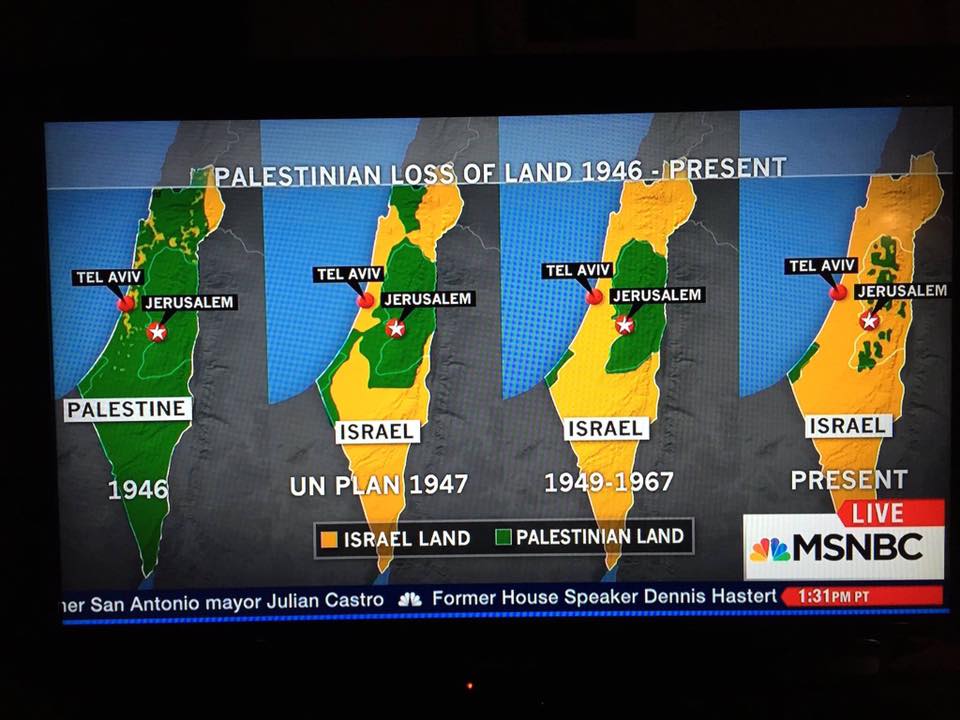
Israel's racist policies inspire Trump and his xenophobic ambitions, as encapsulated by his senior policy adviser arch-Zionist Islamophobe Stephen Miller. Historically, Israel's foundations are built on a Zionist, ie racist and white supremacist entry prohibition - expelling and then banning indigenous Palestinian people from returning to their lands, while enshrining the 1950 Law of Return, which provides all Jews with the right to Israeli citizenship, regardless of country of origin. Further, Israel regularly employs entry bans and deportations against pro-Palestinian and human rights activists, such as Professor Noam Chomsky and, recently, Omar Shakir of Human Rights Watch (HRW).
Likewise, entry bans have been cynically used by the Trump administration on numerous occasions to advance reactionary and criminal objectives. Examples include a sweeping ban on residents from various Muslim countries, a "zero tolerance" immigration policy, which has led to concentration camps and thousands of family separations, and the targeting of members of the International Criminal Court (ICC) seeking to investigate potential American war crimes in Afghanistan or one of the many global locales where the US projects its imperialist ambitions.
US Secretary of State Mike Pompeo perfectly demonstrated American-Israeli complicity when claiming the administration was prepared to impose visa restrictions in similar cases involving allies, including Israel. Pompeo stated: "These visa restrictions may also be used to deter ICC efforts to pursue allied personnel including Israelis without allies' consent."
The ILC's request to bar Congresswoman Ilhan Omar is merely the latest episode of an ongoing campaign involving Zionists, corporate Democrats, and Republicans, including Trump, his lackeys in Congress and white supremacist minions.
The campaign against Ilhan is part of an effort to subdue, marginalise and fragment the increasingly energised progressive wing of the Democratic Party, which constitutes a substantial threat to the status quo.
Ilhan Omar and her fellow "squad" members represent a grassroots, intersectional, social-democratic movement, which opposes the white patriarchal capitalist hegemony in Washington. They have vowed to tackle income inequality, climate change, healthcare, white supremacy, student debt, US imperialism, gun violence, corruption in government and other urgent issues which galvanise millions of young and new voters.
Consequently, Ilhan Omar as well as the other members of "The Squad" - Rashida Tlaib, Alexandria Ocasio-Cortez, Ayanna Pressley - come under fire from both old-guard corporate Democrats, like House Speaker Nancy Pelosi, and Republicans, including Trump himself, all fearful of substantial losses in power.
Furthermore, as part of an effort to alienate racist white people from the Democratic Party and gain voters for himself, Trump has consistently smeared Omar and her fellow women of colour of "The Squad" and equated them with the Democratic Party as a whole. Thus, Trump seeks to polarise American society, using race and class constructs to divide and rule, preferably by inciting violence - or tacitly encouraging violence by not condemning it, which would play into his hands leading up to the 2020 elections.
Behind the attacks on Congresswoman Omar also lies a deep-seated fear of the ascension of Senator Bernie Sanders, whose 2016 presidential campaign inspired a growing awareness of progressive issues, which likely propelled an array of groups and politicians into action and power, including members of "The Squad".
Trump, in particular, has reason to worry, as head-to-head polling data show Sanders consistently beating him in the 2020 elections. Sanders's campaign continues to build momentum as the independent senator vocalises dismay over Trump's racism and corporatist agenda, including tax cuts for the wealthy and catering to the military-industrial complex.
With a signature Brooklynite Jewish accent and conveying a liberal Zionist stance himself, Sanders skipped the American Israel Public Affairs Committee (AIPAC) meeting, and recently stated that as president he would consider withholding aid to Israel as leverage to change its behaviour towards Palestinians, which he condemned as "racist".
Zionists, Republicans and other reactionaries Democrats "sponsored" by AIPAC fear a convergence of intersectional forces, which would challenge the propaganda and agenda of the capitalist white supremacist patriarchy. Therefore, powerful intersectional representatives, such as members of "the Squad" are often tarnished and marginalised.
Zionists, Republicans and other reactionaries Democrats "sponsored" by AIPAC fear a convergence of intersectional forces, which would challenge the propaganda and agenda of the capitalist white supremacist patriarchy. Therefore, powerful intersectional representatives, such as members of "the Squad" are often tarnished and marginalised.
The offensive on Ilhan Omar, which was duplicitously spearhead by American "liberal" Zionists, shows an uncanny resemblance to a Zionist campaign against another intersectional voice - Corbyn supporter Jackie Walker - the now-expelled UK Labour Party activist and Jewish progressive woman of colour on trumped-up charges of "anti-Semitism".
Congresswomen Ilhan Omar and Rashida Tlaib plan to visit Israel and the occupied Palestinian territories outside the traditional Zionist-sponsored propaganda tour for US politicians. They wish to meet Palestinian leaders and civil society to learn about their struggles and find common ground on which cross-boundary alliances can be forged and strengthened, such as between Palestine and Black Lives Matter.
A visit to the occupied Palestinian territories in general and to Gaza, the largest open-air prison on Earth, in particular, would go a long way in countering Zionist propaganda, which villainizes all Palestinians. Israeli forces kill and injure non-violent Palestinian protesters regularly at the Great March of Return, including children, medics and journalists without significant resistance from Europe or the US.
Ilhan Omar and Rashida Tlaib have a unique opportunity to exemplify the power of intersectional solidarity by embracing Palestinian activists and supporters of BDS, assisting to expose Israeli criminality. Their presence in Gaza alongside Palestinians at the Great March of Return would be a watershed moment for all oppressed people.
Criticism of Israel and support for the rights of Palestinian people who are currently deprived of them are legitimate, crucial and moral. To tarnish human rights advocates as ‘anti-Semitic’ undermines the efforts of all those who oppose the white supremacist patriarchy, including Palestinians, Black and Brown people, women, Indigenous groups, immigrants, LGBTQI, Muslims and Jews.
Criticism of Israel and support for the rights of Palestinian people who are currently deprived of them are legitimate, crucial and moral. To tarnish human rights advocates as ‘anti-Semitic’ undermines the efforts of all those who oppose the white supremacist patriarchy, including Palestinians, Black and Brown people, women, Indigenous groups, immigrants, LGBTQI, Muslims and Jews.
PALESTINA
Janna Jihad: "My camera is my gun"
A damaging internal report has cast a dark shadow over the ethical behavior of top officials of the United Nations Relief and Works Agency for Palestine Refugees (UNRWA). As disclosed by Al Jazeera and AFP, the report cites “credible and corroborated reports” that members of an “inner circle” at the top of UNRWA, including Swiss Commissioner-General Pierre Krähenbühl, have engaged in “sexual misconduct, nepotism, retaliation, discrimination and other abuses of authority for personal gain, to suppress legitimate dissent, and to otherwise achieve their personal objectives.” The report was sent to UN Secretary-General António Guterres in December.
As one would expect, reactions have been immediate. The Swiss Foreign Ministry has announced that it has “decided to temporarily stop payments to the United Nations Relief and Works Agency for Palestinian refugees in the Near East (UNRWA).” Already in 2018, Swiss Foreign Minister Ignazio Cassis publicly criticized the role of UNRWA, saying it would be impossible to make peace between Israel and the Palestinian Authority because “For as long as Palestinians live in refugee camps, they want to return to their homeland,” he said. “For a long time the UNRWA was the solution to this problem, but today it has become part of the problem. It supplies the ammunition to continue the conflict. By supporting the UNRWA, we keep the conflict alive. It’s a perverse logic,” Cassis stated.
The Jewish News Syndicate trumpeted over the scandal: “Revelations of rampant wrongdoing in the corridors of the United Nations Relief Works Agency for Palestine Refugees (UNRWA) couldn’t have shamed a more worthy organization. Though normally it’s not nice to gloat over the misfortunes of others, the schadenfreude elicited by the news of inappropriate behavior going on behind the walls of this particularly vile organization was warranted.” An Israeli journalist, Ruthie Blum, tried to put another nail in the agency’s coffin: “Nothing short of shutting down UNRWA will be satisfactory since its very existence is a criminal scam….In the meantime, let us take some comfort in the agency’s well-earned public humiliation.”
“UNRWA is currently running on fumes,” charged U.S. special envoy Jason Greenblatt at the UN Security Council in late May. “It is time to face the reality that the UNRWA model has failed,” he said. “Palestinians in refugee camps were not given the opportunity to build any future; they were misled and used as political pawns,” he added. The United States ended all funding for UNRWA in 2018. “The United States will no longer commit further funding to this irredeemably flawed operation,” the State Department said at the time.
The schism between humanitarianism and politics is not as wide as most believe. Organizations like UNRWA walk a very thin line between assisting all in need and taking sides in conflicts. In response to the current story, UNRWA responded that it “is probably among the most scrutinized U.N. agencies in view of the nature of the conflict and complex and politicized environment it is working in.”
UNRWA was created in 1949 to deal with Palestinians who were displaced during the 1948 war at the creation of the state of Israel. It was established by General Assembly resolution 302 (IV), with the initial mandate to provide “direct relief and works programmes” to Palestine refugees, in order to “prevent conditions of starvation and distress… and to further conditions of peace and stability”. Today, it provides education, health care and social services to more than 5 million Palestinian refugees in Jordan, Lebanon, Syria, the Gaza Strip and the West Bank. Since 2018, with the U.S. withdrawal, it has been in a financial crisis.
While the ethics report deals only with the internal workings of the organization, there is no question that one cannot separate the political from the ethical here. Why are questions being raised now about ethical issues within UNRWA? With continuing tensions between Palestinian authorities and Israel and the Trump administration peace plan still incubating, the report is a cold shower for any hopes of ameliorating the lives of millions of displaced Palestinians. Generations of Palestinians have been stuck in camps, with UNRWA doing all that’s been possible to alleviate their suffering.
Is the report part of a larger strategy? By publicly criticizing UNRWA now, is it hoped that Palestinians will be forced to sign an agreement that will have no promise for the right to return? When the U.S. stopped funding UNRWA, a spokesman for the Palestinian Authority suggested it was “using humanitarian aid to blackmail and pressure the Palestinian leadership to submit to the empty plan known as ‘the deal of the century.” Are the latest revelations part of that strategy?
Any serious abuses within UNRWA should be scrutinized and punished. That should go without saying. And organizations like UNRWA, given the sensitivity of their activities, should be especially careful about their actions. That also should go without saying. But the timing of the current revelations certainly come at an opportune moment for those who want to pressure the Palestinians into a peace deal. And what about all the refugees who depend on UNRWA for basic services? Are they once again being forgotten as they have been for 70 years?
Israeli lawyer Lea Tsemel: "I chose my humanity"

BRASIL


